
Production: Fallout
Posted on Apr 20, 2026 by Katie Kasperson
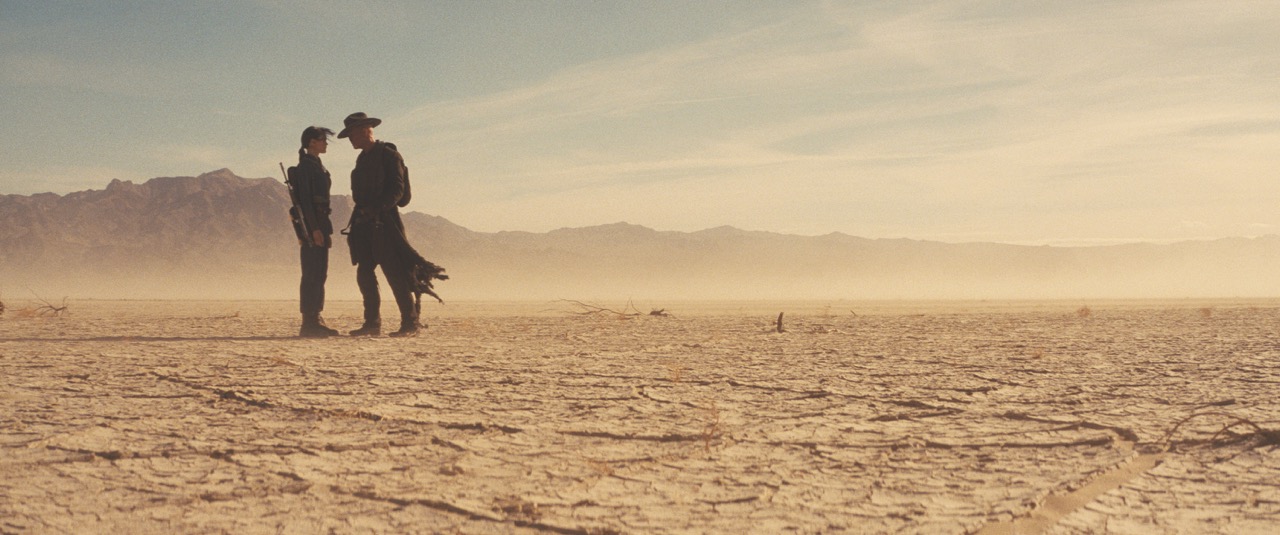
Decisively shot on film and on Amazon’s dedicated virtual stage, Fallout’s second season returns us to a visually riveting, wild western dystopian wasteland
Words Katie Kasperson | Images Amazon MGM Studios
Hot off its first season, Fallout – based on the role-playing video game series of the same name – explores what becomes of humanity when pushed to the brink. Set in a post-war US, the TV series follows characters Lucy MacLean, the Ghoul and Maximus – all of whom must navigate life in a nuclear wasteland.
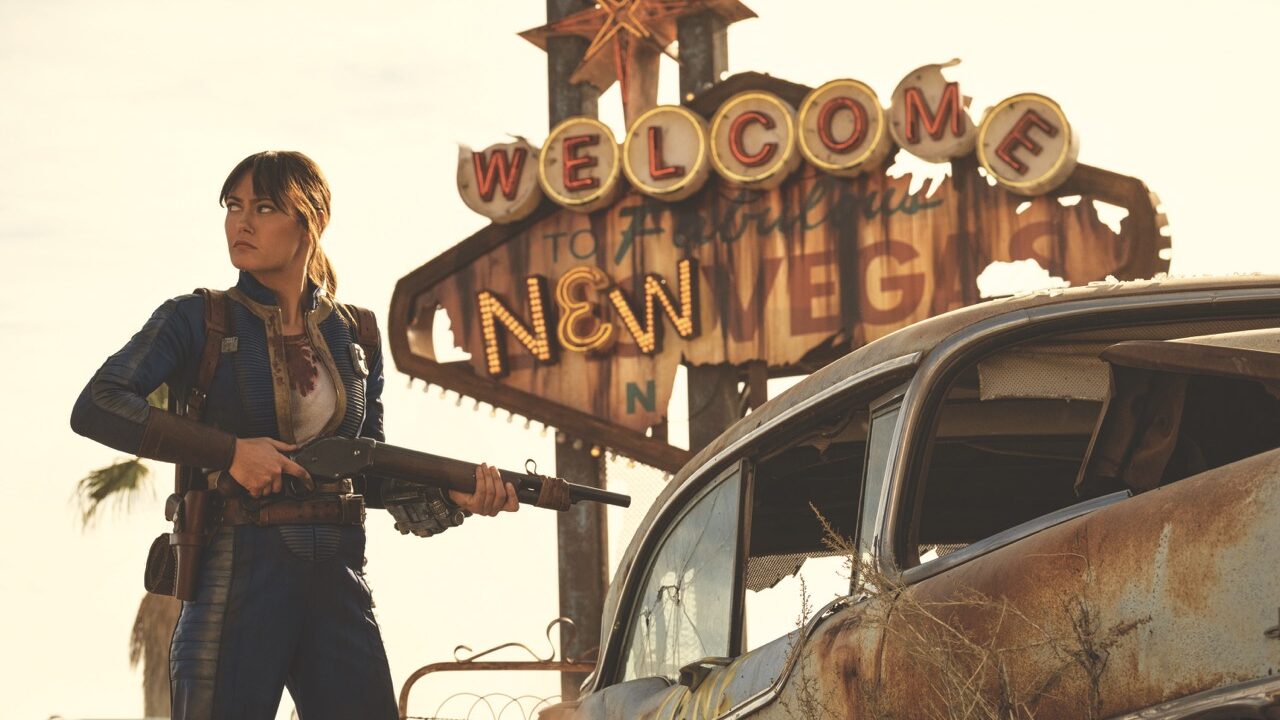
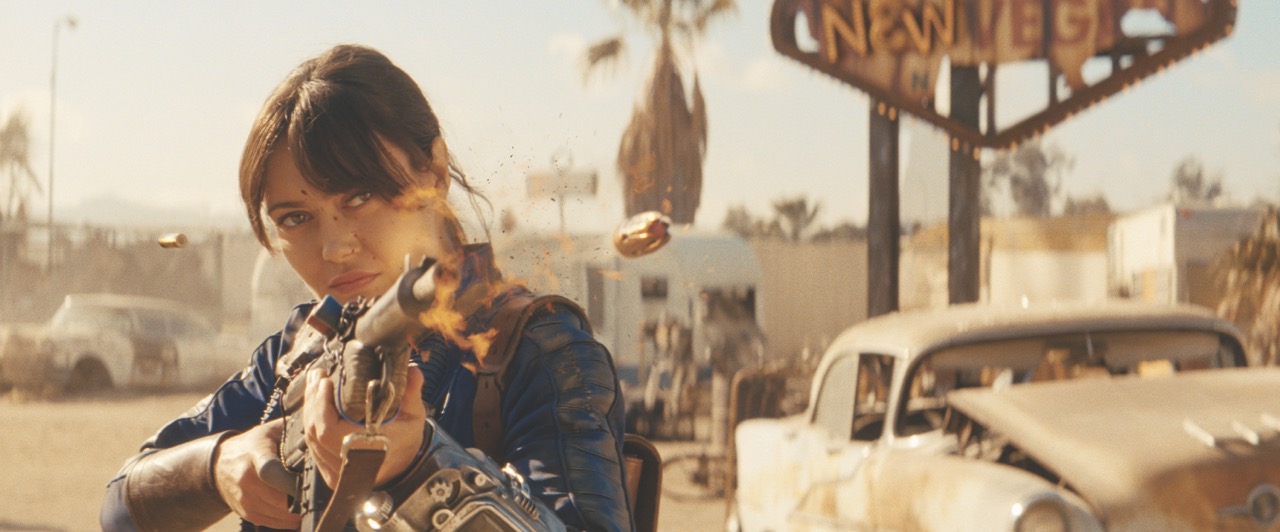
Season 2 digs deeper into the Fallout backstory: what happened before the Great War devastated civilisation, and how did the central characters come to be who they are? Visually, the series leans heavily on VP but is shot entirely on film, bridging a retro, Americana style with impossible environments that class it as science fiction. Introducing locations like New Vegas while returning us to ones from the first series such as the Vaults (living communities marketed as sanctuaries, yet acting as social experiments), the second season gave its filmmakers plenty of material to play with.
Step by step
While there are myriad reasons why a production might hire a volume, for Fallout it came down to three things: convenience, plot and price.
Five years ago, Amazon MGM Studios developed its own VP stage to service original projects. “Having that gave the production access to a volume that’s already built and a team that has its workflow down,” begins Dan Smiczek, VP supervisor at Amazon MGM Studios. It also gave the Fallout crew flexibility. “We could do multiple sets in a day,” says Smiczek, without working well into the night.
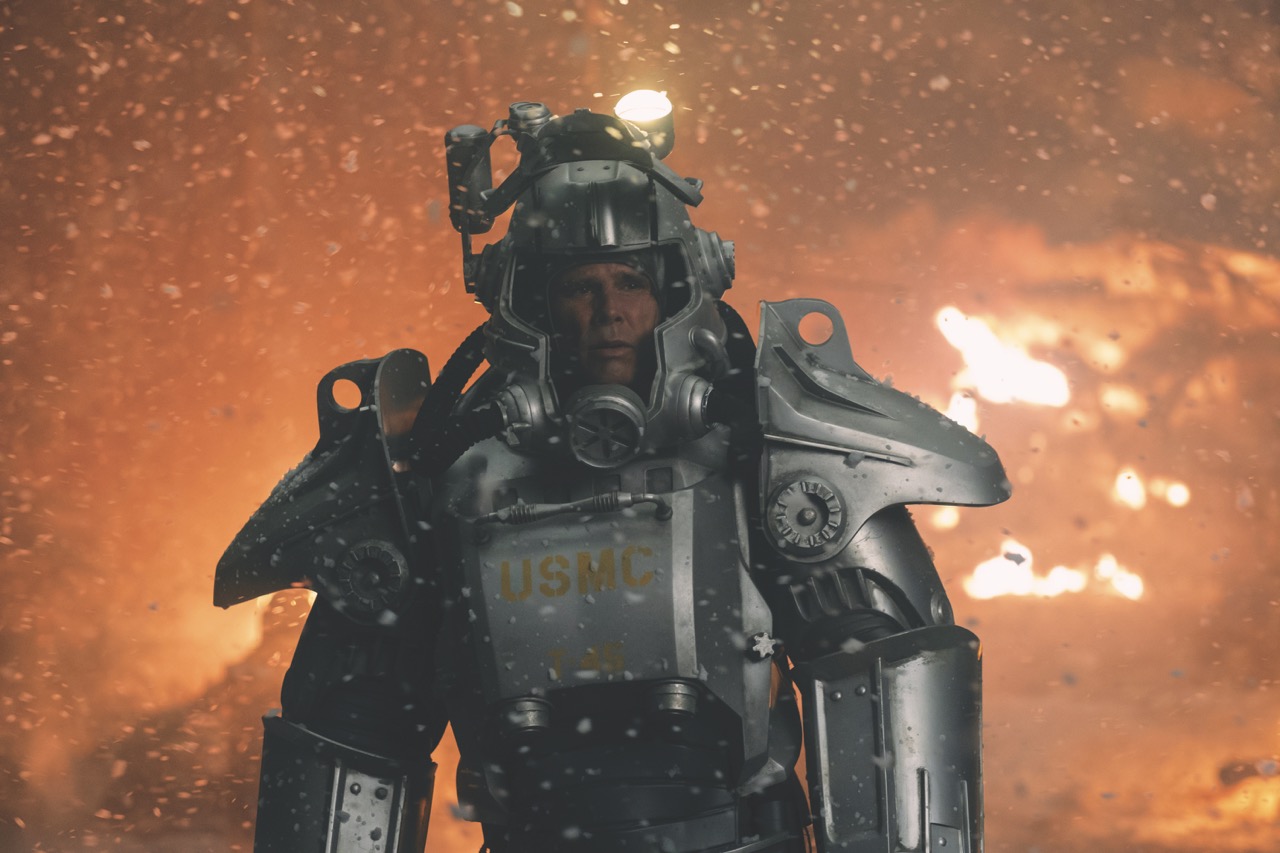
Executive producer Jonathan Nolan also felt strongly about shooting on film and in a volume. “The primary reason,” explains Bruce McCleery, ASC, director of photography and volume DOP, “was to capture otherwise impossible environments that you couldn’t find in the real world. We had a big snow scene in a tundra, at night, with gunfire. We had another scene in an abandoned Vault. It would have been prohibitively expensive to build those kinds of set,” he adds.
Shooting on film and in a volume meant most questions were answered during pre-production. “The planning was fantastic,” stresses Smiczek. “Some of that came from the nature of working with film, having proper film tests and making sure the colour was good.” The rest of it came from creating virtual environments in advance and working with experienced teams at both Amazon and Keslow Camera, where the crew sourced their equipment.
“We would prep for weeks or months sometimes on sets,” recounts McCleery. The virtual art department would design the backdrop content; then, they would liaise with practical artists to build one cohesive scene. “They had to be integrated, so we had to previsualise where the shadows would line up, where the sets would line up and how we would mask the blend lines. A lot of that had to do with understanding how lighting works. You’re creating depth.”
Once the sets were designed, dressed and lit, it came time to block – because with film, there’s no real room for error. McCleery would test everything first on a RED V-RAPTOR, creating ‘a film emulation LUT to have that camera look as close as possible to the film’, which was Kodak 5207 stock for day scenes and 5219 for night. They ultimately shot on ARRICAM LT and ST with Hawk anamorphic lenses.
“Film is very organic,” adds Smiczek. “It’s a bit of an adventure. Every set and every load would push the camera in a different way, so that made things even more interesting. Those film tests were crucial.” When it came down to it, though, McCleery was grateful for the chance to shoot analogue. “Right out of the box, you get a really pleasing image,” he believes. “You don’t have issues like moiré and raster. You’d struggle to solve those artefacts with a digital camera.”
Setting records
While McCleery’s primary role was as Fallout’s volume DOP, he also served as cinematographer on episode 207 (The Handoff) and occasionally picked up additional photography too. “In the volume itself, a lot of what I did was unseen work – legwork – leading up to successful shoot days. That’s a really different kind of prep than for shooting conventional stuff,” he shares. “Shooting episodes, it’s a bit more of a traditional workflow where you’re scouting, storyboarding with a director, crafting sequences and working with a crew in a more conventional way.”
McCleery’s episode takes the audience to the year 2077, just before the Great War began – then jumps forward to 2296, when Lucy hatches a plan to sabotage the Vault system. In the final scene, the team reused a practical penthouse set that appears in the flashback sequences, adding dirt and debris to convey 200+ years of damage. They repurposed the Las Vegas Unreal asset – the view from the penthouse – transforming it into New Vegas, a major location in the second season.
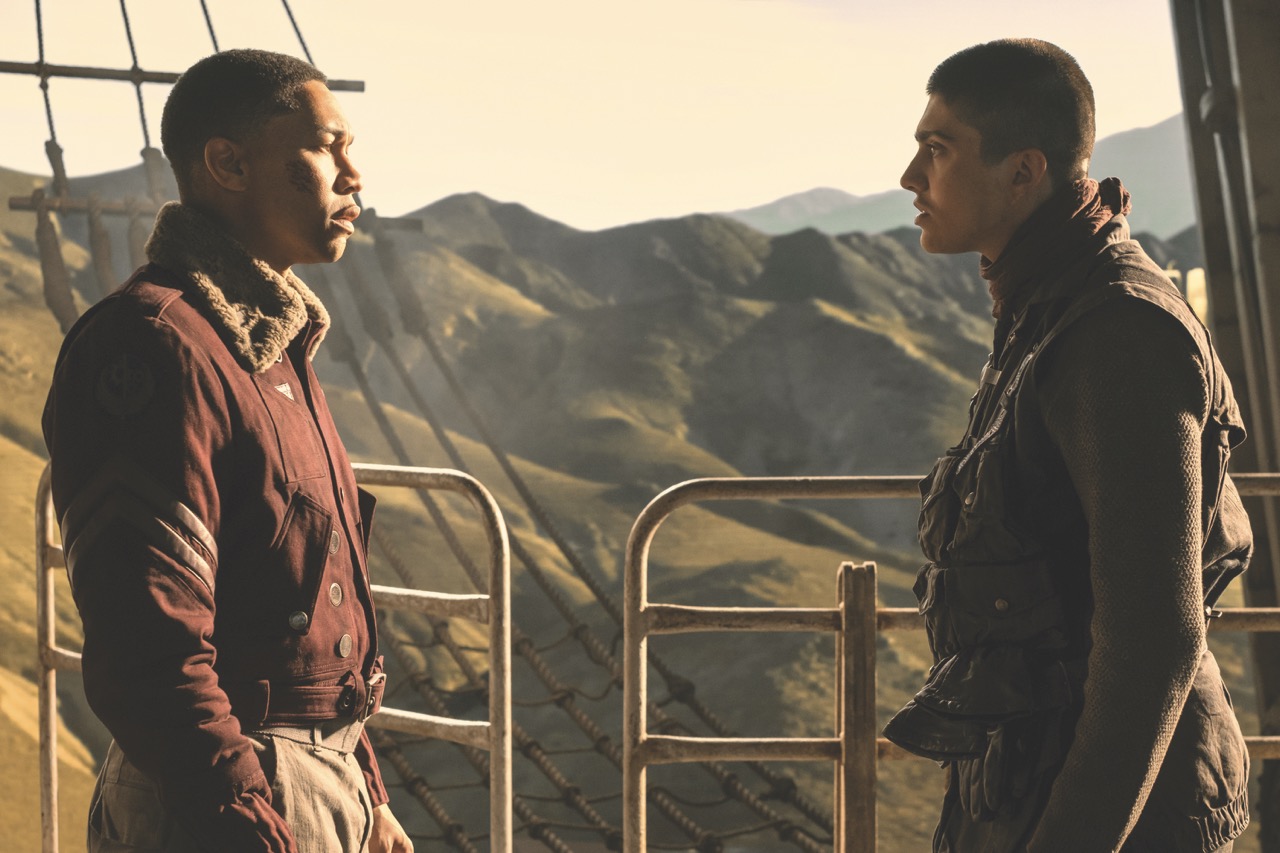
Season 2 also added a ‘big floating ship’ to its collection of sets, which measured roughly 80ft long, barely fitting inside the volume. “We did one kind of groundbreaking sequence,” says McCleery, “in that we combined three disparate elements, mostly in camera. We shot plates of the real desert” – Dumont Dunes in the Mojave – “with drones and helicopters, and then we composited those plates with a virtual set. Part of that set was then going to be recreated, physically, on the stage. It’s the first time these elements had ever been combined in the volume, as far as I know.”
When shooting inside a volume, “people tend to stay away from direct sunlight,” McCleery remarks, as adding a bright spotlight can contaminate the LED panels. To create hard shadows on the floating ship, he needed practicals – and ended up carving a hole in the LED wall (“done according to the architecture of the ship,” he adds) to let the light shine through. McCleery and his gaffers opted for Fiilex K40s and K10s to create that false sense of sunlight.
“We did other interesting things,” continues McCleery, including creating digi-doubles and atmospheric elements, such as engine exhaust. “There are puffs of smoke blowing through the practical set, and then you see them in the distance in the virtual set. Those kinds of connections are important to make, visually,” to ensure both sets are functioning as a single unit.
While blending practical sets, Unreal environments and plates, potentially for the first time, that wasn’t Fallout’s only record achievement. “We streamed 16K resolution drone footage directly into the game engine over SMPTE 2110,” explains Smiczek. “It was challenging. We were always on the edge of everything falling apart, but it worked.”
Sticking to the source
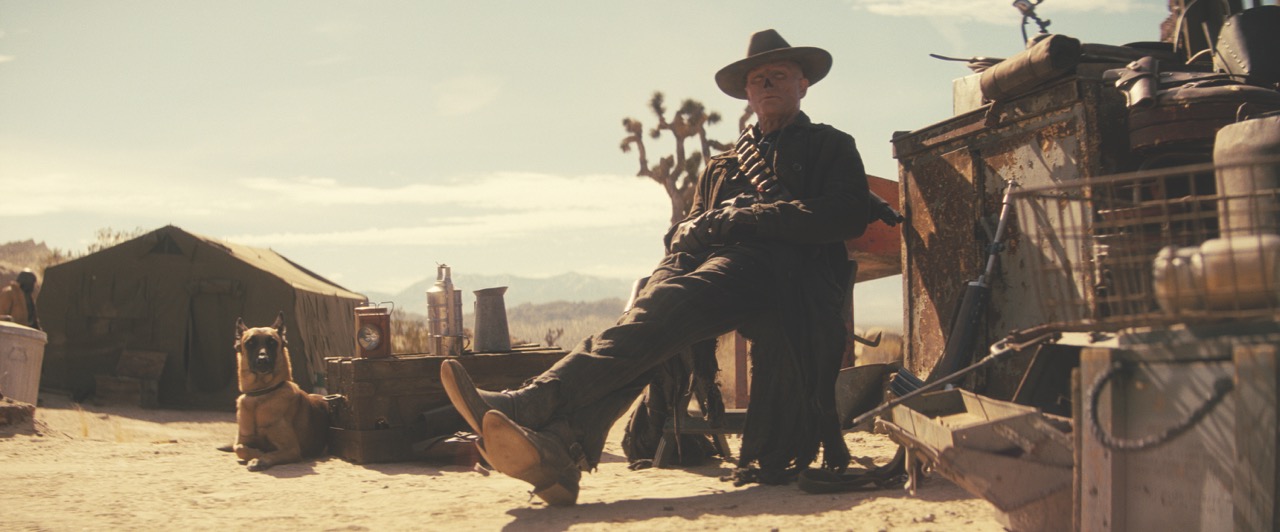
Fallout is just one addition to a growing series of video-game adaptations, but its success comes down to its “respect for the source material,” argues Smiczek. “It’s faithful to the original.” While the show is rooted in its predecessor, it expands the story significantly without removing it from the Fallout universe that fans and players are familiar with. Certain sets, such as the abandoned Vault and the New Vegas Strip, should make viewers feel right at home.
Fallout excels thanks to its technical ambition too. Blending analogue and digital workflows – virtual ones too, for that matter – is no easy feat. “Fallout is one of a few TV shows shot on film,” says McCleery, who believes there’s a real resurgence of the medium. “It’s reassuring.” The downside, of course, is cost, with film being more expensive due to the extra processes and materials.
“There can be a significant cost to doing film and VP in particular,” says Smiczek, “just because there’s a lot of testing to make sure everything’s going to come out correctly. You can hope for the best and fix it in post, but we really wanted to nail it this season.” And so they did.
Fallout is available to stream on Amazon Prime Video
This article appears in the April/May 2026 issue of Definition