
Production: Sentimental Value
Posted on Feb 26, 2026 by Admin
On Sentimental Value, cinematographer Kasper Tuxen, DFF reunites with director Joachim Trier. He talks shooting on 35mm ARRICAM with Cooke lenses, intimate handheld work and practical light
Words Oliver Webb | Images Mubi
Sentimental Value explores the relationship between sisters Nora (Renate Reinsve) and Agnes (Inga Ibsdotter Lilleaas) as they reunite with their estranged father, Gustav Borg (Stellan Skarsgård). A once-renowned film director, Gustav returns to Oslo and offers Nora a role in his comeback film before turning to Hollywood star Rachel Kemp (Elle Fanning) instead.
Co-written by director Joachim Trier and his longtime screenwriting partner, Eskil Vogt, the film also marks Trier’s second feature collaboration with the DOP Kasper Tuxen, DFF after The Worst Person in the World in 2021.
Returning to Scandinavia to shoot The Worst Person in the World awoke something in Tuxen, who was born in Denmark. He decided to shoot a family project on 16mm. “I was pointing the camera at my own family without any idea of what Joachim and Eskil were penning,” he begins. “When Joachim told me about the story and the family house, I’d already been shooting a story about my parents in my childhood home in Copenhagen. I read early drafts and showed him what I’d filmed so far, and it inspired scenes in the film.”
Before coming onboard the project, Tuxen had commenced work on The Apprentice (2024), which ended up sitting back-to-back with the start of prep on Sentimental Value. “We began looking for the house prior to me going into pre-production on The Apprentice, so it was years of prep. But I was very involved. Joachim appreciates all input, whether it is from a technical perspective or about the story.”
Rendering skin tones
Recalling the visual style of The Worst Person in the World, Tuxen opted for a combination of a 1.85:1 aspect ratio, an ARRICAM LT 35mm, Cooke 5/i lensesand 35mm Kodak Vision3 film stocks.
For Sentimental Value, he also utilised an ARRIFLEX 435 for a few slow-motion shots, as well as additional Super Baltars, ZEISS Super Speeds, Cooke’s Varotal Zoom 20-100mm T3.1 for the film’s historical sequences, and an Angénieux 24-290mm T2.8 for its present-day zoom shots.
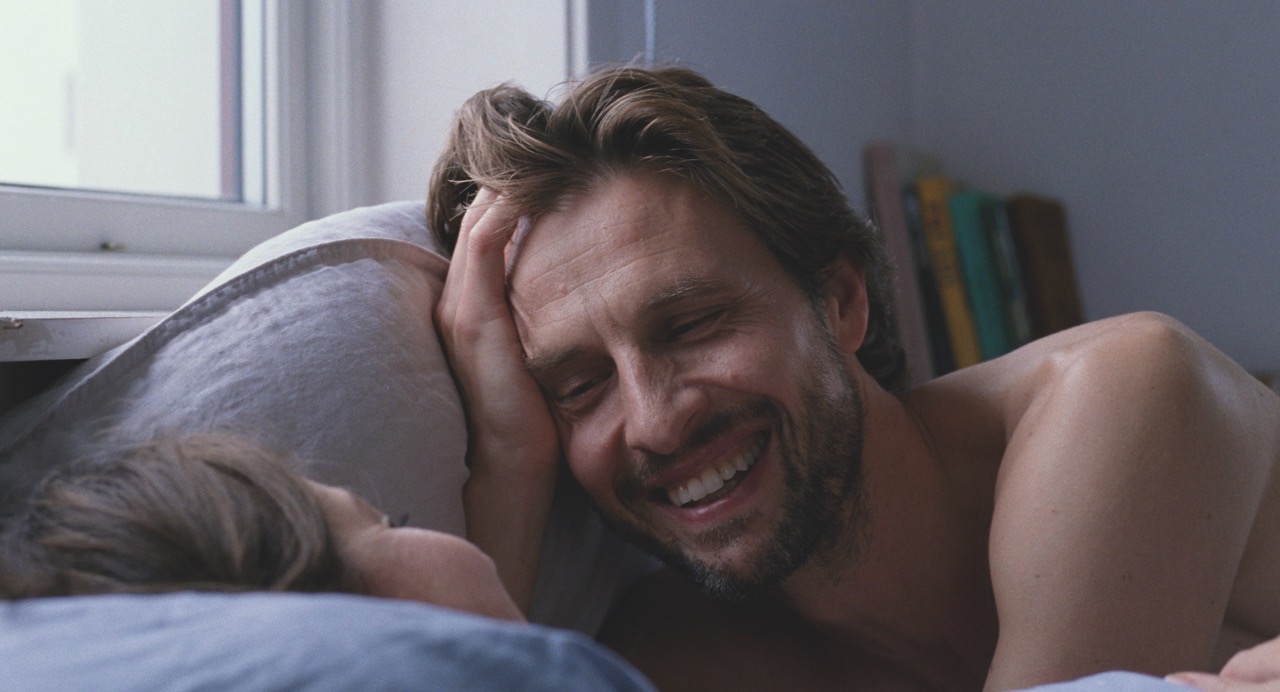
While making The Worst Person in The World, Tuxen fell in love with shooting film. “Apart from the actual look, I also really love grain and how it depicts colour,” he says. “Joachim likes to depict faces as naturally as possible. This is my second feature with the actor Renate and one of her qualities is that she blushes a lot and her eyes redden. This sensitivity in emotion catches those colours really differently. If we had shot this film digitally, it would have been so hard to get the colour palette we did. Rolling film is also expensive, so we had to be quiet and focused and everybody had to perform.”
Despite looking to a number of French, Italian and Scandinavian films, Trier and Tuxen did not want to spend lots of time exploring references for the main part of the film’s story. They did, however, look at getting inspiration for Gustav’s fictional film Anna, shown in the retrospective screening scene. “We had to be Gustav Borg as a filmmaker, both in the present and past,” says Tuxen.
So, Tuxen thought about which film directors Gustav himself might’ve been inspired by, and what his hypothetical World War II movie in the nineties would have looked like. “I remember how everybody was using bleach bypass in World War II movies in the nineties,” he says. “So, we skipped the bleach and kept the silver in the negative for sequences from Anna.
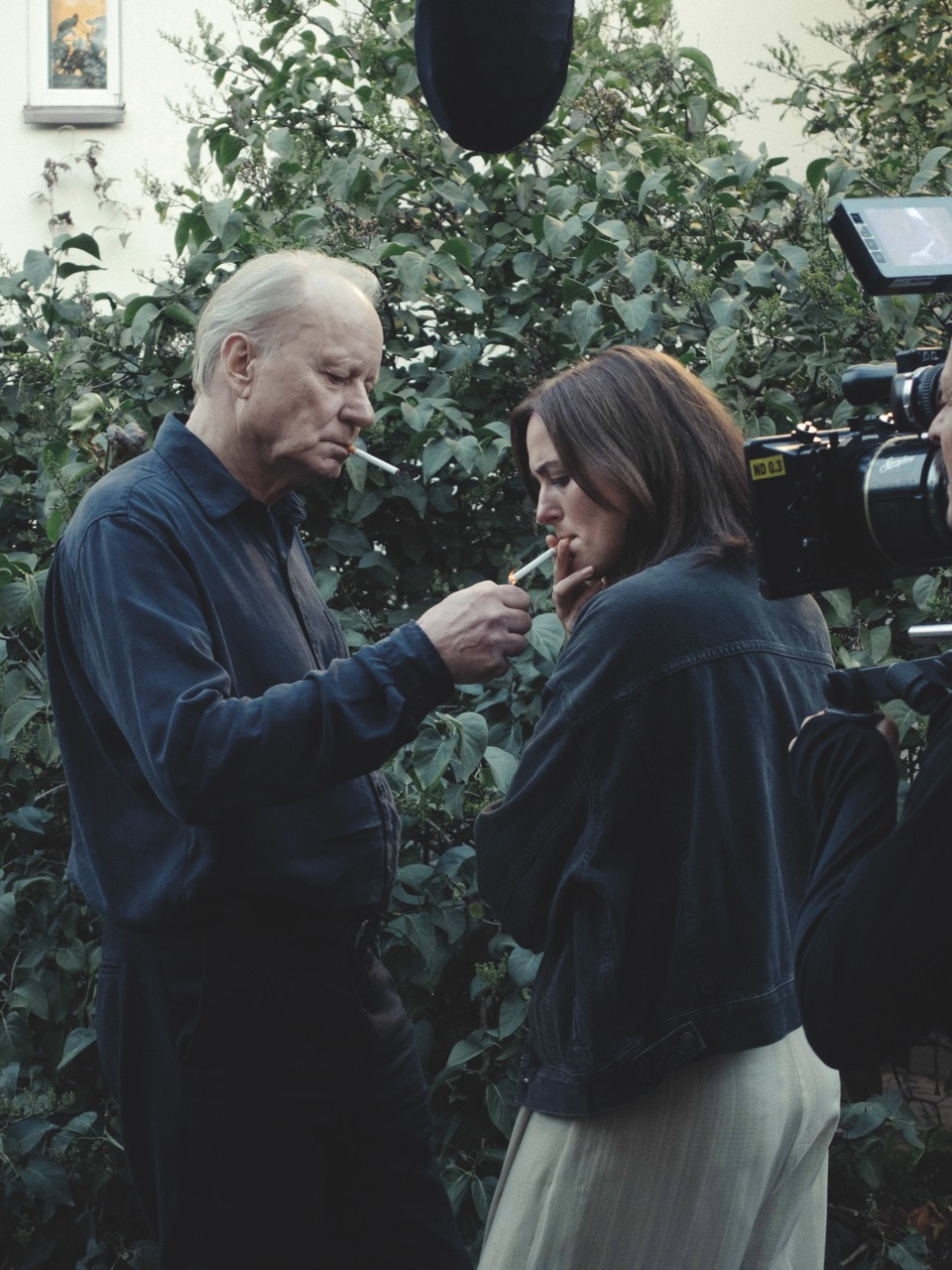
“Joachim and I decided that mise-en-scène and dolly work were more Gustav’s style, while for the contemporary story of the sisters we chose a more handheld-driven, intimate and real approach.”
Historical home
At the centre of the film is the Borg’s Dragestil family home, which has been passed down several generations. We see the house’s evolution over decades. The same house also featured in Trier’s 2011 film Oslo, August 31st. “Joachim knew that key scenes had to work within the space and the sequence of rooms. It needed to have the vibe of a house with a history of sadness and it needed to tick a lot of boxes.”
A replica was constructed by the production designer Jørgen Stangebye Larsen and his team due to the required blue screen. In the final sequence, the replica features in full display. “We shot the oner sequence in November 2024, around 13 months after we rediscovered the house,” says Tuxen. “The day before shooting the oner scene, my grip and I spent the entire day getting from A to B to C to D, hitting all the points and finding out the best way to operate. I don’t think we ever had to stop a take because the camera movement wasn’t right. We delivered on all takes. It was hard, but we prepped enough so that it would be a wonderful thing to shoot.”
Tuxen enjoyed the process of capturing a number of different time periods in the film. “Maybe I am slightly romanticising the time of standing in the war zone and trying to realise it, but I just remember it as fun,” he says. “The house is nearly as old as the film medium itself. The story is about a filmmaker, so we wanted each era of the house to reflect the state of film technology as it evolved over time. We started with scratchy, old, b&w lenses shot on 16mm to give it a little more texture, and then we tried to follow what lenses were mainly used in each subsequent decade to give it a slight historical perspective from our camera.”
Even though Tuxen favoured handheld camera movement for the present-day sequences, it rarely feels chaotic. “The theatre stage freight sequence is really the only exception to that,” adds Tuxen. “I felt like we were breathing slowly when we were shooting this film. Joachim really buys himself time to prep and time to shoot. I was also joined by his editor Olivier Bugge Coutté, who I’ve known longer than I’ve known Joachim.”
Language of light
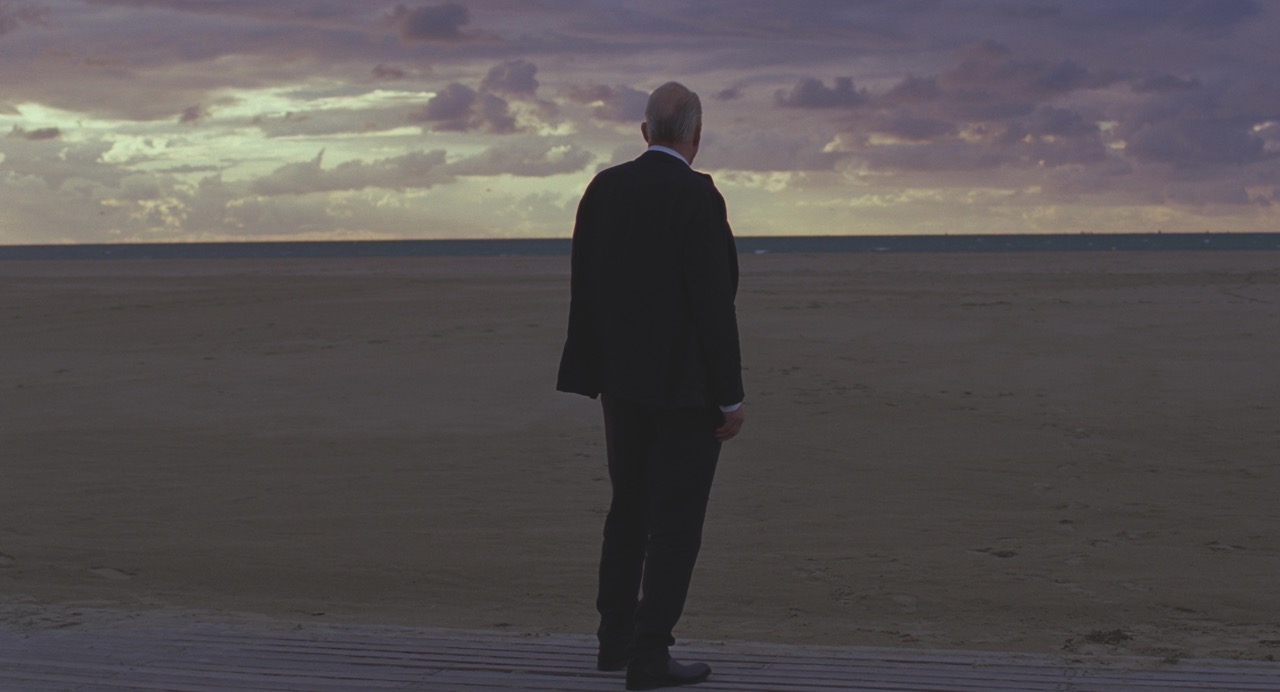
The overall shoot lasted 63 days, with production wrapping in November 2024. It included a short stint in Deauville, France, for the beach sequence in which Gustav meets actress Rachel Kemp. Lighting the beach proved to be a challenge for Tuxen. “We had never been in such a vast space with barely any existing lights,” he says. “It is a very wide beach and the only light sources were coming from those little changing rooms that you see.”
Tuxen admits there have been a few times in his career when he has felt forced to do a moonlit scenario. But he decided against it for Sentimental Value, because he does not like how it takes you out of reality. “We shot very long exposures and brought some battery-operated lights so we could add stronger lights on the roof of that whole stretch of boardwalk and then extend that with softer units.”
Tuxen points to key conversations that were lit with just a single practical. “Something Joachim was adamant about was finding a practical that’s right for the interior but also gives bright light for the conversation,” he says. “We used practicals for the wake when the two sisters sit down and talk about how it’s hard to talk to their dad, when Gustav’s old producer friend Michael tells him to do this film and lastly when Rachel Kemp comes to the house to inform Gustav she can’t be in the film. Those three scenes were led by only one practical each, which was easy to handle on the day.”
Tuxen acknowledges that some of the lighting scenarios were difficult, but wants to give credit to his gaffer Levi Gawrock Trøite and best girl Lisa Emilie Øverjordet for their work. “I underestimated the fact that the house had 13 windows,” he adds. “We had to move through many rooms for lots of the sequences, which meant we had lots of windows to control.”
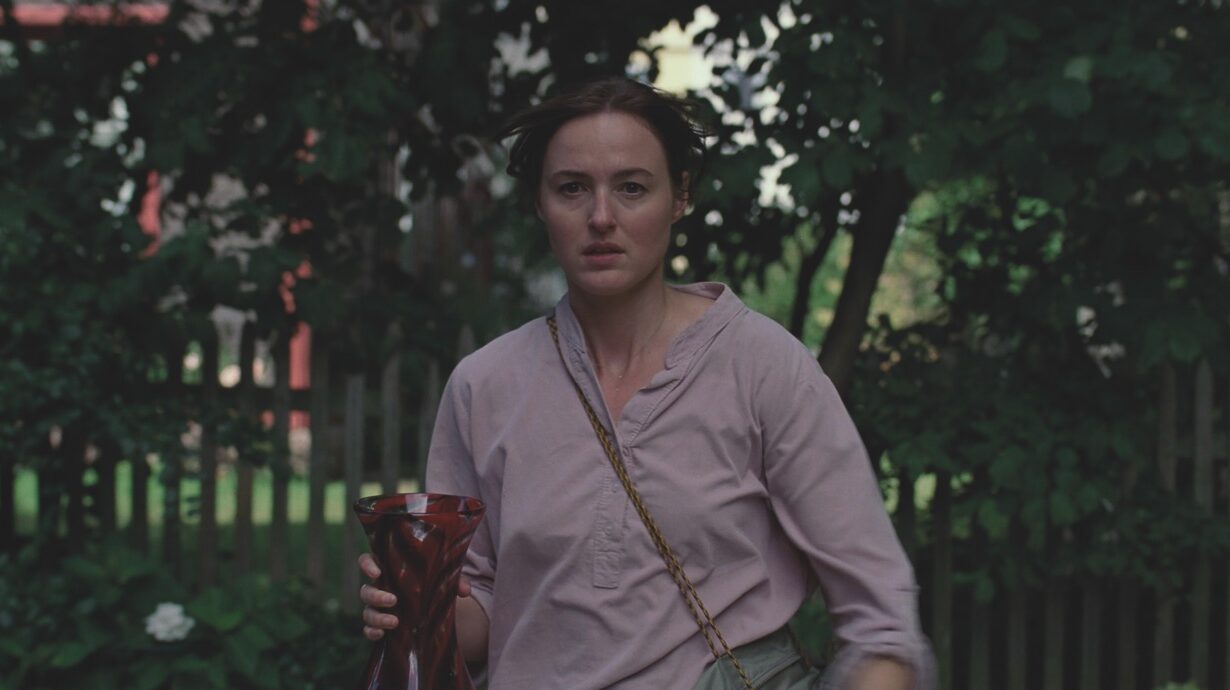
One sequence was particularly challenging to navigate lighting-wise due to actors’ schedules. “The two parts of the summertime sequence – when Nora arrives and speaks with her sister about the red vase, and when Gustav suddenly shows up with Rachel Kemp – were shot months apart because of Fanning’s schedule,” explains Tuxen. “We shot the sisters’ part in actual summer and then Fanning’s part just before fall, so we had to light it artificially with sunlight. It was way more complicated than the scenes lit by just one practical, but I love that the film has room for both very simple and more complex lighting.”
City symphony
The film’s establishing shot of Oslo was not scripted. “We had staging in Nora’s neighbour’s apartment, and one lunch Joachim was looking out of the window and got his idea for a slow pan over the city below,” says Tuxen. “We set it up and shot it in a few different speeds. It works well because it’s almost the same view as when we enter what we call ‘the Nora montage’, when we get into her head after she sends her lover away. It brings your memory back to that – that’s the beautiful opportunist Joachim is.”
Tuxen has enjoyed watching all Trier’s films and getting to see how he has aged and matured as a filmmaker. “His films were never flashy, but they were playful in a different way than I think Sentimental Value is,” he concludes. “He’s 50 now, and this film is about family. I feel that there is more of a trust in simplicity. When it comes to our process, he is very good at leaving what we just did behind, being present and thinking ahead. That’s what he has taught me on both films I’ve shot with him. Whenever I feel like I’ve messed up, he says: ‘We’ll deal with it in the edit, but right now I just need you to leave it behind you.’”
This story appears in the February/March 2026 issue of Definition