
Production: Bridgerton
Posted on Feb 24, 2026 by Admin
As the new season of Netflix’s Bridgerton ventures below stairs for the first time, cinematographer Alicia Robbins, ASC lifts the curtain on the visual rules and camera craft behind the show’s new chapter
Words Verity Butler | Images Netflix
Cobbled streets, orchestral pop song covers, decadent balls and bodice-ripping rendezvous. It can all only mean one thing: Bridgerton is back. With three seasons under its belt, the visual language of Bridgerton – think glowing candlelight and pastel-toned Regency London – is shifting gears. This season doesn’t just twirl through ballrooms; it descends into kitchens and servants’ quarters. For the first time, Bridgerton is exploring the upstairs-downstairs dynamic.
Each series centres on the love story of a different sibling from the eight Bridgerton children, with the fourth instalment focusing on the charming Benedict (Luke Thompson). His mystery woman is Sophie Baek (Yerin Ha), who was born into privilege but forced into servitude, moving invisibly through the same grand houses as ‘the ton’, while never being allowed to belong.
For cinematographer Alicia Robbins, ASC, who shot four of the eight episodes, the challenge was not reinventing the show’s beloved look, but expanding it carefully without breaking the spell.
Regency reimagined
One of the fundamental rules of shooting Bridgerton, and period pieces more broadly, is the lighting – or more specifically the lack of it. “Because it is a period piece, we are locked into shooting with natural lighting,” Robbins begins. “It has got to be sunlight, firelight, moonlight or candlelight – there’s nothing else.”
This limitation becomes a powerful storytelling tool in Season 4, especially as the show moves downstairs. Robbins leaned into the capabilities of the Sony Venice 2, the camera used this season.
“The Sony VENICE has actually been the camera since Season 2,” she says. “Season 3 was on a Sony VENICE, then we switched to a VENICE 2, which is an 8K camera.”
Robbins found that the full-frame sensor allowed for greater flexibility with stabilisation and intimate framing – vital in confined servant spaces. Lens choice is another cornerstone of the show’s look, with ARRI Signature Primes once again the glass of choice. “They are a really well-rounded lens,” Robbins says. “They’re gorgeous and clean and that’s the look of Bridgerton – we’re not doing the gritty period piece style.”
To soften the inherently sharp digital image, she relied on filtration: “Most of the time it is Tiffen Soft/FX,” she explains, sometimes paired with smoke or fog filters to introduce atmosphere and glow around candlelight.
Choreographing the divide
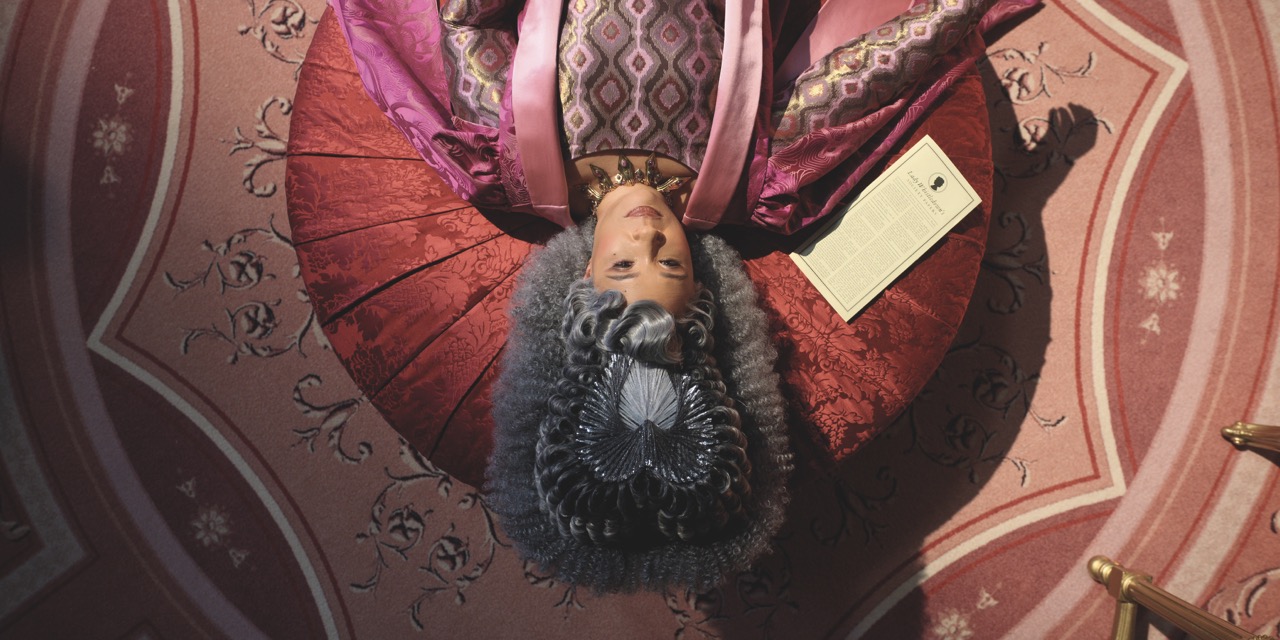
In past seasons, Bridgerton has been noted for its playful use of colour and visual indicators. It creates distinct schemes in both wardrobe and sets among the various families living in Mayfair, as well as using them to inform viewers of the emotional states of each character – often even as subtle as a loose cravat or relaxed hairstyle.
Robbins explains how they chose to weave this signature feature into the new season’s theme. “The upstairs-downstairs for the Bridgerton house is a very different look to the upstairs-downstairs of Penwood house,” she explains. The Penwoods are the new family on the Mayfair block, acting as the antagonists for this season’s storyline.
At Bridgerton House, the downstairs is lively, expansive and warm. “It has a lot more fluidity in terms of Steadicam – and a bit of handheld. It’s still chaotic, but it is more open and has a lovely, bustling atmosphere.” Movement is key to this: the camera floats and mirrors the energy of the staff, who are busy but valued nonetheless.
The Penwood household tells a different story. “It’s dingy, dark and features very little lighting,” Robbins continues. “Sophie’s room is this tiny little rat’s nest of a room that you can barely squeeze into.”
Robbins shot Sophie’s quarters exclusively at night, relying entirely on candlelight and the flicker of a small fireplace. “I was trying to make it feel claustrophobic, like she doesn’t have anywhere to escape to.”
When Sophie later enters the Bridgerton kitchen, even though she remains a servant, the space feels luxurious by comparison.
Intimacy in every frame
One of Robbins’ key technical strategies was shooting night scenes at higher ISOs. “I found a sweet spot at ISO 1600 for my night interiors and exteriors,” she comments. “It really made the candle and firelight pop.” This approach allowed shadows to fall naturally without flooding sets with artificial bounce light that would betray the period illusion. “I’m not having to over-light the space to reach the shadows, which feels more natural.”
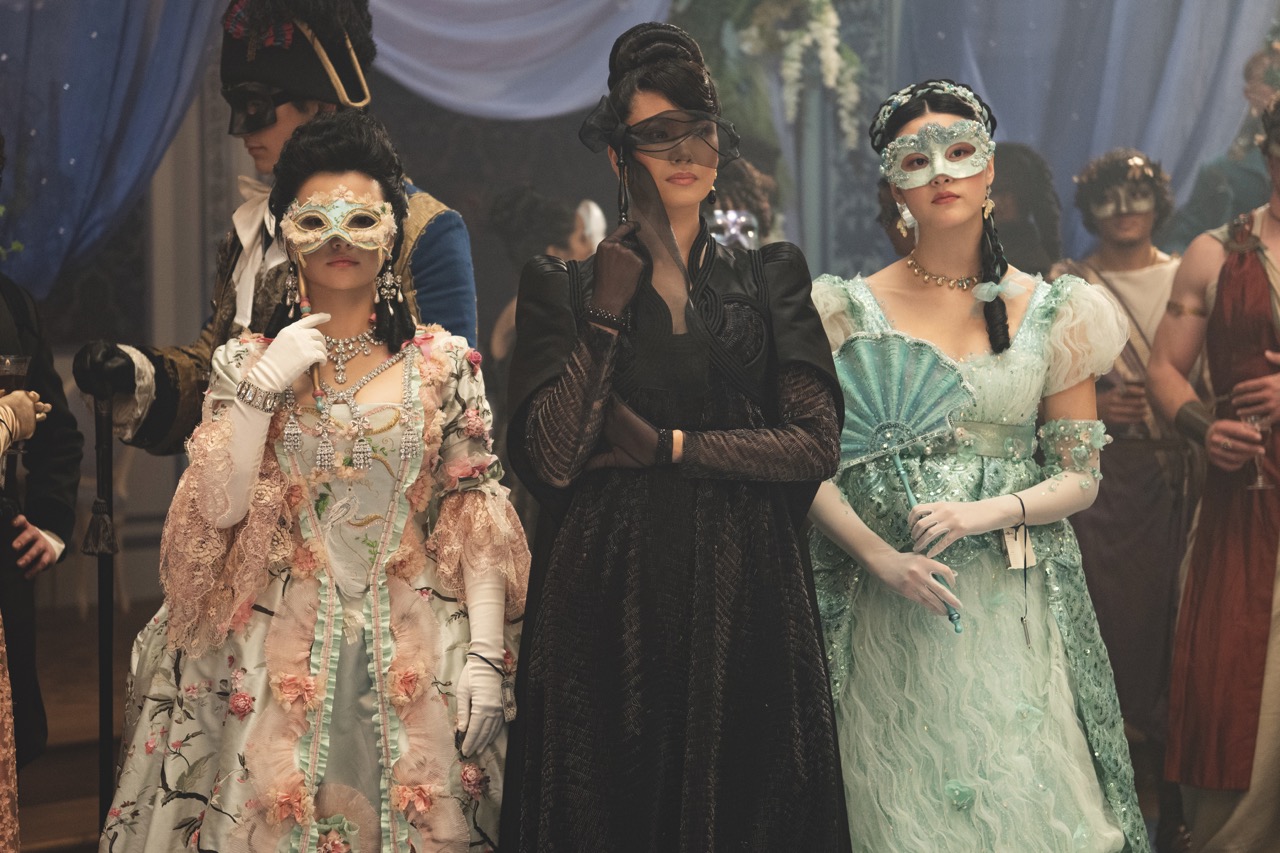
Perhaps the boldest departure in Season 4 is how rarely the show returns to its most iconic setting. “There weren’t as many balls,” she emphasises, “which is very different for Bridgerton.”
Episodes 2 and 4, shot by Robbins, feature no balls at all. Instead, proximity and camera movement provided visual interest. “I had to ask myself, ‘how do we retain that glamorous Bridgerton feel?’”
Director Jaffar Mahmood’s approach was instrumental. “He really thinks about how angles and movement can tell a story happening internally. It grounded the story a little more.”
A particularly striking example of this was the use of a crack in the door. “Sophie gets to see a sliver of the man of her dreams, which from her perspective was all she’ll get to have.”
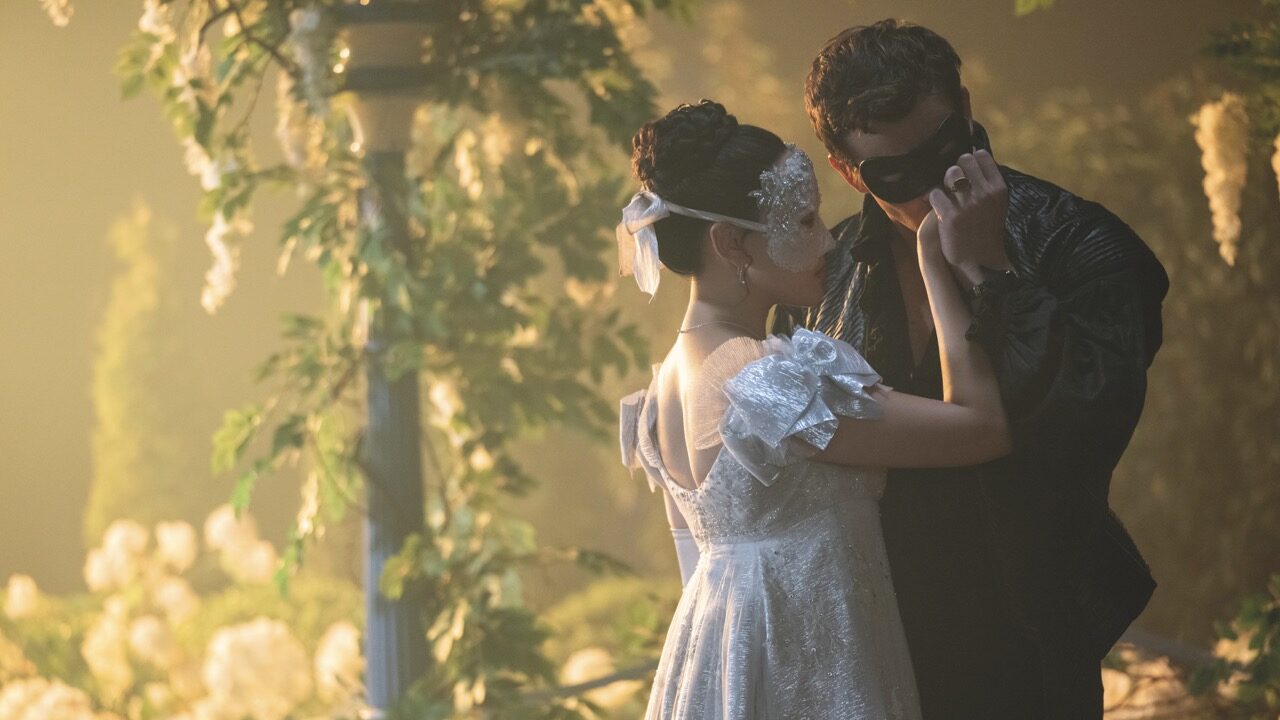
A blade of light falls across Sophie’s eye as she watches Benedict through the narrow gap of the door, unaware that the woman he is desperately searching for, his elusive ‘Lady in Silver’ from the masquerade ball, is just inches away. Her friend urges her to open the door, to step into the light and reveal her identity, but the frame holds her back. The power of the moment lies in that restraint: a sliver of vision, a fraction of possibility.
Robbins and Mahmood leveraged this visual metaphor. “How do we tell the upstairs-downstairs story subliminally, without beating people over the head with it?” Robbins asks.
The season repeats this idea throughout – such as a key staircase scene which deployed split camera moves and framing that placed the characters on opposite vertical planes.
Season 4 also reintroduced flashbacks, particularly to Sophie’s childhood, and Robbins deliberately used this as a chance to break from the show’s clean aesthetic.
“We ended up using Petzval lenses. They are really funky lenses, giving you a weird, swirly-edge look.” Paired with a dedicated LUT, the flashbacks are slightly desaturated with select colours (especially reds) pulled forward.
The show’s repeated international success has enabled a generous budget, and as a result Robbins and the production team were treated to a large new backlot, inspired by previous filming locations from Bath.
“It’s massive,” Robbins enthuses. “A huge, circular area that has several different streets within it.”
When winter weather posed certain challenges, the backlot provided the production with much-needed flexibility, now and in the long term. “If they hope to do all eight books,” she adds, “then it means we have a backlot ready for shooting for the next four years.”
Season 4 of Bridgerton proves even the most established visual languages can grow. By stepping below stairs, the show finds innovative new ways to use light and movement. And, dear reader, it may be Bridgerton’s most captivating approach yet.
This story appears in the February/March 2026 issue of Definition