
Precision in motion at Broadley Studio
Posted on Feb 17, 2026 by Admin
Broadley Studio elevates green screen virtual production with MRMC and Brainstorm
Advertisement feature
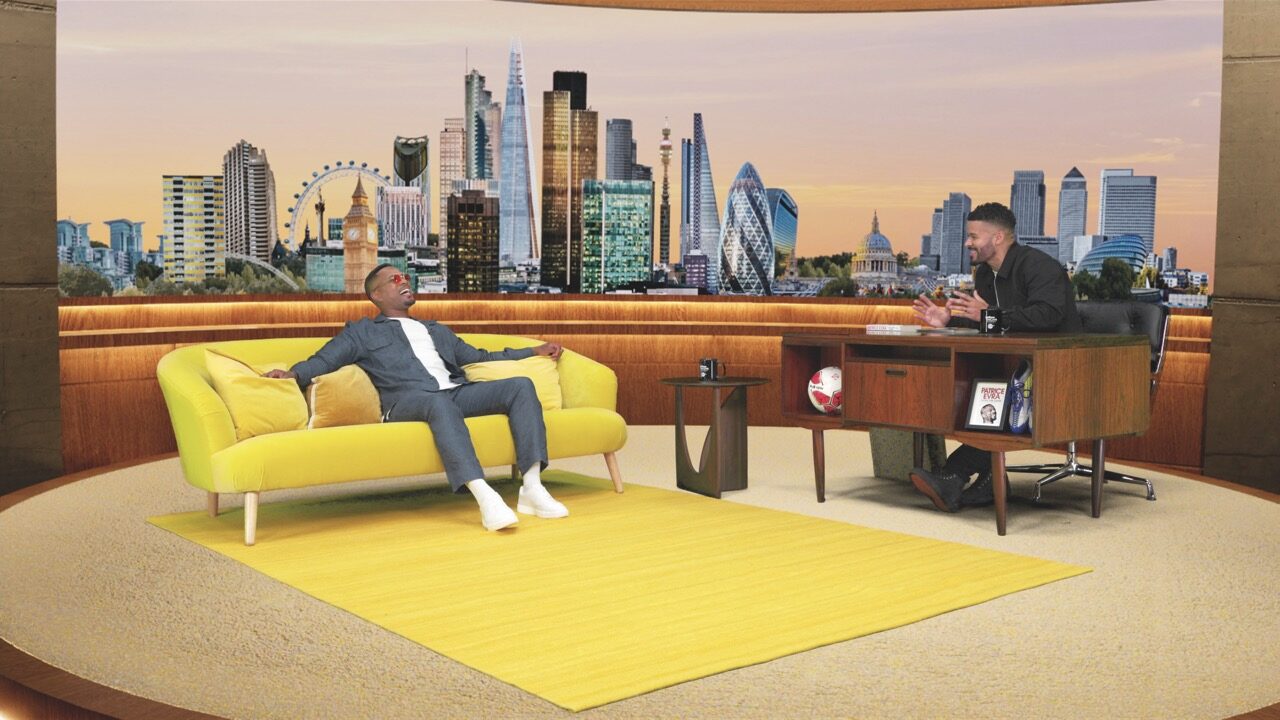
Virtual production isn’t a trend we’ve adopted, it’s a workflow we’ve built for creators who need speed without losing craft. While the industry debates LED walls, we stay focused on what actually delivers: control, repeatability and clean composites on a real schedule. When a shoot needs a hero film, cutdowns, 9:16 socials and live output, precision is the difference between ‘nearly’ and ’nailed’.
Broadley is a broadcast green screen studio in central London. We’ve built our virtual production workflow all around flexibility: capturing believable, clean composites in real time when it helps performance and decision-making, and keeping full freedom to refine in post when the brief demands.
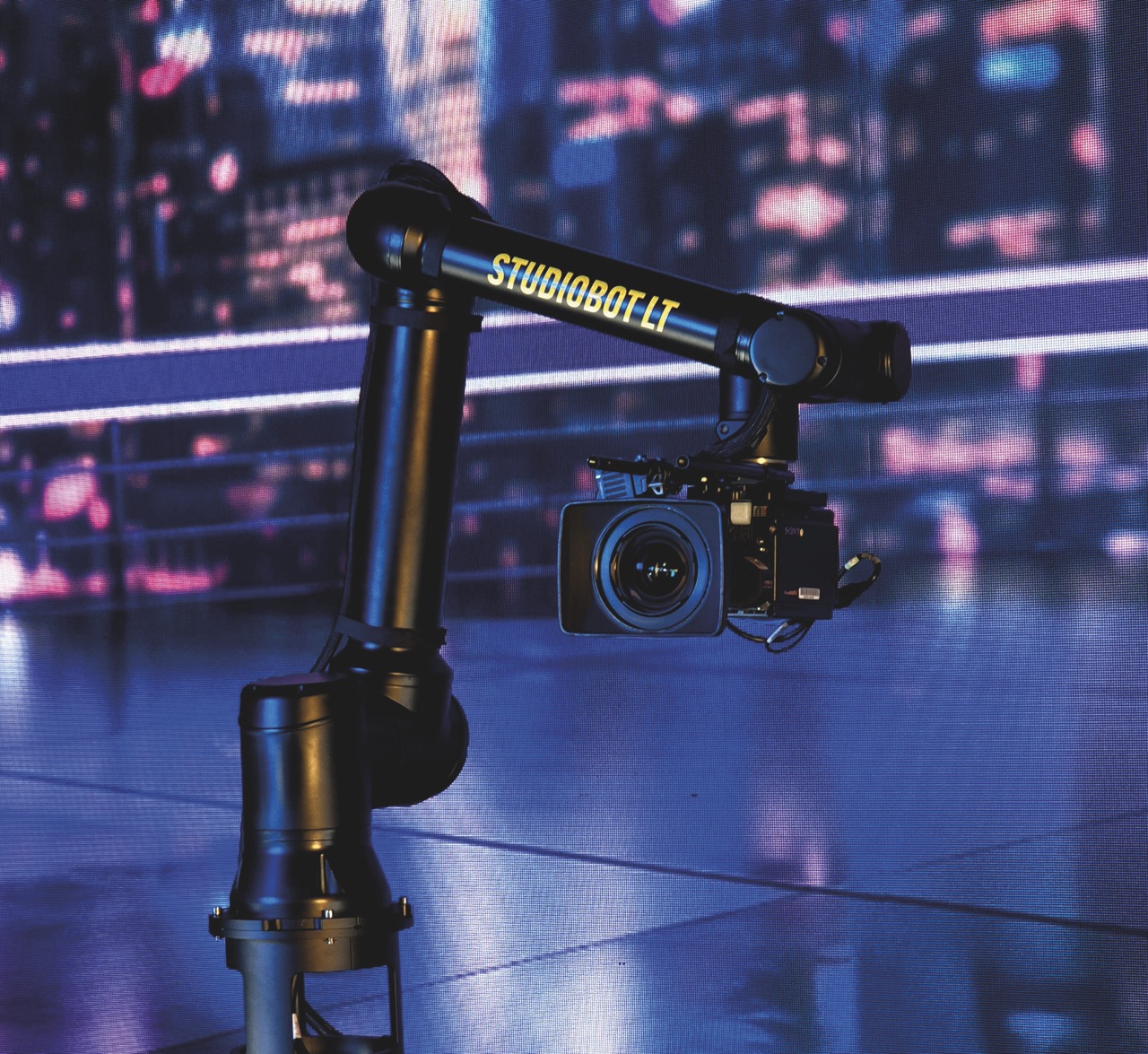
The next step in the virtual production workflow arrives this February: an MRMC StudioBot LT to complement our existing 2m QRS system.
Why a six-axis robot arm really matters
Most motion control begins with linear moves, which is great for certain shots, but limiting for others. A six-axis arm changes the grammar. It can boom, arc, roll and translate in one fluid movement – and then do it all again with frame-accurate repeatability.
That is not just for VFX shots. It is valuable any time you want to refine a camera move without losing continuity: from multi-pass plates and product variations to a performance capture or live output that still needs options for cutdowns.
The StudioBot LT also supports push motion control: you can physically guide the arm to explore a move, then lock keyframes and iterate quickly. For directors and DOPs, it turns ‘let’s try one more version’ from a time penalty into a normal part of the process.
Bringing robotics into the virtual world
Robotics become truly useful in virtual production when tracking and rendering keep up. We run Brainstorm InfinitySet to drive real-time environments, using FreeD data from the robot and our Sony cameras. Paired with Blackmagic Ultimatte 12G keying, the goal is simple: stable parallax, clean edges and a composite that holds together as the camera moves.
Using green screen over LED volumes keeps this approach cost-efficient and sustainable, while giving us fine control over lighting choices, backgrounds and final treatment.
What it changes on set
The benefit isn’t ‘more technology’. It’s fewer compromises:
- Creative freedom: Complex moves are achievable and repeatable, even with interchangeable lenses and cameras.
- Reliability: Repeatable camera paths reduce guesswork for VFX, graphics and editorial work.
- Efficiency: Once a move is built, you can run it for multiple passes, formats and versions without starting from scratch.
The StudioBot LT doesn’t replace cinematography – it supports it. It’s a precision tool to make experimentation safer and delivery faster.
Find out how Broadley Studio can support your next project at broadley.tv
This article appears in the February/March 2026 issue of Definition