
Review: RED V-RAPTOR XE
Posted on Jan 15, 2026 by Admin
Cinematographers Nick Morris and Ailsa Aikoa join forces to put the new RED camera through its paces
Our reviewers
Ailsa Aikoa
Ailsa Aikoa is a cinematographer working across narrative film, music video and commercial projects. Her work includes award-selected shorts such as Blood (Tribeca) and music videos for artists including Wet Leg, alongside fashion and branded campaigns for clients such as Vivienne Westwood and Jimmy Choo.
Nick Morris
Nick Morris is a DOP whose career spans film, television drama and high-end commercials. His lensing work includes the acclaimed Pillion (2025) and Sweetpea, which earned him a BAFTA nomination for photography and lighting. He’s also served as cinematographer on commercials for brands including McDonalds, Tommy Hilfiger and Nike.


RED V-RAPTOR XE: A dual-perspective test by two cinematographers
Definition offered us the opportunity to have a play with the new RED V-RAPTOR XE, and we jumped at the chance! As two cinematographers working largely in different worlds, we inevitably approached our review from slightly different perspectives. Nick predominantly shoots HETV and feature films, while Ailsa works across commercials, music videos and short films. Those differing priorities revealed both strengths and weaknesses in the camera.
We tested the V-RAPTOR XE extensively: first in a controlled test room alongside a line-up of other cinema cameras (ARRI ALEXA LF, ARRI ALEXA 35, Sony VENICE and DJI Ronin 4D), and then again in a real-world setting.
Build, size and handling
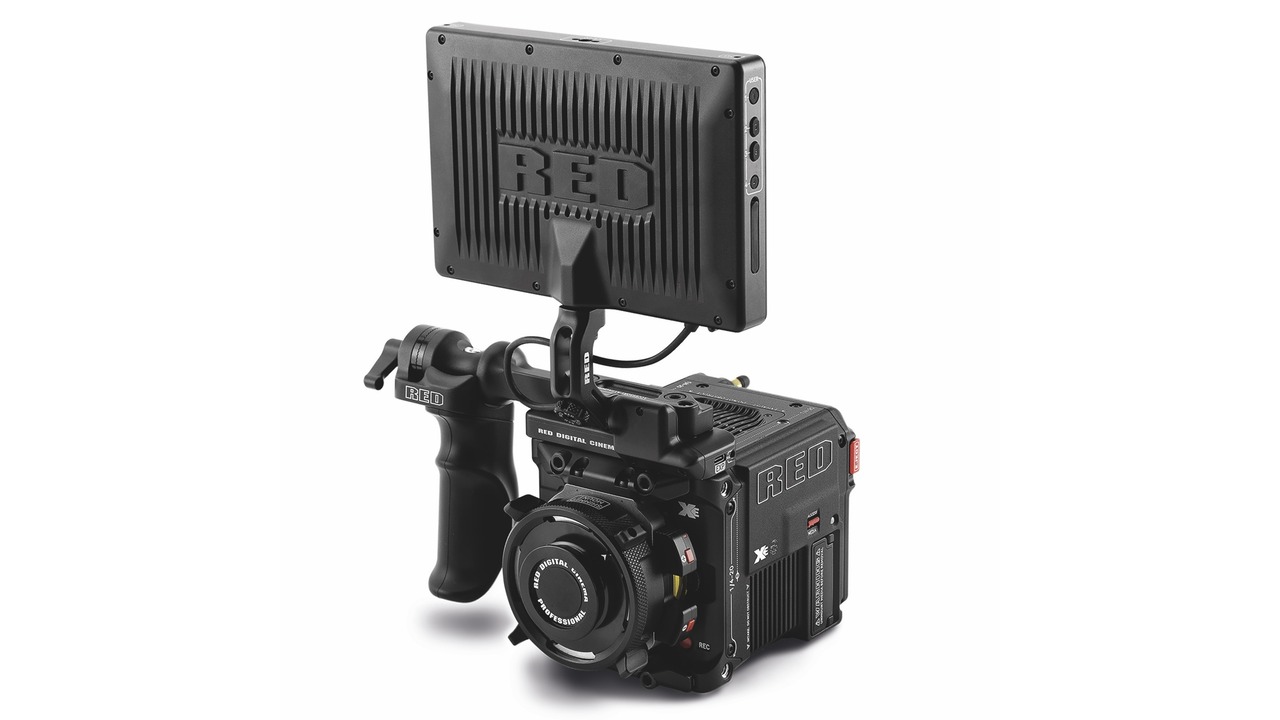
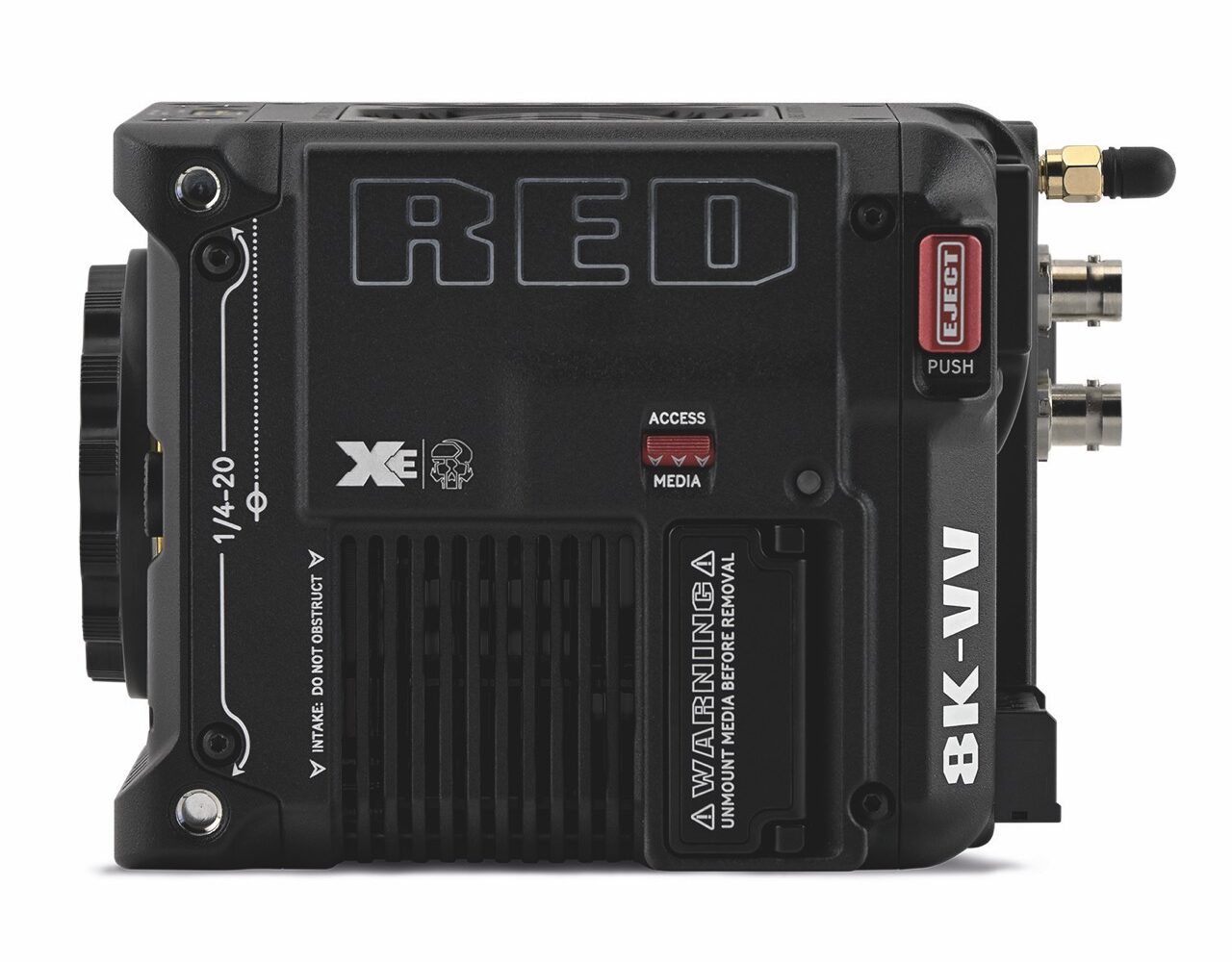
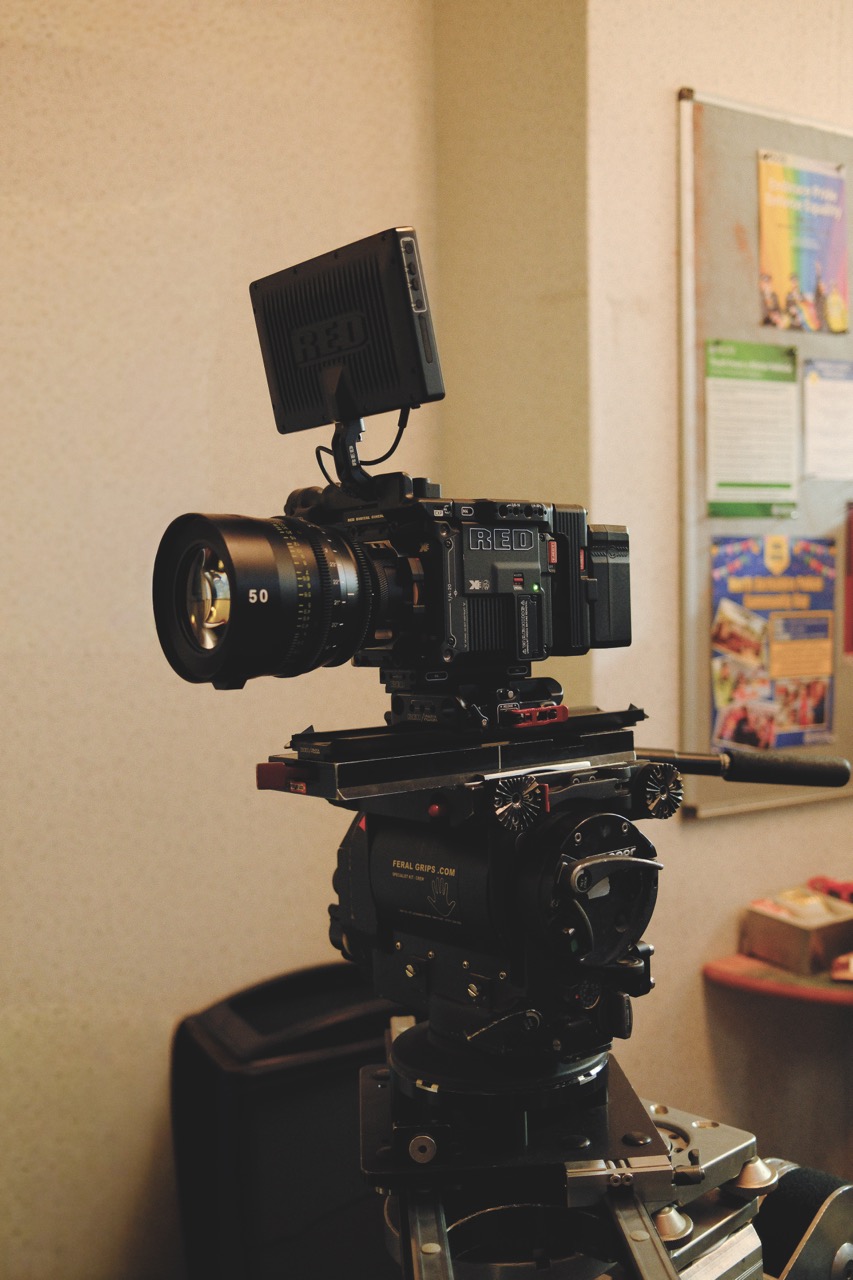
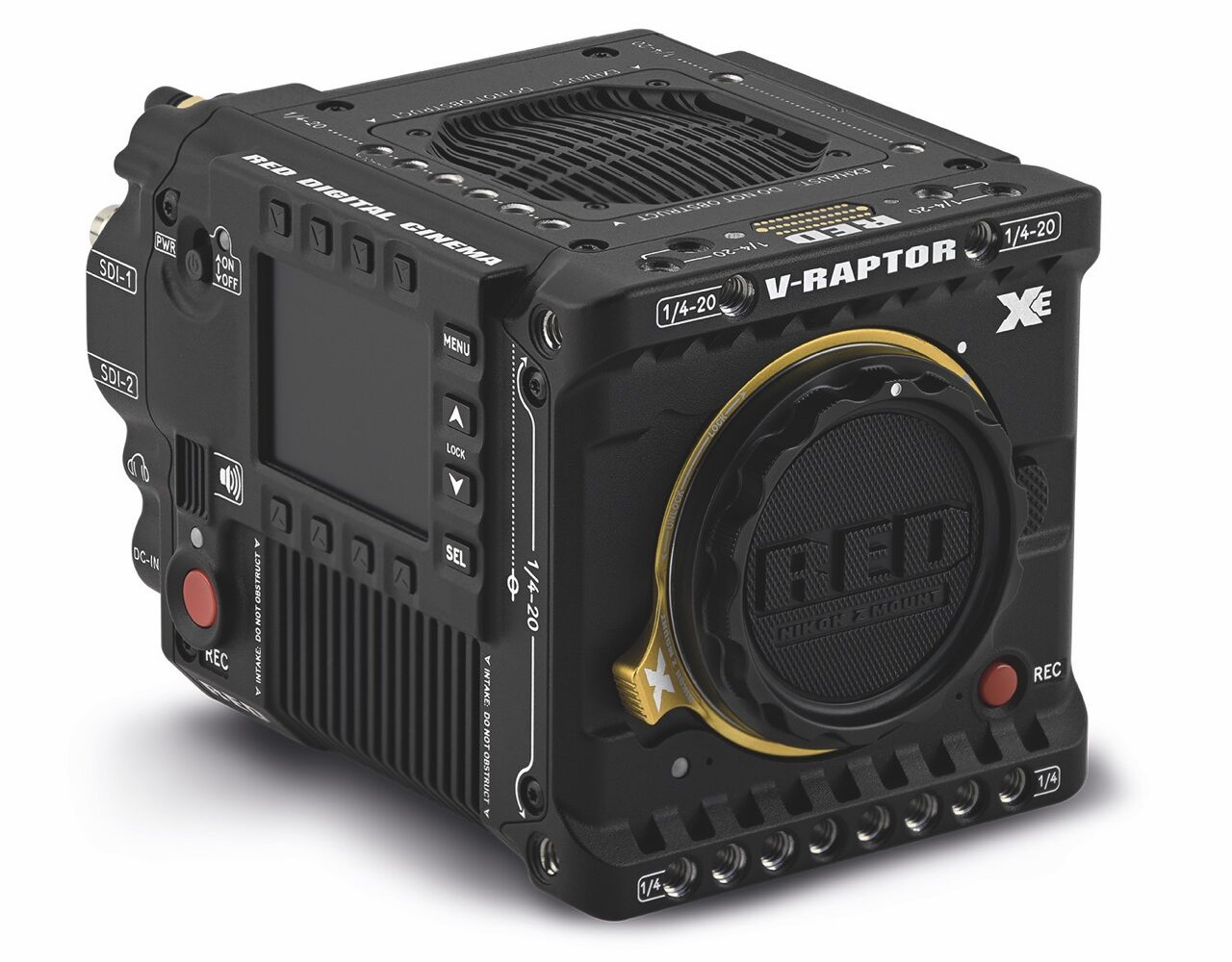
Our first impression was its compactness. Stripped back, the XE is barely larger than its KOMODO-X cousin. Set up with the DSMC3 RED Touch 7-inch LCD, a mini V-Mount battery and a TLS rehoused Canon FD prime, the camera becomes a remarkably small package, given its specifications. Adding the RED trigger handle makes it feel like a tool you genuinely want to pick up and shoot with, which will appeal significantly to self-shooters and shooting directors.
Nick, as an avid gimbal user, noted how many options that allows for, especially having recently trialled a very small version of this rig previously on a music promo, balancing the higher-spec V-RAPTOR [X] on a tiny DJI RS4 gimbal for stabilised shots in very small spaces with great results. Other systems targeting this very small-footprint market – like the VENICE Rialto Mini, for example – are useful, but being able to run the XE on a prosumer gimbal without a bulky fibre-optic tether is a huge plus. That said, the very light body can work against you, as heavier lenses make balancing delicate, often requiring counterweights.
The small box format is great for flexibility too, the RED plate system that came with the test kit was assembled very quickly and easily, all with a single allen key, and allowed for the camera to be stripped back to basics for gimbals or car rigs, or built up for studio builds. Both of us noted the value of the integrated Expander Blade, which provides genlock (BNC), 5-pin timecode, R/S 3-pin and RED CTRL 4-pin. It’s still frustrating that the 3-pin Fischer can’t provide power, meaning lens motors require separate power and run/stop cables.
The Electronic ND Z-PL mount adapter, however, was outstanding – rock solid, with none of the play seen in earlier PL–RF adapters. The variable ND in precise 1/3-stop increments is a huge practical win, especially for a system with no internal NDs. It feels like you can be very precise with your exposure while maintaining exactly the shooting stop that you want creatively, all while saving a lot of time on-set without glass filters. The change from the clear filter cartridge to the variable ND filter in the mount took moments, although both of us dreamed of a future where the mount might contain both and be switchable via a button like the V-RAPTOR XL [X] camera, or other high-end cinema cameras with motorised internal ND systems. One relatively major downside of the variable ND to note though is that it doesn’t work with all lenses, as lenses with deeper rear elements will foul on the glass filters in the mount.
The DSMC3 RED Touch 7-inch LCD on-board monitor looks excellent, with great contrast and brightness, and the camera control via touchscreen is intuitive. But neither of us loved its RMI cable, which carries image, power and control. The screen feels designed to live in one top-mounted position, which we found limiting considering how often we want to reposition our own onboards on any given shoot day. In testing we found that the cable felt vulnerable, and we occasionally lost connection, which could be stressful on a fast-paced set.
Workflow, UI and recording options
Both of us already own RED KOMODOs, so the workflow was immediately familiar. Our tests were recorded in full 8K 17:9 (8192×4320) at MQ. The MQ compression has always been palatable except in extreme circumstances, like VFX or green-screen-heavy work, and keeps data rates in line with competing systems: around 55 minutes per 1TB at 8K MQ R3D RAW 16:9, compared to the ALEXA Mini LF’s 51 minutes in LF 3.8K 16:9 ARRIRAW. Bump up to HQ and recording time drops to only 39 mins per 1TB card.
The UI is functional and much improved over previous RED systems, and the assistant side menu window makes for very comfortable on-set adjustments. It would be interesting to see how much can be controlled from a focus puller’s handset, particularly whether remote adjustment of the electronic ND is supported.
For use as a DOP, one area that takes a little adjustment is the false colour and exposure tools. It’s great that the top LCD user buttons can be assigned to quickly bring up false colour, and having both ‘Exposure’ (based on the LOG image) and ‘Video’ modes (affected by LUT and camera settings) gives useful flexibility. In practice, though, we personally find an ARRI-style false colour – showing middle grey, one stop over and approach-to-clipping zones – more intuitive for making fast exposure decisions on-set. As heavy users of in-camera LUTs, we like being able to judge skin tone exposure while also monitoring true RAW highlight clipping, which the current system requires a bit more familiarisation with. That said, many experienced RED users will be perfectly comfortable with this once dialled into their workflow.
The revised sensor-mode menu – grouped into 8K VV, 8K Anamorphic, S35 6K/S35 Anamorphic and S16 3K – is a welcome improvement. That said, we’d personally prefer a workflow where you first choose (a) spherical or anamorphic squeeze (1.0, 1.3, 1.5, 2x, etc), then (b) aspect ratio (17:9, 16:9, 2.35:1, etc) and finally (c) available resolutions and crops (8K, 7K, 6K, etc). In practice, lens choice and aspect ratio tend to stay consistent across a project, whereas resolution often changes to take advantage of different frame-rate options at various sensor crops. It’s also worth noting that, on RED systems, lowering resolution results in a sensor crop rather than downsampling, which can affect field of view and, at more extreme crops, have some impact on image quality. It would be great to see an option in future systems to prioritise higher frame rates via compression before cropping, where possible.
Image quality
This is where the V-RAPTOR XE shines. The sensor size offers a beautiful cinematic richness and excellent depth-of-field control. Due to its 17:9 native sensor, it is wider than most competing full-frame options, revealing more of a lens’s image circle, which brings new character details to even quite familiar lenses. It also maximises the ‘LF’ feel of the images, with an even wider field of view forcing cinematographers to lens up to retain the same framing compared to Super 35 – or even other full-frame cameras – which naturally leads to a shallower depth-of-field.
Of course, the many sensor options mean the camera can be shot in S35, S16 or practically any crop mode in between!
Dynamic range & highlight handling
The sensor has a very graceful highlight roll-off, and transitions from bright points into midtones rarely feel harsh or digital. In real-world shooting, the shadows feel very natural, not clipped or crunchy. Highlight retention and roll-off is a particular sticking point for both of us and factors heavily into any camera choice. In fact it’s often the thing that separates the wheat from the chaff in an incredibly saturated market of excellent cameras. We routinely turn to ARRI cameras for specifically this reason, as they tend to excel in retention of bright details in windows and lampshades in a way that other cameras just cannot compete with.
But in steps the RAPTOR! From our tests, the dynamic range and highlight retention of the V-RAPTOR XE were very comparable to the ARRI ALEXA Mini LF. The website claims 17+ stops of range, which would rival even the exceptional ALEXA 35. In our tests however, the RAPTOR fell a little short of that and needed to be underexposed by at least two stops to get close to the same amazing highlight retention. With the ALEXA 35, it was actually quite hard to create a test environment that clipped it in both highlights and shadows simultaneously. Putting the RAPTOR into the same lighting scenario tended to lead to blown highlights. So holding the circa £13,000 V-RAPTOR XE (Z mount, body only) against the circa £60,000 (body only) ALEXA 35 has to be taken into account as exceptionally tough competition.
In practice, the dynamic range of the ALEXA Mini LF is more of an appropriate comparison, and the V-RAPTOR XE holds up in this arena, with almost identical results in the highlights and shadows.
We found two things in our more technical under and overexposure tests and high ISO stress tests. Firstly, the camera holds up exceptionally well when properly exposed at ISO 3200 and 6400, rivalling (or often surpassing) most dual-native ISO cameras for in-camera noise and colour retention, and certainly beating the Mini LF in a low-light shoot-out. However, the tests were not so good when it came to recovering poorly exposed images. Tests shot three stops underexposed still felt very clean when brought back up in post, but the image feels markedly noisy at four stops under. Overexposure was less forgiving. Between one and three stops over the image was much cleaner and provided richer colours than when properly exposed. However, highlights quite quickly suffer and go flat and unrecoverable in large areas of the image at three stops over or beyond. The ALEXA, by contrast, handles rough treatment markedly better, with images remaining recoverable a few stops past these limits in both directions.
Highlight roll-off is an area of particular excellence for the XE. Some cameras hit absolute white in an ugly way, whereas the RAPTOR managed to bridge the gap between clipped and detailed in a way that was nuanced and less obvious. That’s a real win in our books; cameras at lower price points tend to really fall down in this area, and need either dramatic underexposure or careful treatment in post. Any work-horse camera for us needs to deliver here more than anywhere, as 95% of anything we shoot is intended to look good on the day – and we tend to make our exposure choices on-set rather than relying on things being pulled around dramatically in post.
Colour
Colour reproduction with the in-built Rec. 709 display settings (pleasingly adjustable via the Output Tone Map and Highlight Roll-off settings) is rich and cinematic, but we both tend to avoid in-camera Rec. 709, and instead largely rely on our own custom-built LUTs. In testing it’s easy to be persuaded by different manufacturers’ flavours of Rec. 709 too, so we brought all of the footage into Resolve and graded it from the LOG images. Side by side, the ALEXAs and RED become largely indistinguishable, and subtle elements like bias to warm/cool tones or clipped highlights can make it become more obvious. Generally speaking, the V-RAPTOR XE looked fantastic. With rich and varied skin tones, little to no colour shift through shadows and highlights, deeply saturated and varied colours (especially overexposed by a stop), certainly neither of us felt like we could discount the camera from any future productions on its image.
Diverging perspectives: Long-form vs commercial work
And here is where our reviews started to differ…
Nick, with a head predominantly in drama and narrative, felt like the camera had very few pitfalls. For a hectic TV schedule, the form factor was fantastic, the build user friendly and adaptable, the image beautiful and comparable to cameras hugely more expensive, and the more limited slow-motion capabilities (60fps at 8K, 80fps at 6K, 120fps at 4K and 240fps at 2K) compared to the souped-up RAPTOR X very rarely being a drawback in day-to-day film and TV. Plus, with 95% of long-form projects shooting an aspect ratio between 16:9 and 2.35:1, the 17:9 sensor offers few drawbacks. Certainly, Nick felt that if he could save budget on cheaper XE camera bodies that might free up money elsewhere on a film or TV show, he’d be very tempted to do so for future projects.
Ailsa, working across commercials, sees a different landscape. Multiple deliverables – often 16:9 and 9:16 from the same shoot – are vastly easier with a 3:2 sensor like those found on many competitors. In the modern commercial world where social deliverables weigh equally with TVC counterparts, aspect-ratio flexibility can matter as much as colour science or frame rates. When the V-RAPTOR XE competes head to head with Sony VENICE and ALEXA LF in image quality, these practical considerations easily become the tiebreaker. This is also where the more expensive V-RAPTOR [X] creates a clearer niche. Its significantly higher frame-rate options make it a lot more suitable for specialist commercial work, where extreme slow motion is often very valuable. Once the V-RAPTOR XE drops to its more modest FPS capabilities, however, it loses some of that niche appeal and ends up becoming more of a generalist tool.
Conclusion
The RED V-RAPTOR XE is a proper powerhouse at a seriously alluring price point. It punches well above its weight and is comparable to some of the real workhorses of the industry. At around half the price of its higher spec sibling, the V-RAPTOR [X], the compromises in high frame rates and access to the Global Vision range of features feel like a remarkably good deal. Without those features, it still competes readily with the ALEXA Mini LFs and Sony VENICEs of this world for specs and holds its own in image quality. There are a few foibles, and choosing the right selection of durable accessories is essential, as is learning the specificities of the menus and tools. It feels clearly marketed to owner-operators and self-shooters, but don’t sleep on it for larger sets. It is arguably more suited to drama rather than commercials, and we both expect it will be particularly well received in indie features.
This article appears in the February/March 2026 issue of Definition