
Standout cinematography 2025
Posted on Dec 9, 2025 by Admin
The Definition team round up their top films and shows of the year, celebrating the ideas, talent and tech that made them shine
The Ballad of Wallis Island
Oliver Webb
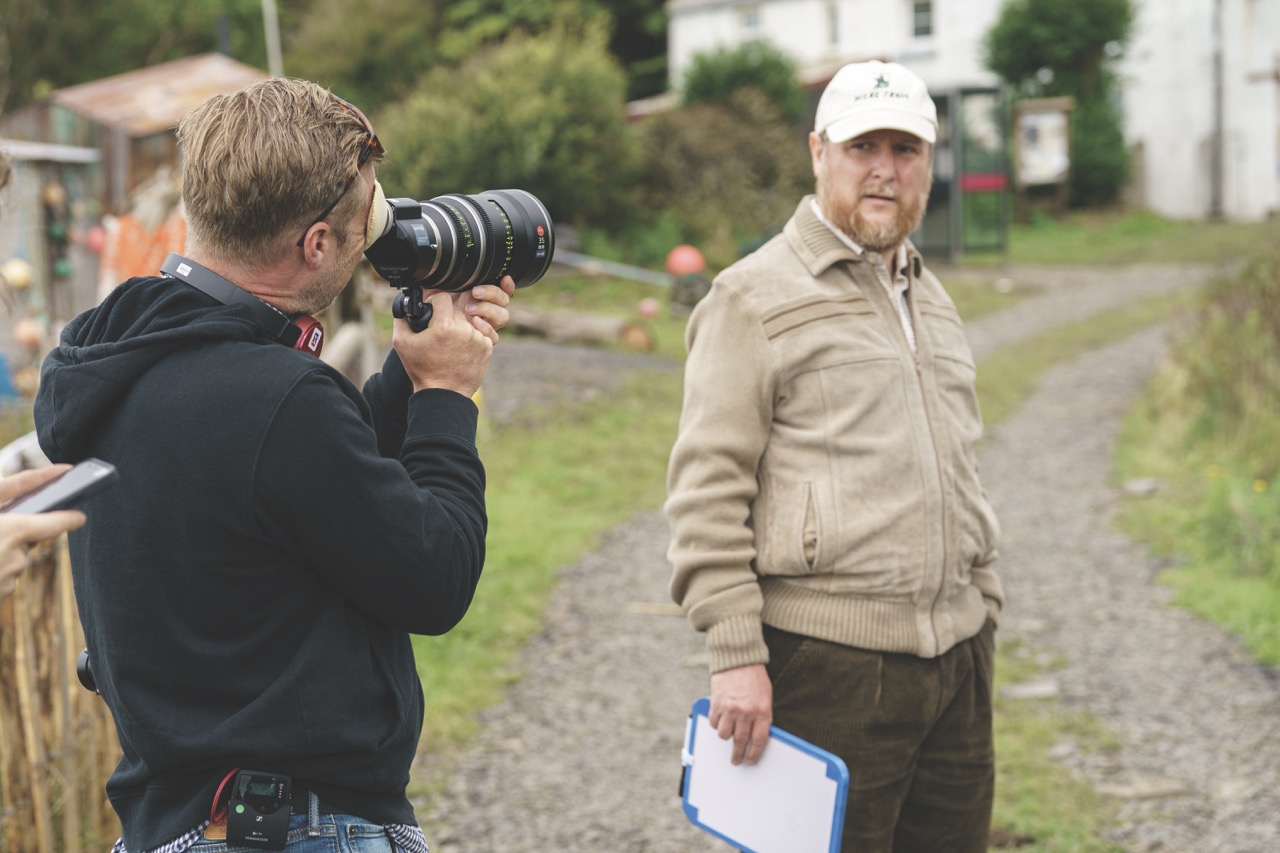
Not only did The Ballad of Wallis Island give us a range of catchy folk songs like Give Your Love and Slip Away, it’s also a moving tale of past loves and heartbreak. Originally a 2007 short film (The One and Only Herb McGwyer Plays Wallis Island) by director James Griffiths, The Ballad of Wallis Island was shot by DOP G Magni Ágústsson, ÍKS. Ágústsson opted for the ARRI ALEXA 35 with LEITZ PRIME large format lenses to shoot the film and used natural light sources to portray the beautiful, rugged island landscapes. Wales acted as the fictional island with the main issues involving the erratic weather. Although, ultimately this was a blessing in disguise as the greys and blacks contrasted with the hard light, resulting in a moody, atmospheric backdrop to the film’s poignant story.
Adolescence
Nicola Foley
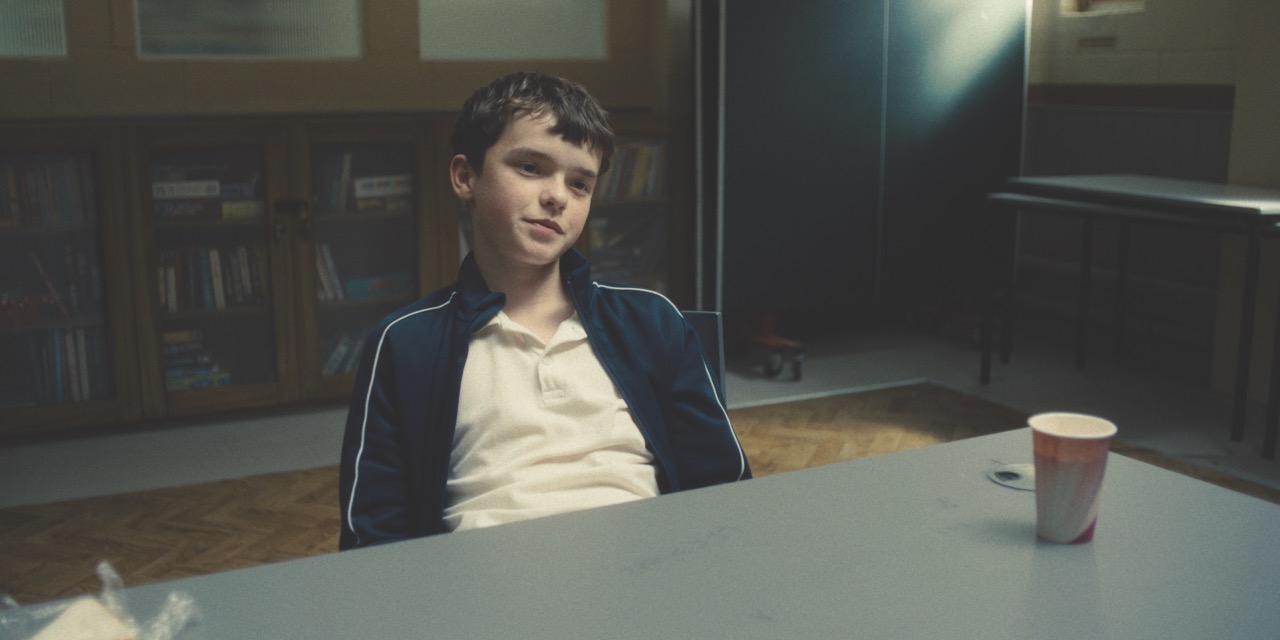
Reuniting the Boiling Point team of Jack Thorne (writer), Stephen Graham (co-writer/exec producer/actor), Philip Barantini (director) and Matthew Lewis (DOP), Adolescence made headlines as much for its filmmaking approach as its harrowing story. As is well known, each episode was shot in a single, continuous take – but it never feels like a gimmick or the filmmakers showing off. In fact, it suits Adolescence’s unflinching storytelling perfectly – not allowing the viewer a moment to relax as the devastating narrative unfolds.
The team battled signal issues, technical failures and the relentless physical challenge of capturing the performances in full each time. So many things could go wrong and kill a take – but thanks to incredible talent behind and in front of the camera, military-level coordination and some important pieces of kit, they pulled it off to make (IMHO) the best telly of the year. When I interviewed Matthew Lewis earlier this year, he told me that the shoot simply wouldn’t have been possible without DJI’s Ronin 4D. This prosumer camera might be a surprising choice, but its small form factor and self-stabilisation allowed maximum agility. They could run with it at full sprint, slap it on a drone, pass it through windows and it’d stay perfectly steady the whole time. It also allowed the use of a variable ND filter, which made exposure control more manageable.
For Lewis, Adolescence was also a lesson in how little you need to make a shot look good from a lighting perspective. He and gaffer Max Hodgkinson got clever with blocking and using practical and natural light, enabling the quick-paced production to keep rolling and looking great, while the VELVET KOSMOS 400 colour fresnel fixtures provided hard-light sources. With its unbelievable ambition, complex choreography and blistering performances, this show raised the bar and showed how powerful a well-executed oner can be. It deserves all the awards that come its way.
Wicked: For Good
Katie Kasperson
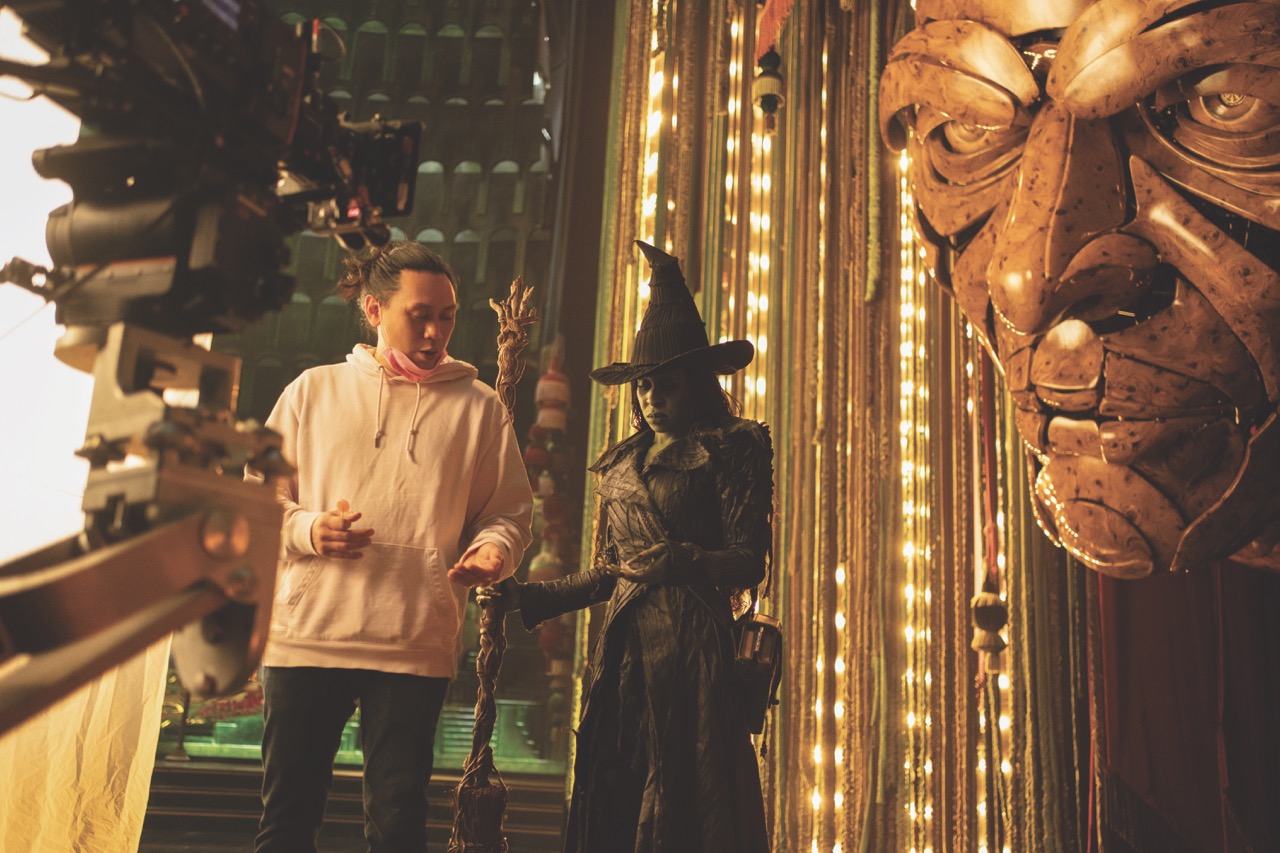
Based on a long string of The Wonderful Wizard of Oz adaptations, Jon M Chu’s Wicked: For Good completes the story of Elphaba and Glinda, two witches and best friends who’ve been wedged apart. Like the 1900 L Frank Baum book, the 1939 film and 2003 Broadway musical, Wicked: For Good is ripe with all the colours of the rainbow – pink and green holding extra meaning, of course.
DOP on both Wicked: For Good and last year’s Wicked, Alice Brooks, ASC worked with Universal Production Services to light each scene in a different shade. UPS provided nearly 10,000 lights – including over 300 Cineo Quantum IIs – to cover 17 stages at Sky Studios Elstree.
The resulting film delivers all the magic and emotion of the original book, movie and musical combined. From the Emerald City of Oz to the enchanted Ozian forest and even down the yellow brick road to Munchkinland, Brooks creates a visual language that stays true to its predecessors while expanding the canon. She does so with an ARRI ALEXA 65, alternating between two Panavision prototype lenses – one for Glinda’s bubbly, picture-perfect world and the other for Elphaba’s raw reality.
While Wicked: For Good follows on from Wicked, it’s heavier both thematically and visually. The dire moments are darker, the celebrations grander and the stakes higher; Wicked: For Good is a visual spectacle that deserves to be seen on the big screen.
Severance
Katie Kasperson
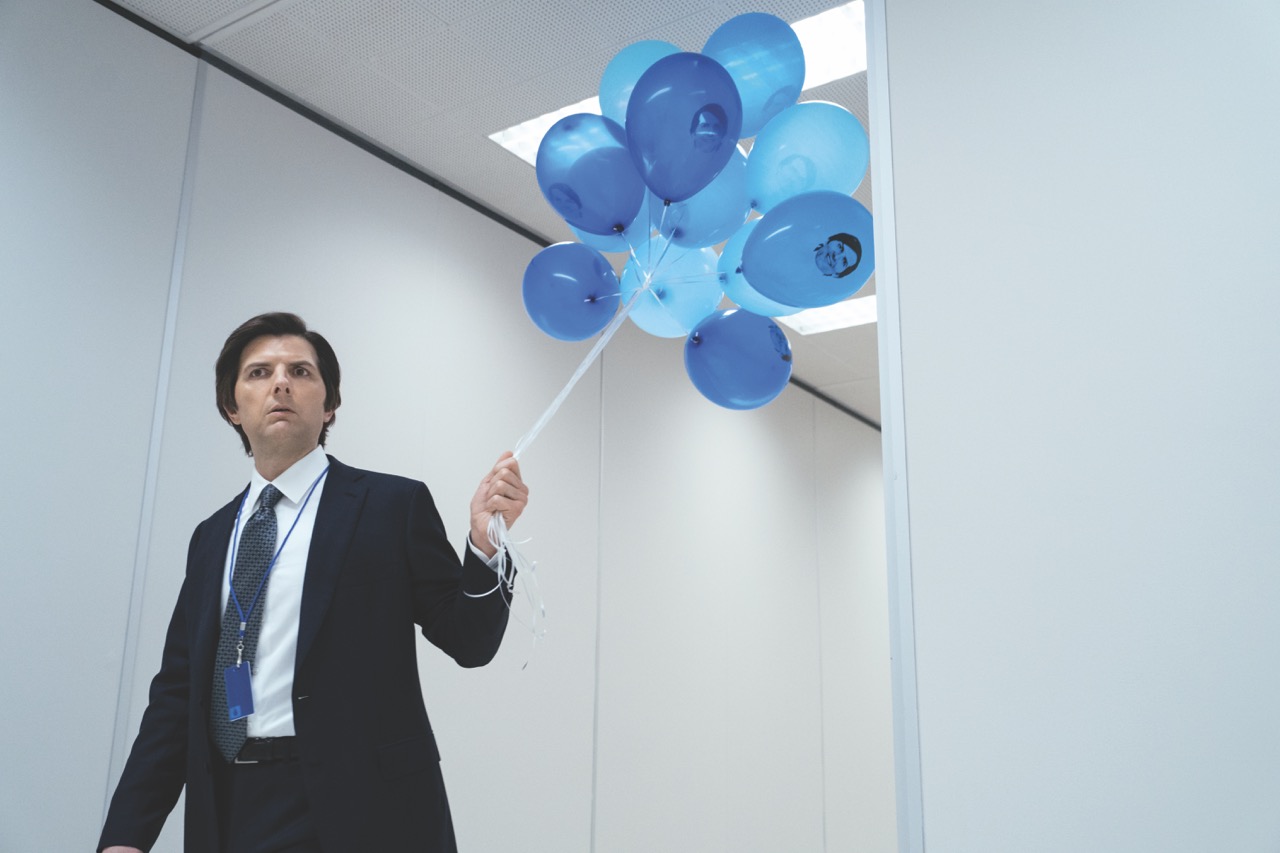
On its surface, Severance is an office drama set primarily in a sterile, white-walled, windowless room, yet it’s one of the most visually compelling, technically precise TV shows of late. Led by Jessica Lee Gagné, the series’ cinematography isn’t about showing off what the team can do (and they can do a whole lot); every decision has been carefully considered, every camera movement orchestrated. Paying homage to everything from French New Wave cinema to Alfred Hitchcock to The Twilight Zone, Severance is truly a treat for the eyes as much as the mind.
Key to Severance is the innie-outie dichotomy; the protagonists head down to the severed floor at Lumon, where they do work that is ‘mysterious and important’ – or so they are told. When they leave, they forget everything, and when they clock in the next morning, vice versa. They live two lives, and the show explores the practicalities and repercussions of this dual existence.
To do so, the show’s DOPs define the innie and outie worlds as aesthetically distinct. They play with lighting, lens choice and colour theory to set the two apart, giving viewers a visual language that’s vital to their understanding. The DOPs also utilise ultra-wide shots, symmetry, extreme close-ups and other framing techniques to establish the show’s unnerving tone. There’s an element of surveillance at all times, and the camerawork succeeds at speaking to that.
28 Years Later
Nicola Foley
28 years on from the events of the original film and the rage virus has destroyed the UK as we know it: a quarantined no-man’s land, left to rot. The infected have evolved since we last saw them, hunting in packs, establishing alphas and even giving birth to new (not) zombies.
Pockets of humanity endure in this hellscape, including the film’s protagonists, who’ve barricaded themselves on Holy Island. And while the infected have evolved, humanity has regressed. On Holy Island, the community valorises men as soldiers in the great fight against the infected, confines women to strict traditional roles and clings to a rose-tinted vision of Britishness. You could draw a parallel to populist politics’ nostalgia for the ‘good old days’, and perhaps a sly nod to Brexit – Britain cut off, stubbornly apart – but we’re here to talk about the cinematography, so let’s do that!
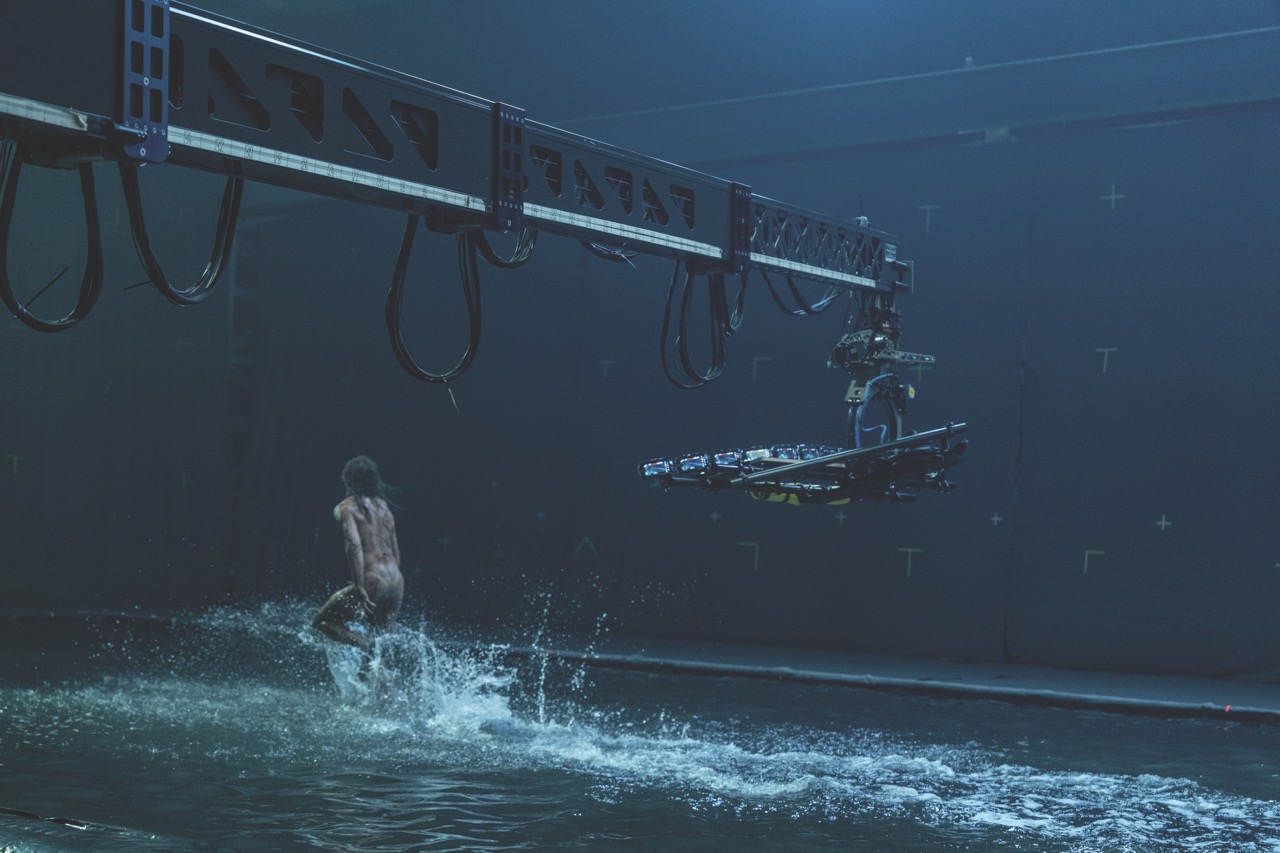
It may have cost $60 million, compared to the original’s modest £5 million budget, but this film has the heart of a low-budget indie. Much of it was shot on iPhones (albeit iPhones pimped out with high-end cine lenses and specialised rigs), proving once again that Danny Boyle is a director who thrives under constraints. The iPhone-first approach gives continuity with the visual language of the first film – grainily captured on early 2000s digital cameras – but best of all, according to Boyle and DOP Anthony Dod Mantle, it made them quick on their feet, allowing them to roam about freely and giving the cinematography a heart-in-mouth immediacy as the infected close in. With a super wide 2.76:1 aspect ratio, there’s nowhere to hide as the action unfolds, and you find yourself at once immersed and scanning the periphery for the next horror.
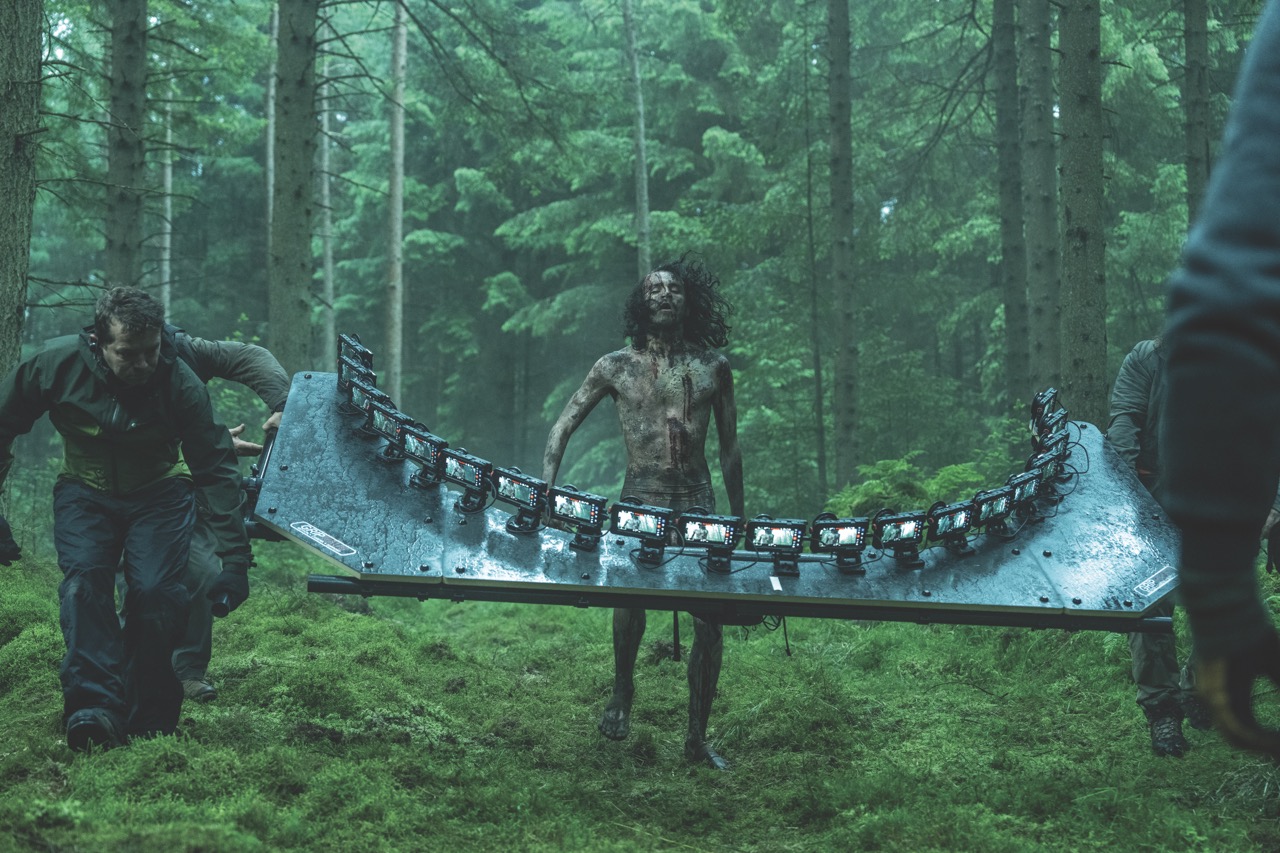
For certain sequences, as many as 20 iPhones were mounted to a board in a semicircle, forming an array that allowed them to capture key moments – like kill scenes – from multiple angles simultaneously. Inspired by The Matrix’s ‘bullet time’ shots, where Neo dodges bullets in slomo, the effect gave the filmmakers a 360° view of the violence, meaning they could be totally dynamic in the edit, slicing around the subject at will. iPhones were also attached to the actors themselves, allowing the viewer into the POV of a rage-infected zombie as it chases down humans.
Alongside all the carnage, there’s beauty in this film too. A starlit chase scene down Holy Island’s dramatic causeway against a backdrop of roiling waves is visually gorgeous, while a child tenderly placing his mother’s skull on the ‘bone temple’ as he says goodbye for the final time might well move you to tears.
As a die-hard fan of the original film, I was apprehensive about this sequel. Like many I’d been disappointed by 2007’s 28 Weeks Later – a polished, action-heavy film with major plot holes that lacked the realism and heart of its predecessor. But 28 Years Later, with its distinctly British flavour and idiosyncratic style, is the follow-up I’ve been waiting for.
Tron: Ares
Katie Kasperson
When Disney dropped Tron in 1982, it was met with mixed reviews and a meagre box office performance. Visually, it broke ground as one of the first feature films to use extensive computer-generated imagery, but it was disqualified from the Academy Awards’ visual effects category – back then, using CGI was synonymous with cheating. In the four decades since its debut, Tron has spun off an animated TV series and two sequels – including Tron: Ares, released earlier this year.
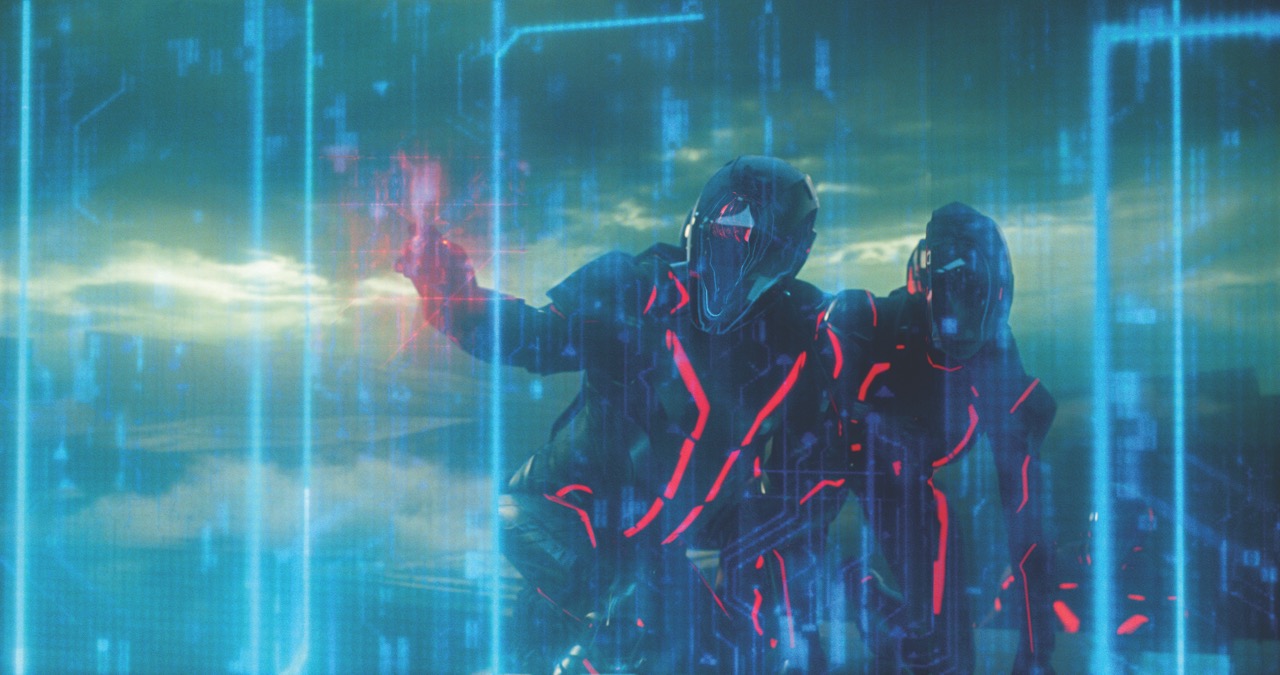
The third instalment in the Tron film trilogy, Tron: Ares is a tale of an agentic, intelligent programme designed as a soldier with superhuman strength. Instead of taking viewers into ‘the Grid’, as before, Ares brings the Grid into our reality. This has some interesting implications on the film’s visuals and raises existential questions, too: what happens when our physical and digital worlds start to merge together? (The answer: nothing good.)
Inspired by its predecessors, Tron: Ares, led by DOP Jeff Cronenweth, uses Tron’s trademark look: highly computerised images that resemble video game graphics, Light Cycles and laser beams. In Ares, we’re also treated to the titular character’s perspective: a view of the physical world through a digital lens. Filmed for IMAX with a RED camera, an Atomos Sumo HDR monitor and ARRI spherical glass, Tron: Ares blends action with science fiction. It’s a not-too-distant dystopia that uses modern filmmaking techniques, while staying true to its roots.
Jeunes Mères (Young Mothers)
Oliver Webb
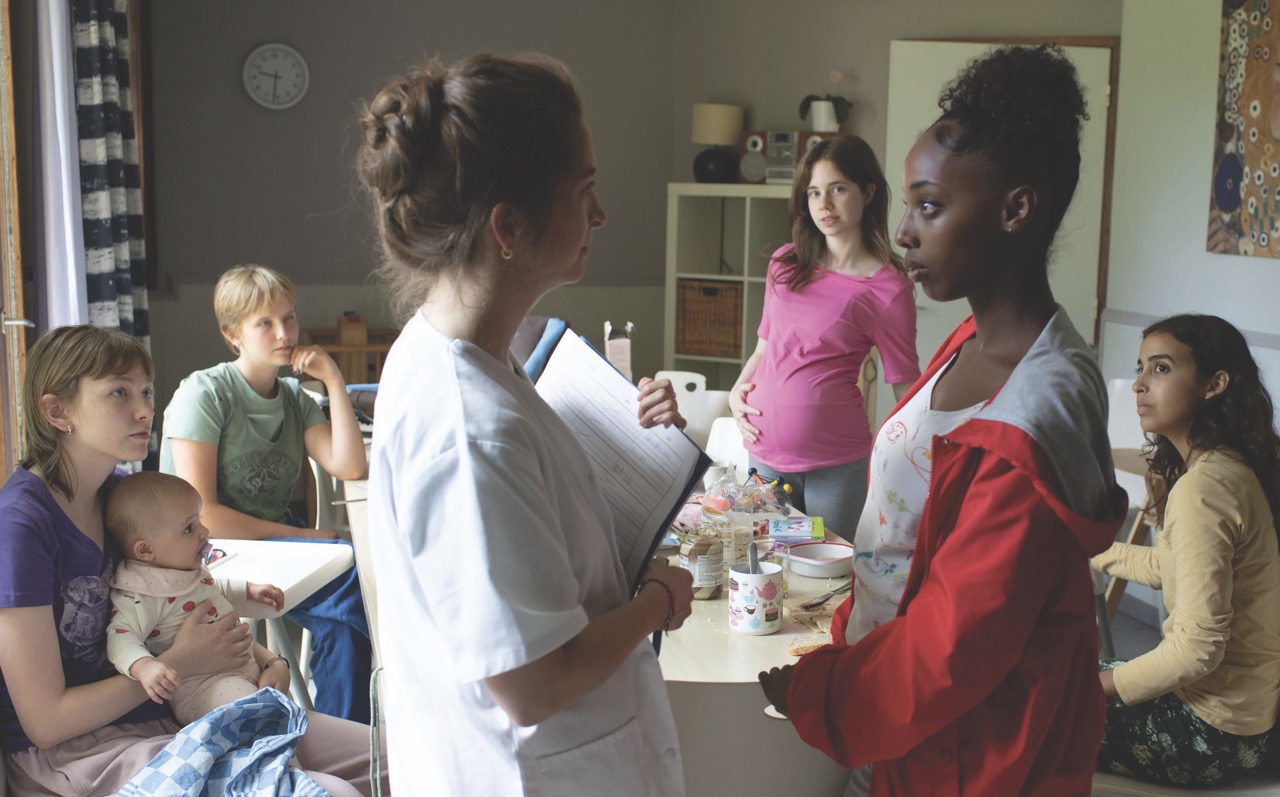
Jean-Pierre and Luc Dardenne returned to the big screen earlier this year with their latest film Young Mothers. The film follows five women: Jessica, Perla, Julie, Naïma, Ariane and their children, who are all housed in a centre for young mothers. Benoît Dervaux, SBC served as cinematographer, reuniting with the brothers after their collaboration on Tori and Lokita.
Notoriously, the Dardennes like a handheld approach and to shoot in documentary style. When I spoke to Dervaux earlier in the year, he explained that the cinema of the Dardennes is one of research in progress that takes certain aesthetic risks. “Through its own grammar – long takes, poorly positioned camera, indirect contact with actors/actresses, absence of reverse shots, naturalistic lighting – it deconstructs the codes of a language still too fixed by the industry,” he explained. “Admittedly, the harshness of this cinema does not necessarily appeal to all audiences.”
Dervaux chose RED V-RAPTOR and Leitz HUGO lenses to shoot the film. Due to their weight and size, they were the ideal solution. For Dervaux, these lenses are some of the most advantageous, alongside the ZEISS T2.1 and Ultra Primes, which he used on the Dardennes’ previous films. I’m excited for what the Dardennes and Dervaux make next.
Anemone
Katie Kasperson
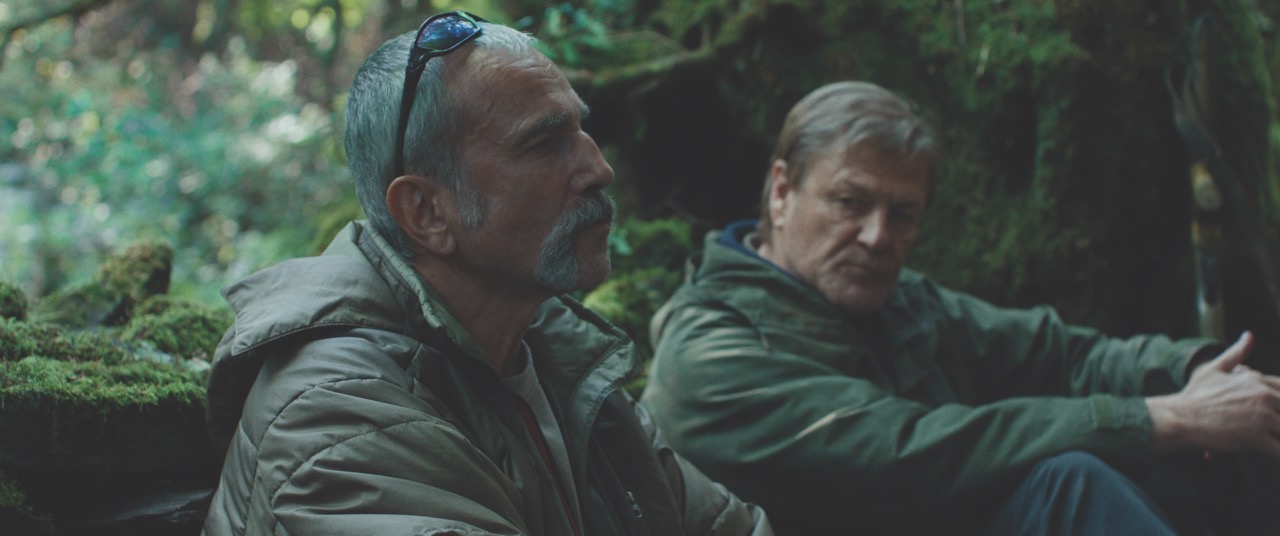
Directed by first-time feature filmmaker Ronan Day-Lewis, Anemone – starring Daniel Day-Lewis and Sean Bean – has a surrealist style all captured in camera by Ben Fordesman, BSC. Based in the isolated areas of northern England, the film follows two estranged brothers, one of whom (Day-Lewis) has exiled himself for having committed a war crime during The Troubles. Filled with purposeful silence, Anemone is told visually and explores the relationship between the world and how we see ourselves within it.
Ronan Day-Lewis’ background in studio art likely lent itself to Anemone. The film’s painterly quality is evident from the first frames; the camera pans across a child-like drawing that, less innocently, depicts death and suffering. Landscapes look ethereal, the weather supernatural, with mystical creatures also making an appearance, thus categorising the film as a work of magical realism.
It’s Fordesman, though, who holds the paintbrush, treating each frame like an individual work of art. Due to its lack of dialogue – apart from two unforgettable monologues – the story had to place an even stronger emphasis on imagery. Day-Lewis delivers a debut feature that’s visually striking, naturalistic and at times haunting; Anemone benefits from his willingness to take artistic risks.
Ballad of a Small Player
DOP James Friend gives an exclusive insight into his cinematography on this engrossing character study in the gambling mecca of Macau
After Oscar success with All Quiet on the Western Front and Conclave, director Edward Berger reunited with long-time collaborator James Friend, ASC, BSC for Ballad of a Small Player – an atmospheric character study set amid the neon glow and shady corners of Macau’s casinos. The film follows a high-stakes gambler (played by Colin Farrell), laying low to avoid his debts, and visually it’s a striking departure from Berger and Friend’s previous work. The war-torn realism of All Quiet gives way to a softer aesthetic, with Friend’s lighting choices central to the effect. Working almost entirely on location, Friend had to find ways to keep his lighting natural and fluid within Macau’s tightly controlled spaces, with Aputure’s INFINIMAT stepping up to the job.
“The idea with soft lighting is it can come from everywhere, instead of just a big, motivated source,” explains the DOP. “That allows the actors to have a stage and walk around, without pinning them to a specific mark. Usually this would come as a booklight or a bounce, but this needs multiple frames and diffusion, which requires a big footprint. Not only does this make work restrictive, we also didn’t have the space in Macau. Ballad of a Small Player is entirely shot on location and this is where the Aputure INFINIMAT came into play. It gave me the soft quality and control in a small package.”
The larger the source, the softer the light, which created issues when filming in casinos. “Not just one, but multiple casinos,” adds Friend. “And they’re all highly regulated and secured. We weren’t allowed to rig frames or obstruct the CCTV cameras, making working on the big open floors in the casinos tricky. We couldn’t turn off lights or hang diffusion to minimise the shadows cast by the spotlights either, which would be the usual workflow.”
To tackle this problem, Friend turned to a lighting manufacturer he knows well, and one with the fixture he needed: Aputure and the INFINIMAT. “Macau is like Disneyland for gambling, and you have to experience it. So along with director Edward Berger, we went there and soaked it all in, visiting the casinos and seeing what the lighting possibilities were. I found out that the INFINIMATs offered me a sizeable source with a high quality of light on just two stands.”
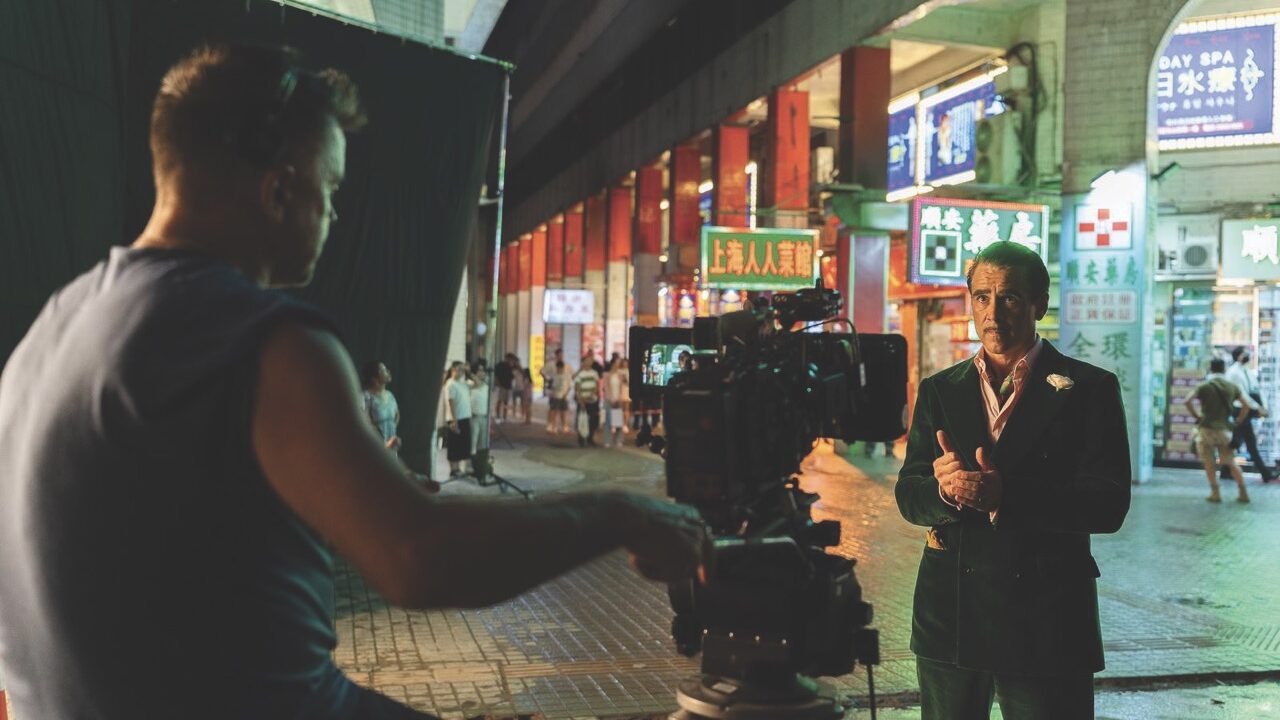
Using different sizes of the INFINIMAT, it was the large 20x20ft unit that made certain shots possible. “In a scene where Colin Farrell and Tilda Swinton are talking, the background was dead,” tells Friend. “At that stage we were so used to everything in Macau lighting up and sparkling, I felt like we needed to add something to keep the same look and feel. We put the INFINIMAT about 100ft away in the back of the shot, put a chase of colour through it and made it a non-descript, out-of-focus, beautiful highlight. It worked fantastically.”
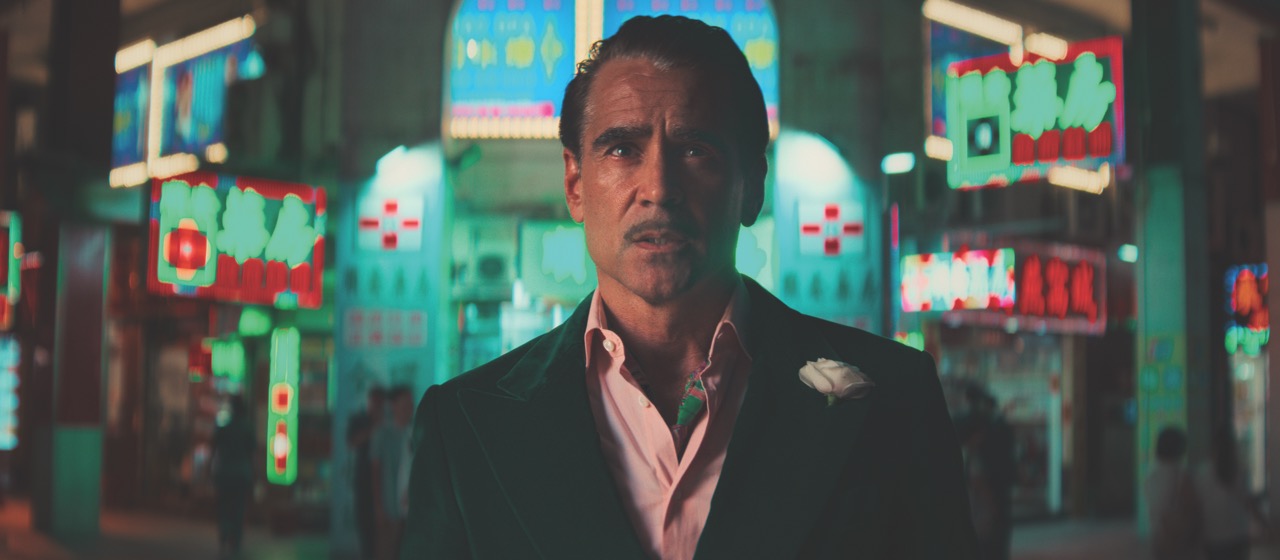
In another shot, Colin is standing in front of the Rainbow Casino, for which they used the façade of a decommissioned building littered with light bulbs that haven’t been used for years. “Impossible to change them all,” says Friend, “so we needed a source to replicate what it would look like shining on his face. I had an 8x8ft INFINIMAT that produced enough light to counteract the bright signs in the background. They made it hard to expose for this scene, but with the INFINIMAT on the side, out of shot, I got enough light in Colin’s face without going front-on and losing all shapes.”
A costly issue the crew encountered was that closing down any area of a casino required not only weeks of notice but also compensation for lost revenue: a difficult expense to justify. “Shooting day scenes at night became the most cost-effective solution as it was a bit quieter, but we still had to be surgical in our planning and lighting set-ups,” says Friend. “So for a scene in a casino lobby, which was the entry and exit of many high rollers, we had a very limited time frame and needed a portable source that we could wheel in and out at a moment’s notice. It was under a sort of canopy, making it both an indoor and outdoor location where we wanted to shoot a daytime scene but could only do it at night for continuity. The 20x20ft INFINIMAT let us shoot in the dead of night, turning it to 6500K, sidelighting the entire set. The output was striking and I believe this was the only source that could have made it work.”
This article appears in the November/December 2025 issue of Definition