
Production: Stranger Things
Posted on Feb 16, 2026 by Admin
Stranger Things turned the world upside down. As the sci-fi saga comes to a close, we sit down with DOP Caleb Heymann, who explains how he kept the supernatural, increasingly grandiose story grounded in reality
Words Katie Kasperson | Images Netflix
Few shows achieve international phenomenon status, but Stranger Things is certainly one of them. Premiering on Netflix in 2016 to critical acclaim, the series ran through five seasons, 42 ‘chapters’ (episodes) and a collective runtime of nearly 48 hours, giving audiences an ensemble cast of lovable characters, a hefty dose of eighties nostalgia and a sci-fi story that pays homage to both the classics and hidden gems of its genre.
Following a group of kids – by the end, they’re well into their teens and twenties – from the fictional suburb of Hawkins, Indiana, Stranger Things begins on a small scale. There’s a missing boy named Will, a telekinetic girl named Eleven and an alternate dimension (or so they think) called the Upside Down. By Season 4, the world of Stranger Things has expanded into California and the Soviet Union (it’s 1986 at that point), and in Season 5 it travels, Back to the Future-style, 30 years into the past while present-day (1987) Hawkins is under government-sanctioned quarantine.
Joining the show on Season 3 as a second-unit DOP, Caleb Heymann returned for Seasons 4 and 5 as lead cinematographer. “They were, by far, the biggest two seasons of the show,” he states – the runtimes and budgets alone can back up this claim. “They took extra time to film because in Season 4 we had the pandemic and in Season 5 we had the strikes. I don’t necessarily wish there was a Season 6,” he admits. “It feels like that chapter came to its proper close. We’ve done Stranger Things to the fullest.”
It’s Vecna’s world (and we’re just living in it)
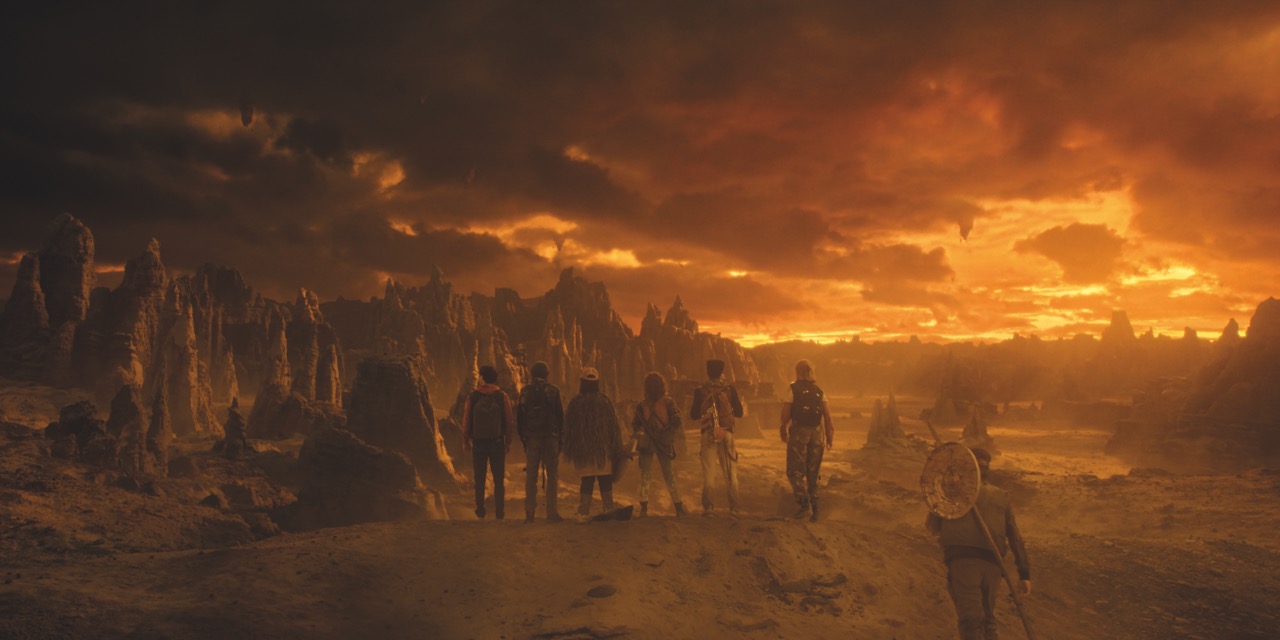
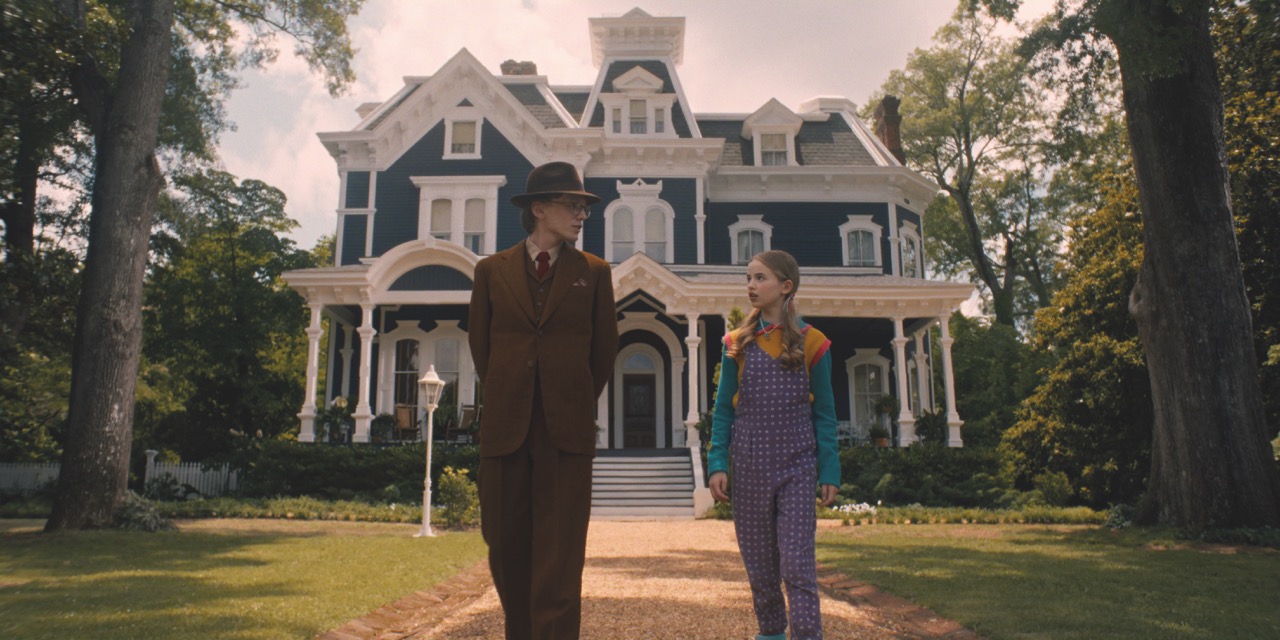
There’s an evil in Hawkins and, each season, it goes by a different Dungeons & Dragons-inspired name. First, it’s the Demogorgon, then the Shadow Monster (aka the Mind Flayer) and, finally, Vecna. Also known as Henry Creel, Vecna was the first of a series of lab rats (Eleven being – you guessed it – the eleventh) to undergo telekinetic training. Season 5 transports us into his past, back to the Creel house introduced in Season 4 and inside his very own mindscape.
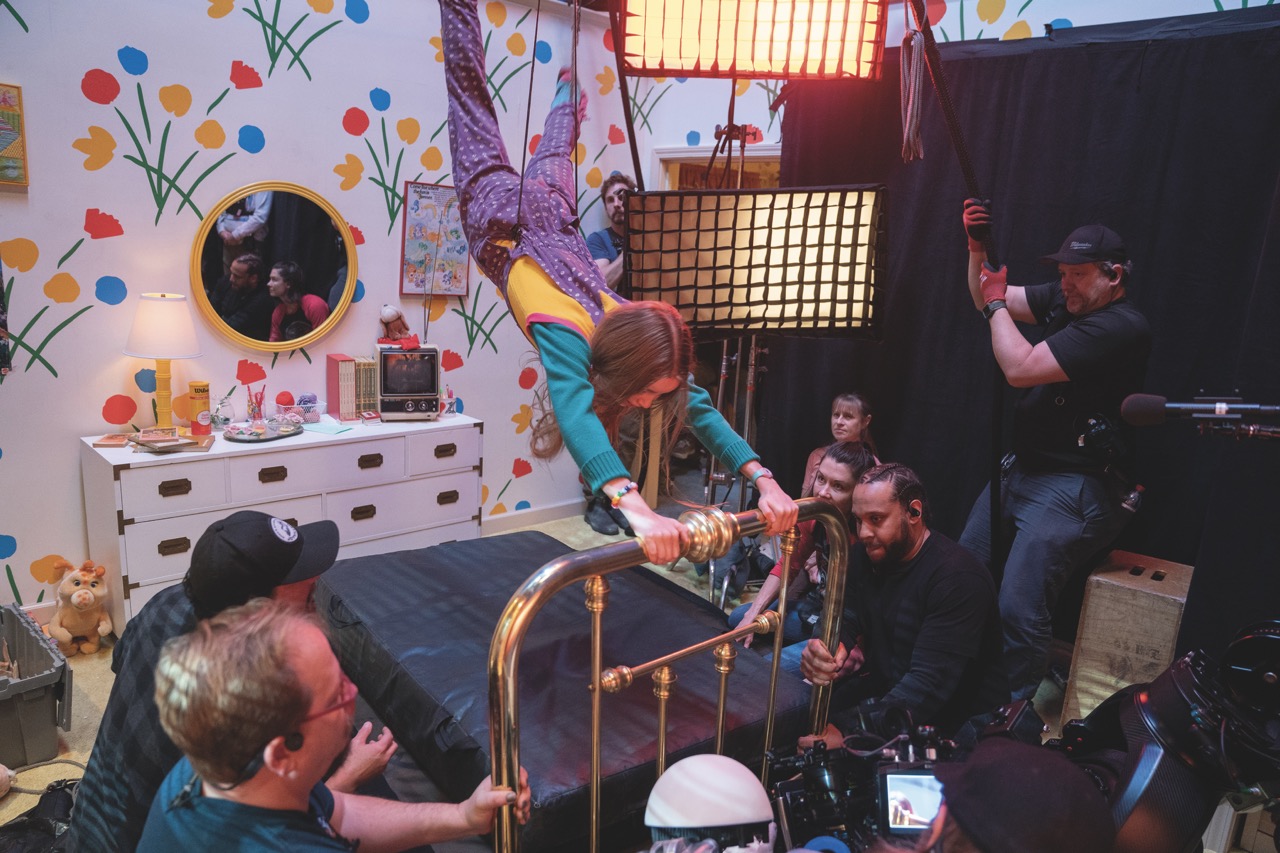
“We wanted Henry’s world to feel inviting,” begins Heymann. “It’s an amalgamation of his memories, and we were leaning into a saturated, almost Technicolor look. We didn’t want the Creel house to look like it did in Season 4, where it’s dark, the lights are out and the windows are boarded up. We wanted it to feel different from the rest.”
The mood in Hawkins, meanwhile, is grim. “Hawkins has been taken over by the military,” Heymann explains. “The season opens with this melancholic sense of everybody being sick and tired of this lockdown.” Eleven is hiding; Dustin, Steve and Jonathan are fighting; Karen Wheeler is drinking; Robin is hosting a radio show on WSQK, dubbed The Squawk. “Most of what we shot this season were new locations. There’s the MAC-Z, which is the militarised downtown Hawkins, and then The Squawk. There’s always so much new stuff that we don’t have to be overly beholden to what we did last season. There’s a constant evolution to it.”
An ode to the eighties
Stranger Things comes with both obvious and subtle references; Jonathan has a Jaws poster, while Mike has one for John Carpenter’s The Thing. Vecna resembles Freddy Kreuger, while Nancy Wheeler’s name was lifted directly from A Nightmare on Elm Street.
“This season was less reference-heavy than Season 4,” Heymann says. “There were touchstone references for that season and how we wanted the horror to play out visually. This time around, Alien and Aliens served as inspiration for their boldness of lighting.”
In episode 4, called The Sorceror, Vecna and the Demogorgons attack the MAC-Z while Eleven attempts to infiltrate headquarters in the Upside Down. Throughout the series, “there are a lot of flashing lights caused by the presence of evil,” Heymann explains. “When we get into all the mayhem in episode 4, I referenced Aliens when the emergency lights go off.”
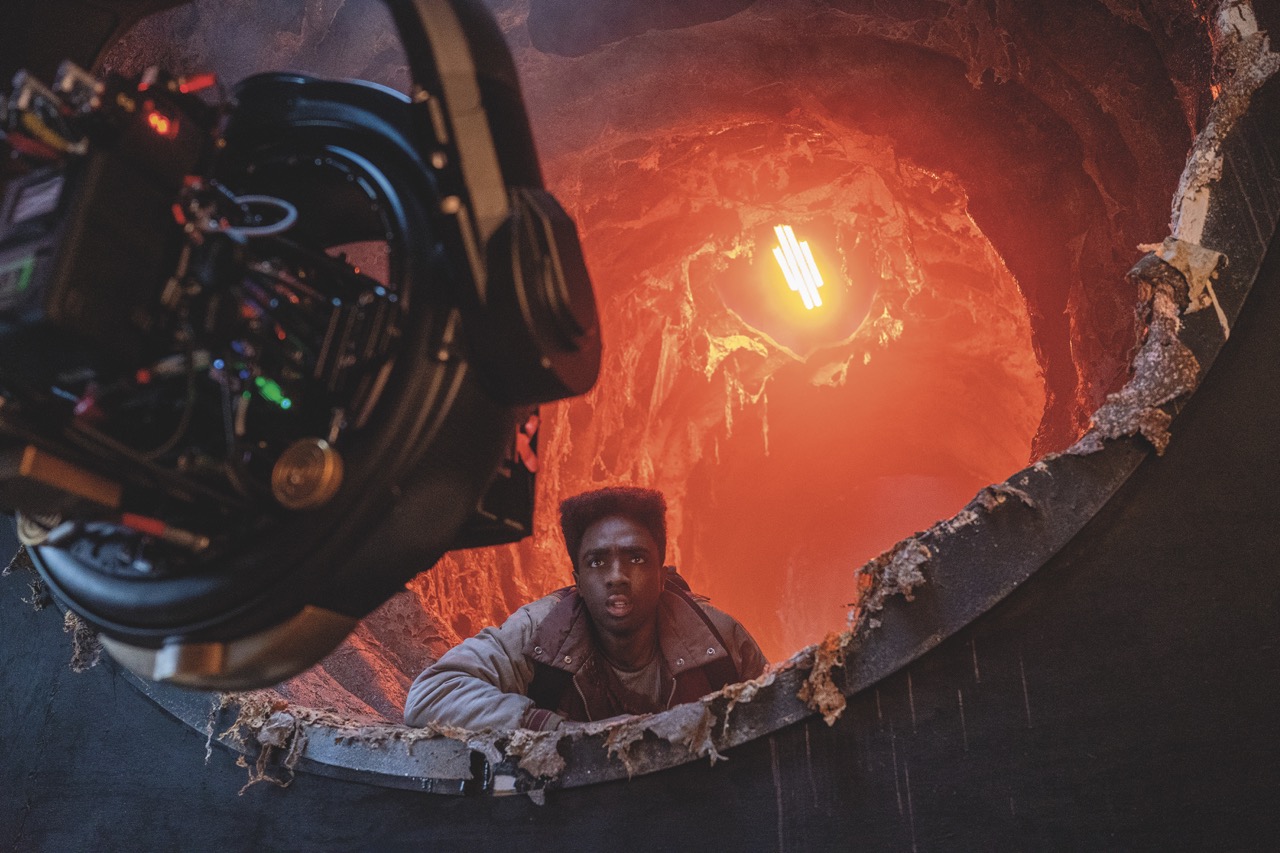
Whenever possible, Heymann and his crew prioritised achieving effects in camera. “We have a lot of practical lights,” he shares. “The sources in the frame motivate everything else, whether those be lamps or rotating alarm lights. We do the same thing with special effects,” he adds. “I like to mix the two. We’re using real fire, and we supplement that with our lighting. We always try to have a base of the real thing.
“It’s such a gratifying show to work on as a cinematographer because light is almost its own character,” he continues; whenever there’s a surge of energy in the Upside Down, the lights flicker in the ‘rightside up’. “When you have a story where so much of it takes place in the supernatural realm, it’s important that the physics feel real and the lighting feels grounded in the environment – not like some cheesy visual effect.”
Practical magic
The Sorceror concludes Season 5, Volume 1 and features the series’ largest action sequence – as well as a major reveal – which takes place within the MAC-Z. “There were close to 100 stunt performers and an incredible amount of choreography and planning,” explains Heymann. “Every time you see a body flying through the air, that’s a stunt performer; and we’re timing that with a Demogorgon that’s going to get added in visual effects.
“There’s an impressive commitment from all departments to pushing the boundaries of what we can do in camera,” he continues, “as long as we can do it safely. Everybody agrees it’s going to look better.” This includes the red lightning effect in the Upside Down,
the ‘de-aging’ of actors (they hired younger versions of Will, Jonathan and Joyce Byers) and the bathtub scene in episode 2, The Vanishing of Holly Wheeler.
Henry abducts Holly Wheeler – Mike and Nancy’s little sister – into his world, but not before their mother, Karen, puts up a mean fight. “Of the entire season, that was the first thing we shot, to figure out how to do that transition from the Demogorgon to underwater in the bathtub, where Karen and Holly are hiding,” recalls Heymann. “We needed to shoot them on a separate set where we could have one side of the bathtub clear so that we could shoot through it, but then shoot the top half in the actual Wheeler bathroom.”
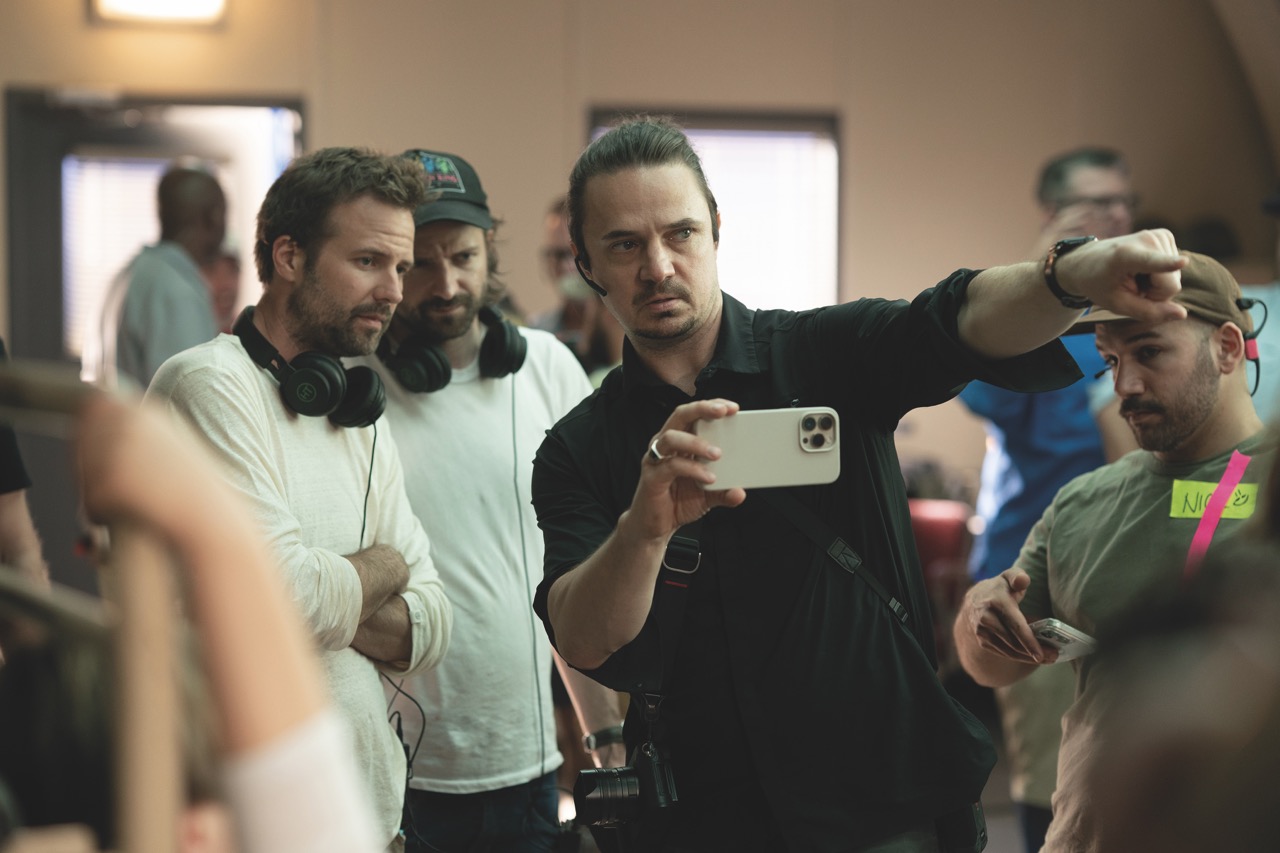
The whole scene is stunt-heavy. Holly is pulled through her ceiling, Ted Wheeler is ‘blasted through the wall’ and Karen stabs the Demogorgon with a broken wine bottle. “As a DOP,” begins Heymann, “it’s wonderful because you’re working with all the different departments at the same time and having conversations with VFX, stunts, special effects and, of course, the Duffer Brothers. I was really happy with how it all came together.”
Tricks and treats
Season 5 also marks a slight departure from its predecessors, introducing new visual tricks and camera techniques. For instance, Will, who’s connected to the villainous hive mind, has visions, able to see through the Demogorgons’ (and later, Vecna’s) eyes. To communicate the change in POV, Heymann used filters – called centre spot dioptres – coupled with a physical shake of the camera whenever Will entered an altered state.
To capture the POV footage itself, Heymann selected the DJI Ronin 4D, which could “simulate the galloping of the Demogorgon and do the tight turns and thread the needle between trees,” he says. Meanwhile, he used the ARRI ALEXA 35 – fitted with Cooke S4 lenses – as his main camera, occasionally swapping in the Sony FX6 or the RED KOMODO. He also leant on Motion Impossible’s AGITO for tracking at high speeds, Scorpio cranes for bird’s-eye shots and bespoke flashlights, as much of Stranger Things 5 occurs overnight.
There’s also a flashback, intercut into episode 4’s massive action scene, featuring a Super 8 film of young Will, Mike, Jonathan and Joyce. “It was a combination of real 8mm footage and a KOMODO for shots that might need some VFX work,” says Heymann. “We wanted it to have this raw authenticity and a different look from everything else that was happening in the MAC-Z. It was one of those moments where you read it in the script and you’re like, ‘Oh my god, I can’t wait.’”
Small world after all
Stranger Things’ universality comes in part from its ensemble cast; there’s a favourite character for everyone, no matter their age or identity. But working with that large a group – particularly of young people – presents some logistical headaches. “We tried to shoot in story order, but there were a lot of factors that forced us to shoot five or six episodes in the same week,” Heymann shares, including continuity considerations and cast availability. “If there are 13 people in a scene and one of them is sick, you’re thrown a curveball.”
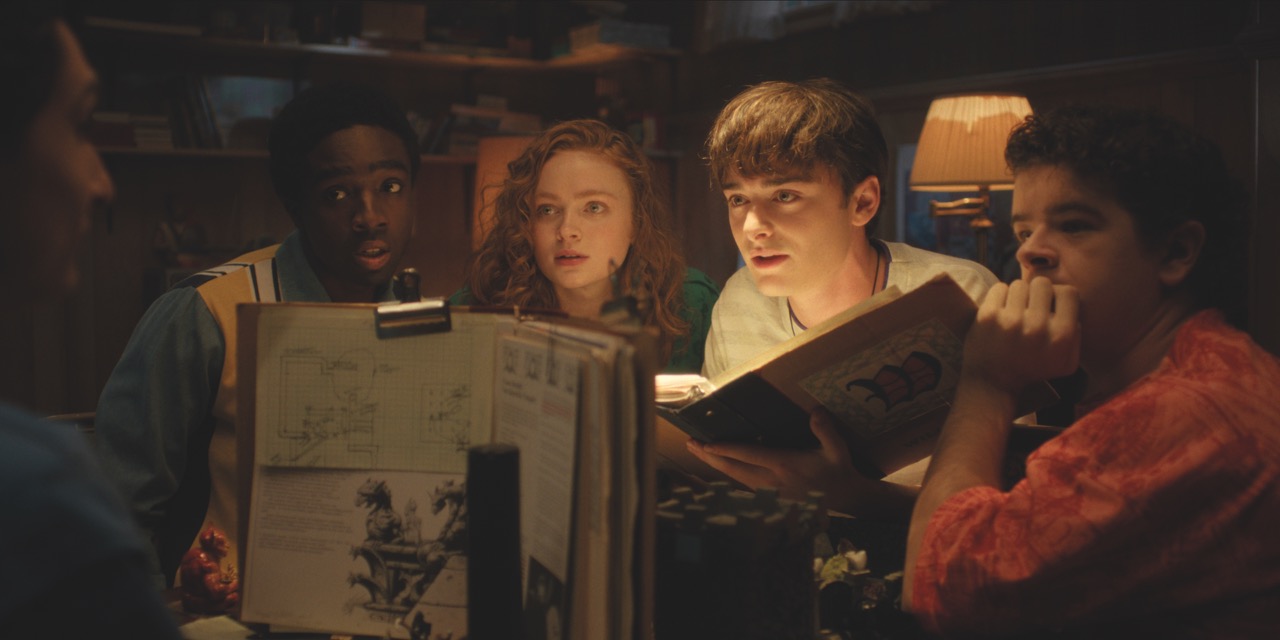
While Heymann felt an added pressure to deliver (“you know that over 100 million people are going to be watching,” he says), this also drove him to do his best work on the show. “It helps you get out of bed every morning. Knowing that so many people out there, including every person who works on the show, loves it and is anticipating it – it’s definitely extremely motivating. The Duffers set the tone by being passionate and caring so much about the details, not only of the world but also of the characters. It’s a balance of the epic and the intimate.
“We’re fortunate to have an incredible cast that brings these characters to life,” he continues, “and it’s such a joy to photograph them. I love the rare occasion when we have a relatively simple domestic scene – it’s a nice treat.”
For Heymann, Season 5 “was about finding balance. People will remember the characters and relationships and friendships. Worldbuilding aside, that’s the most important thing.”
Watch the final season of Stranger Things on Netflix
This story appears in the February/March 2026 issue of Definition