
Beyond the frame: Immersive storytelling
Posted on Jan 15, 2026 by Admin
Charlotte Mikkelborg, acclaimed immersive director and Craig Heffernan, EMEA director at Blackmagic Design, reflect on the promise and pitfalls of immersive storytelling
Immersive storytelling promises something traditional cinema never could: the ability to place your viewer directly inside a scene, free to look around and explore as they wish. It offers amazing creative potential, but with that comes new challenges, from preventing motion sickness to navigating complex workflows and guiding the audience’s attention. The technical learning curve is a steep one for those who are hoping to venture beyond 2D, but the rewards are tantalising.
Charlotte Mikkelborg is one of the directors leading the charge in this space. She started out in front of the camera as a BBC correspondent and had a stint making 2D documentaries and features, before pivoting to immersive content. She’s since directed a string of acclaimed projects, from The Journey (2018), a projection and interactive dome experience that won a CINE Golden Eagle Award, to Fly (2019), a project created with Neil Corbould’s Oscar-winning special effects team and starring Joanne Froggatt. And more recently, she series directed Adventure (2024-2025), a live-action Apple TV+ Original for the Apple Vision Pro.
Her first encounter with immersive content was back in 2015, long before today’s sleek headsets and polished production tools. “I had a meeting in LA with a producer who mentioned this 360° Cuban dance piece,” she recalls. “I couldn’t quite get my head around it until I tried on the VR headset. After that, oh my God, the experience was truly eye-opening.”
The technology was rudimentary – this was the era of Samsung Gear VR and Google Cardboard – but the potential blew her away. “I was absolutely captivated. Why wouldn’t you want to be immersed inside a scene, rather than just looking at it on a rectangular screen?”
It wasn’t long before she led her own 360° VR project for the UN called Born into Exile, which follows two pregnant Syrian refugee women in the week leading up to their babies’ births. “The UN were putting money into making this kind of content because they found that it made people more likely to engage and donate,” she explains.
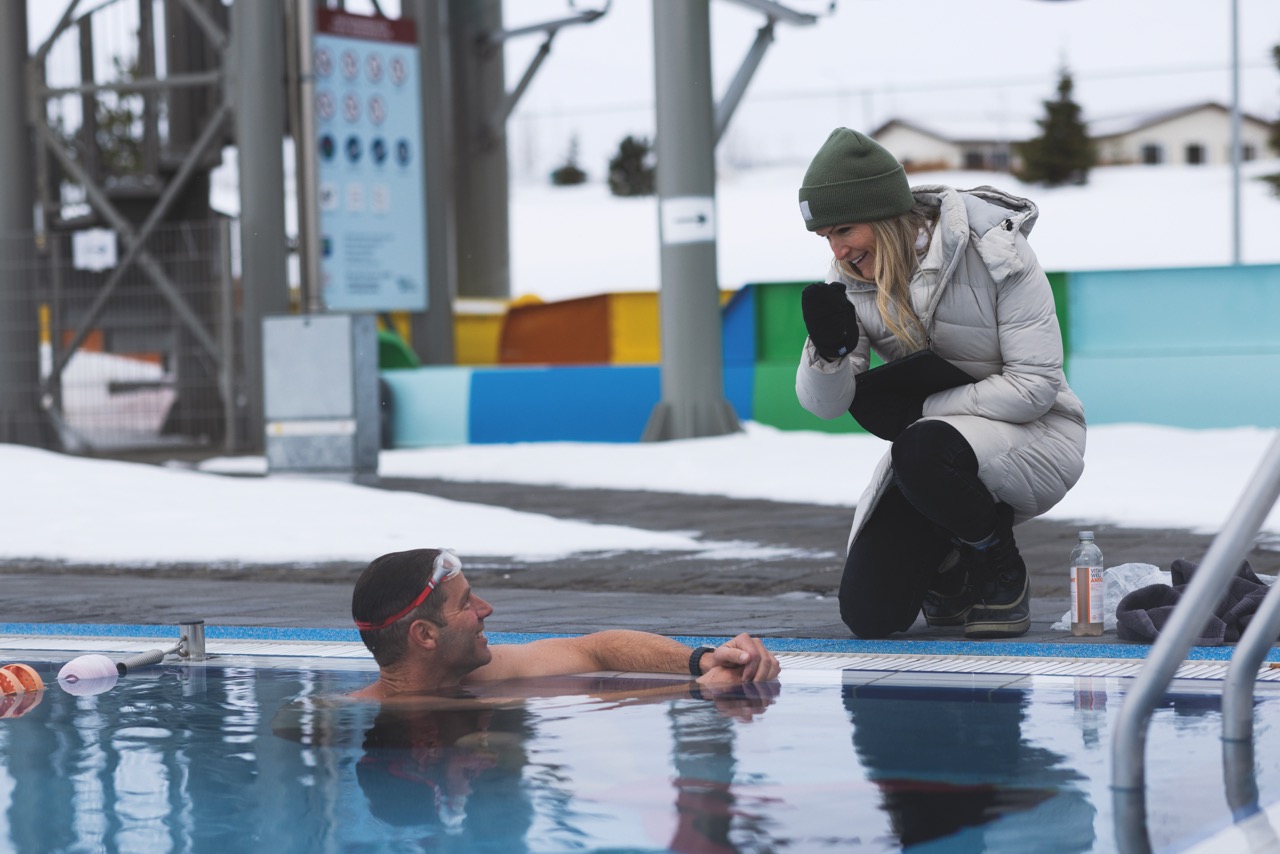
Since being contacted to work on Apple TV+’s first immersive series in 2023, Mikkelborg has worked primarily in 180° immersive content. This front-facing format captures everything in front of the viewer, without the full wraparound of 360°. It offers filmmakers the freedom to shoot in ultra-high resolution, using tools like Blackmagic’s URSA Cine 17K, while keeping control over lighting and camera movement.
”There’s an amount of choreography that goes into directing for immersive that you don’t necessarily get in 2D,” she asserts. But the payoff? “You get someone’s complete attention, and that’s such a rare treat. When we’re watching films these days, we’re often also on our phones – distracted. But with this, you’ve got somebody entirely immersed in your content.”
An antidote to second screen syndrome is a win in our books, and we’re pretty sure filmmakers will love the prospect of having the audience’s undivided attention. But in a medium where the viewer has the freedom to explore, exactly how to direct their attention to the thing you want them to focus on becomes the new challenge.
It’s something Craig Heffernan, EMEA director at Blackmagic Design, recognises from a technical standpoint. When working with a 180° field of view, he points out, considerations must be made for all elements of the scene, both 180° vertically and horizontally.
“In traditional filmmaking, editing, camera movement or in-frame action dictates the viewer’s point of view and mediates their emotional connection to characters. All that goes out of the window with immersive production, when the viewer is ‘in the scene’ and can choose their own viewpoint,” he muses. “This dictates some important changes in a director’s approach to mise-en-scène, blocking and camera placement, especially for narrative filmmaking, to ensure the audience stays engaged and doesn’t miss key moments.”
He draws a parallel with theatre: “Due to the 180° field of view, an audience member can look wherever they want at any time during a scene. It becomes more like stagecraft in guiding the viewer’s attention.”
The way you choose to guide them can take many forms, such as sound or light, suggests Mikkelborg, pointing to The Line, a Brazilian VR short that uses a simple spotlight to guide the viewer’s gaze through a miniature love story. “It’s done in such a simple but clever way,” she enthuses.
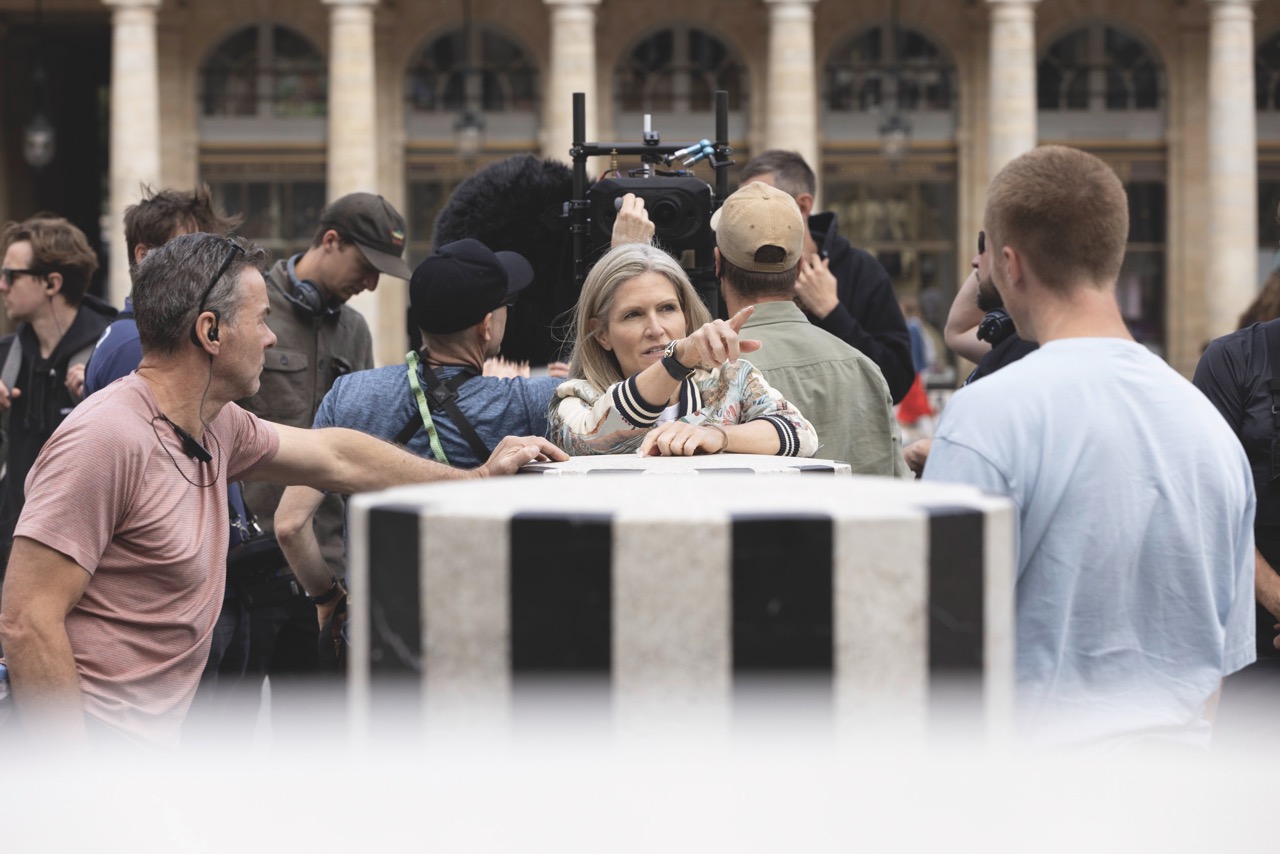
Multisensory experiences might take this even further. Her British Airways-funded VR experience Fly, shown at the Saatchi Gallery and recipient of the best documentary experience at Raindance in 2020, is an exhilarating journey through the history and possible future of aviation. “We explored all the multisensory aspects that you could include when you have somebody’s entire audio-visual attention, incorporating wind, touch and smell – these are other ways you can direct attention in this medium,” she assures.
Shooting with a camera that has a 180° field of view means a different approach when it comes to lighting and audio too, says Heffernan. Lighting rigs and stands, generally placed around set, might now be visible to the viewer, so you need to think about gear that can be subtly integrated and appear part of the environment. “Boom mics would clearly be seen above any camera, so it’s more likely that actors will need to be fitted with lavalier microphones hidden in costumes for their dialogue,” he adds.
But immersive production offers an “opportunity to expand existing surround sound mixes by integrating spatial audio, allowing scene- or object-based audio to be captured and mixed in order to give the viewer a 360° surround audio experience,” according to Heffernan. “Productions will have to use newer ambisonic microphones, which can capture full-scene soundscapes, creating fully engaging scenes.”
Immersive storytelling also changes the equation when it comes to motion. If you get it wrong, it can be a surefire way to make your viewer feel queasy. Mikkelborg recalls the early days when the camera would simply be placed on a tripod in the scene and you’d press record, taking all creative control away from the director.
Over time, though, she and others have learned how to use movement to enhance immersion rather than causing problems. “Smooth cinematic movement can work,” she notes. “In Adventure, which has a motorsports episode, the motion is very fast but it’s still comfortable because it’s smooth, on a single axis and keeps the subject centre in frame. As long as the motion feels purposeful and the body’s inner ear isn’t contradicted enough to cause discomfort, it works beautifully.”
Heffernan agrees that camera motion is one of the trickiest balancing acts. “Even a slow, steady tracking shot could be enough to create unease and an unnatural sensation of movement when, in reality, you are not,” he explains. “On the other hand, fast-paced movement and whip pans are no-goes, as they can induce motion sickness in the viewer who is fully immersed in the field of view.”
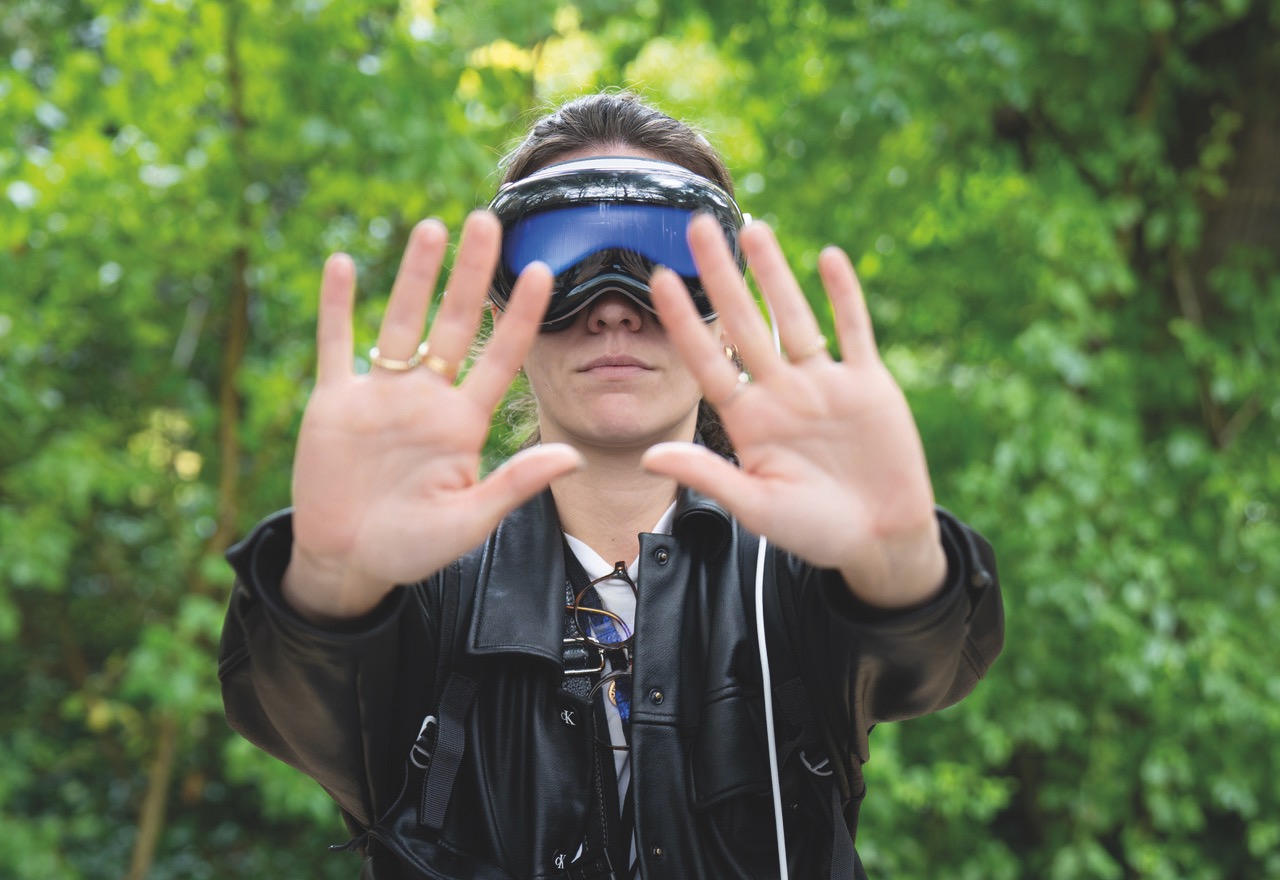
You also need to consider the height and relative position of the camera, ensuring it feels natural for the audience, he says. “Using a low-angle or a worm’s-eye view for an immersive production creates an entirely different sensation for the viewer when immersed in a scene.”
Mikkelborg suggests that immersive production is still in its infancy, but she’s convinced it represents the future of screen storytelling. “I’ve been working in immersive for around ten years now and I’m completely biased,” she laughs, “but I have believed since I watched my first 360° film – and I still believe – that this medium is 100% the future. Because of course it’s going in this direction. Why wouldn’t you want to be more immersed in storytelling?”
She believes that the potential is still largely untapped. “The more talent that comes to the space the better,” she says. “People new to the medium will do something that we might not expect. I’m excited about more high-quality narratives coming to the space as well because more great content will draw people in. Think about immersive Harry Potter or Game of Thrones where you don’t just watch the story, you feel like you live it.”
From a technical standpoint, Heffernan comments that the road is only getting smoother for filmmakers looking to make the leap. “From our work supporting immersive projects, a key learning has been in post-production and the development of a new immersive toolset for DaVinci Resolve,” he explains. “This now offers intuitive editing tools to help manage dual-sensor 8K media as quickly and efficiently as 2D media. There are also new viewer options to check out immersive content in native state, LatLong or a viewport option that emulates the lens space of the camera for Apple Vision Pro.”
He points out that Resolve’s new toolset also widens creative possibilities: “New tools have expanded Resolve’s support for VFX, graphics and 3D image composition in the immersive space, as well as for mixing and mastering to Apple Spatial Audio. Finally, this needs to be finished and then delivered to Apple Vision Pro, so new tools for rendering and delivering immersive packages for audiences to experience with Apple Vision Pro are absolutely critical. They have been custom-designed and built to process high quantities of media, so the quality of the dual 8K media captured is ready for audiences.”
Heffernan’s advice to filmmakers stepping into this world is to be brave and creative.
“Immersive production is truly a new approach for audiences to experience storytelling unlike before. For over a hundred years we’ve been invited to watch filmmakers craft stories and introduce characters through the frame of a 2D camera system. Even where 3D camera technology expanded this, adding the illusion of z-axis depth, the scene remained locked to the camera frame and its focus. Immersive production enables the filmmaker to place their viewer in the scene and invite them to be closer to the action than any other filmmaking technology,” he concludes. “It’s more visceral, immediate and emotionally engaging in the hands of great storytellers.”
This article appears in the November/December 2025 issue of Definition