
Shot-on-film productions: Long live celluloid
Posted on Mar 23, 2026 by Admin
As shot-on-film productions dominate awards season this year, we take a tour of the labs at the forefront, combining traditional processing craft with modern digital workflows
Words Oliver Webb
Half of the best picture nominees at the 2026 Academy Awards were shot on film, with Bugonia, Sentimental Value, One Battle After Another, Marty Supreme and Sinners all showcasing a commitment to celluloid. The latter three also earned nominations in the best cinematography category. With filmmakers continuing to champion the format, we explore how film is preserved and pushed forward by the combined efforts of industry leaders.
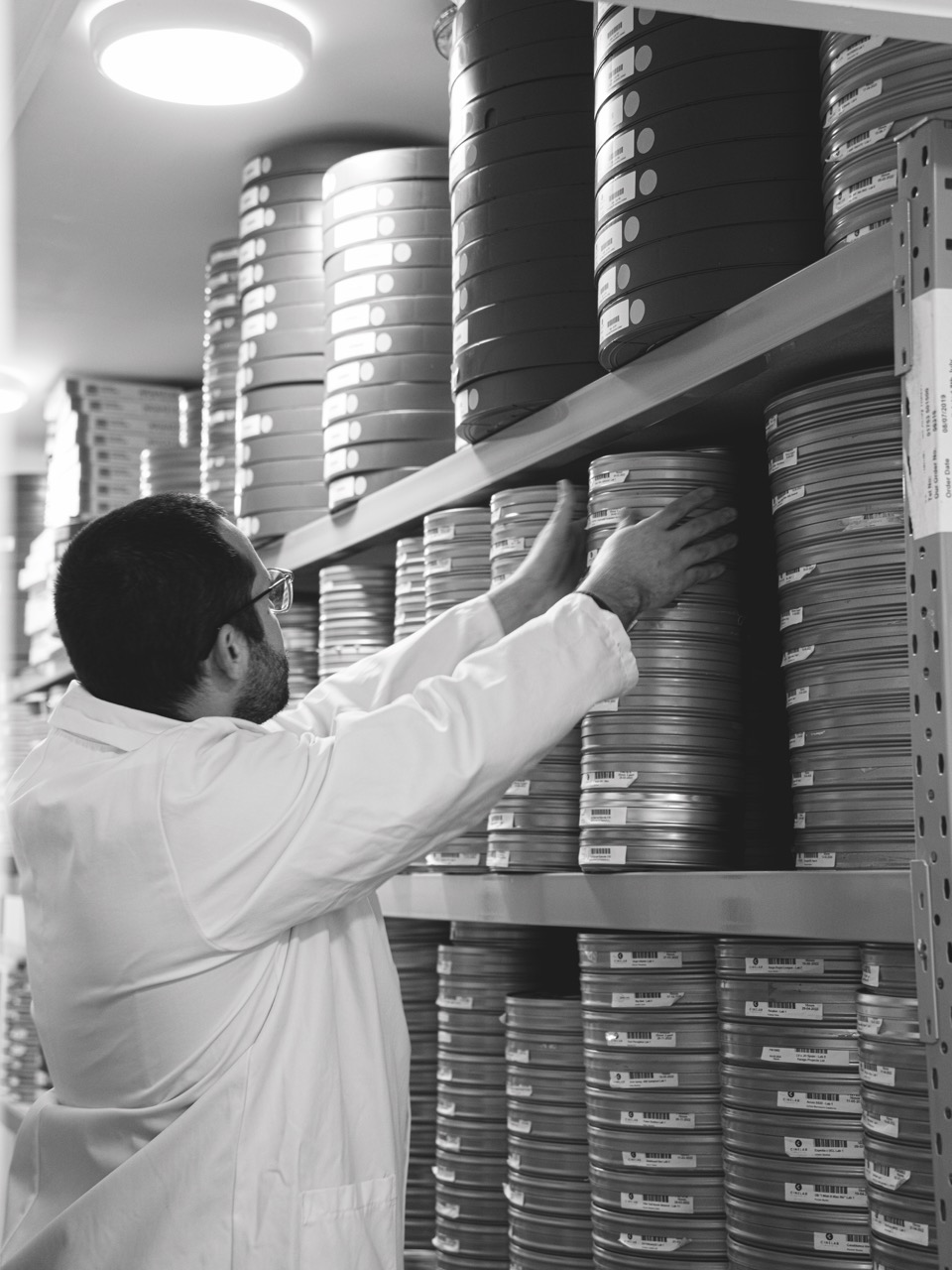
The future is film
Founded in 1892 by George Eastman and Henry A Strong, Kodak has been synonymous with film since 1889, when it introduced the very first commercial and transparent roll of film. Today, the company still plays a central role in sustaining and evolving the medium.
Kodak is currently working closely with a major film and media institution to open a new photochemical lab and scanning centre. Training programmes developed in conjunction with Kodak will foster development and expertise in a wide range of areas, such as chemical development, darkroom work and film handling – as well as crucial soft skills in energy management and technology and advancements in preservation.
In London, Kodak’s lab continues to function not only as a commercial operation but as a space for innovation and skills training. A close alliance with machine manufacturers led to the recent launch of a completely new film cleaning system, which is now commercially available. Kodak also works extensively with labs and preservation institutions across Europe, such as the BFI, CNC, L’Immagine Ritrovata and TransPerfect Media.
“Our mission across the motion picture industry right now is to support filmmakers directly with film stock and, secondly, to support the ecosystem that supports the workflow,” begins Vanessa Bendetti, vice president and head of motion picture at Kodak.
In markets where services have historically been limited, Kodak has stepped in to help stabilise the local infrastructure, while staying committed to backing up independent labs rather than fully verticalising operations. “It is incredibly important for the continuation of the medium of film that there are multiple players within the ecosystem. That’s been our overall approach since I’ve been here.”
Bendetti argues that if film is being talked about, then it is often already the filmmaker’s medium of choice. “That is not to say that there aren’t filmmakers who prefer digital capture, but if we are already in the conversation, it’s usually because there is a fight for film. We are not attempting to sell film from a creative perspective. We equip filmmakers with the information that they need to advocate for it.”
That support includes providing test stock, budget comparisons and early-stage introductions to cinematographers and crew members who are experienced in film workflows. “We get involved very early,” adds Bendetti. “Almost every time we are able to successfully support a production shooting film, there’s been some sort of digital budget comparison. There has been pushback somewhere, whether it’s logistics or something else.”
A recent technological milestone is the evolution of Kodak’s VISION3 colour negative film. The company has worked to develop a successful alternative to remjet, the long-standing halation protection layer that has been effective but cumbersome during manufacturing and processing.
“It did a great job of protecting film on the base side from scratches, offering lubricity and protecting from halation, but there were challenges that came with that,” says Bendetti.
Sustainability remains a key focus for Kodak. The company is continually refining best practices to reduce reliance on natural resources such as energy and water, while using technology to improve quality and efficiency across workflows. “There are benefits for labs from an environmental and cost perspective – and for our customer in the resulting image,” Bendetti continues.
Production is shifting worldwide, with many projects moving away from the United States in search of stronger tax incentives and lower production costs. “We’re also excited to be moving our Kodak laboratory in Atlanta, Georgia to a new location, which will allow us to offer expanded services, training, community programming and education.”
Kodak House has been an incredible resource for filmmakers and creatives beyond that space. The Los Angeles location has hosted numerous Q&A sessions, welcomed such esteemed filmmakers as Brady Corbet, Yorgos Lanthimos, Ryan Coogler, Gia Coppola and Sean Baker, and offered training and hands-on workshops.
Kodak has reinvested in film as a pivotal part of the corporation’s future. “We are in the middle of a ten-year plan for capital upgrades and investment in the factory, which will ensure we can produce film for many more years to come,” notes Bendetti.
“Younger filmmakers are also investing their resources and future in the medium now. Once the decision to use film is made, there is an incredible amount of support and celebration.”
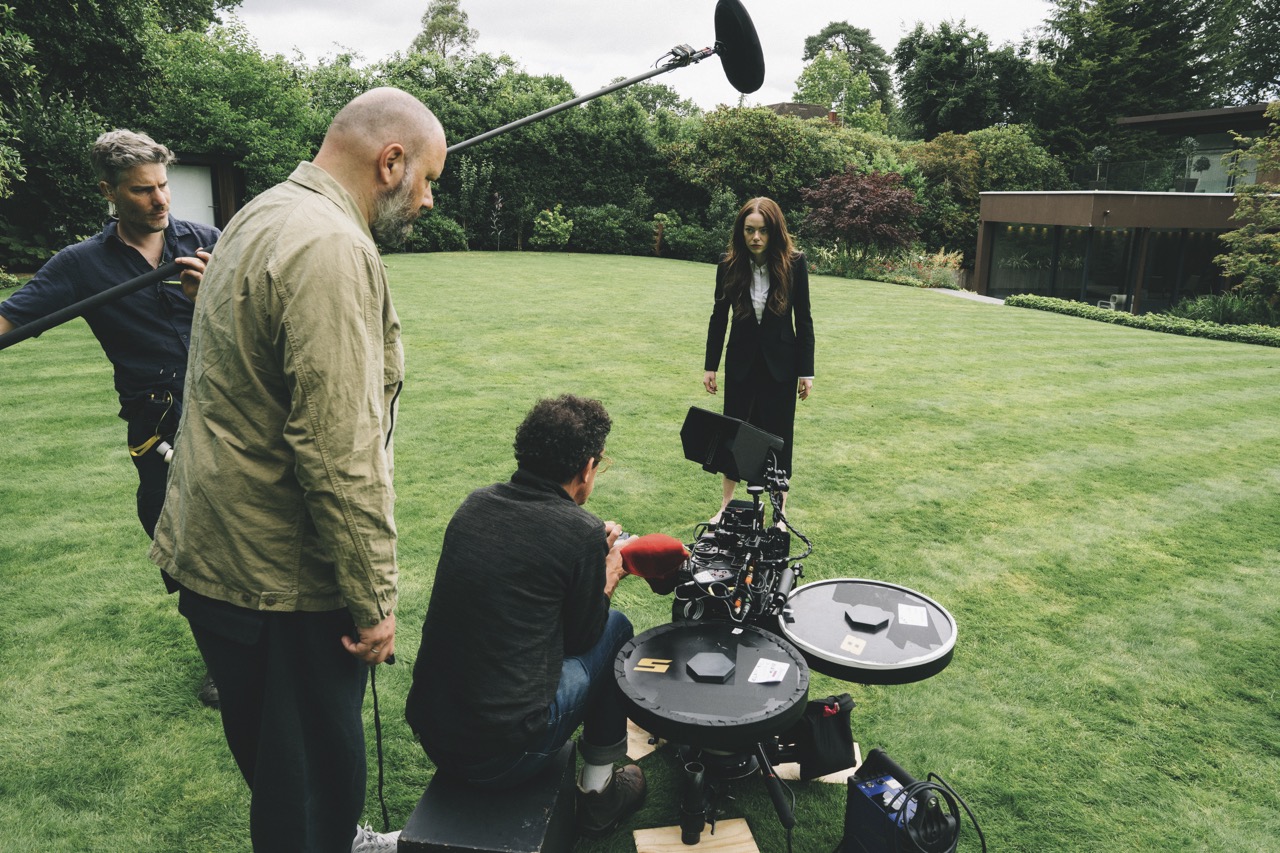
Digital-film-digital
Cinelab Film & Digital opened in 2013 in London and is the only UK company that offers a full-service film laboratory and digital dailies service. Alongside its traditional film lab processes and advanced digital post services, Cinelab introduced digital-film-digital (DFD) as an analogue, intermediate process that transfers digital footage to celluloid film via an ARRILASER. The film is then processed and scanned back into a digital format, imparting an authentic film look on source footage. The growing demand for 4K streaming and theatrical releases has helped drive the adoption of this technology.
“Ten to 15 years ago everyone was attempting to get digital cameras up to a resolution that was sort of comparable to film,” says Cinelab CEO Adrian Bull. “Film’s always done a really good job of dealing with resolution, dynamic range and latitude.”
For Bull, the key to film’s continued relevance lies in pairing traditional lab craft with contemporary workflows. “What’s important is that we’ve coupled film processing with top-end scanning and dailies services to provide a workflow that makes supporting filmmaking as efficient as possible,” he says. “It is about processing, scanning, grading and sound syncing, so that filmmakers can see their rushes the next morning. Footage that is delivered to the lab at the end of a day of shooting is typically available to view the following morning.”
Alongside efficiency, there’s a growing number of filmmakers who want a different look and feel to their work. “Every frame of film is different because of the nature of grain. Digital isn’t like that,” says Bull. “It’s encouraging for us that people recognise the value in shooting film.”
Concerns around AI-generated and manipulated content have further shifted perceptions over the course of the last year. “Interestingly, film is one of the only things that is a permanent record of a performance, and so proves someone did what they did. If you shoot anything digitally there’s no provenance to that, whereas film is an artifact.”
Bull argues that actors are more likely to be interested in supporting projects that are shot on film, especially if it is a guarantee of their performance being recognised. “I think it’s going to be an interesting year ahead because already we are seeing so much online content that people don’t trust.”
The biggest challenge with labs, according to Bull, is the fact that they require a lot of experience. “Over the 13 years of the Cinelab film laboratory, we have constantly brought in people at a junior level and then trained them up, so that there are new people feeding through the business. That was difficult to do ten years ago because we didn’t know what the future was for film lab operations,” he admits.
Cinelab, however, has started this year with two new junior trainees. “They have entered the wet lab side of the business to learn about film handling, prep, processing and printing,” says Bull. “They’ve got the opportunity to learn alongside experienced people.”
Despite the rise in film productions, Bull is not remotely concerned about competitors. “Fundamentally, it just increases the potential supply to allow more people to shoot on film,” he says. “We see a lot of millennials coming through who don’t feel like they have shot a film until they’ve done it on film, which is pretty cool. There is a much higher demand for film prints again, and we’re making more film deliverables than we have done compared to the last five years.”
Bull stresses that it’s also very encouraging to see high attendance figures in cinemas that show 35mm prints. “People can’t see a 35mm print at home, and there’s something that is still quite different about watching a 35mm print compared to a DCP.”
This article appears in the February/March 2026 issue of Definition