
30 Years of Cine Gear
Posted on May 29, 2026 by Nicola Foley
CEO and co-founder Juliane Grosso reflects on three decades of Cine Gear Expo and what the future holds for the event and industry
Cine Gear Expo, which celebrates its 30th anniversary in June, has a reputation as one of the most important filmmaking industry events in the calendar.
Taking place on the iconic Universal Studios Lot in the heart of Hollywood, it’s become an institution; a place where filmmakers and industry professionals come together, catch up, discuss the state of the filmmaking landscape and explore the latest technologies.
It’s grown and evolved hugely since its first outing in 1996, when founders Karl Kresser and Juliane Grosso, working with Otto Nemenz, set up the event to address what they saw as a gap in the market. “The Hollywood filmmaking community was sprawling, talent-rich and hungry for connection,” describes Grosso. “But there was no dedicated place where artists and technicians could come together to test and talk about the tools of their craft.
“From the start, Cine Gear Expo was designed to focus on the needs of the community. The founding idea was simple: bring the best technology and the best creative minds into the same room, on a real studio lot, and let the magic happen organically. Thirty years later, that hasn’t changed one bit.”
One thing that has changed is the content of the conversations on the show floor. In the early days, it was all about equipment – predominantly lights, lenses and cameras – but today it encapsulates virtual production pipelines, sustainability on-set, AI tools, colour science and crucial discussions around representation behind the camera.
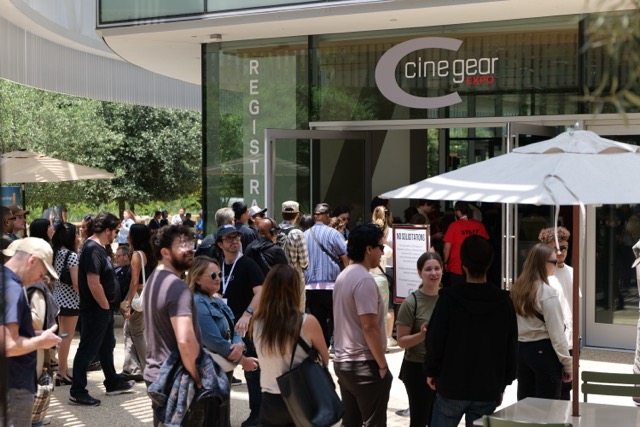
The scale of the operation has also changed significantly. Cine Gear Expo has gone from effectively a regional gear showcase to a multi-city extravaganza, adding shows in New York and Atlanta, with the flagship LA summit attracting some 16,000 attendees from all around the world.
Grosso believes the key to the event’s continued relevance and success has been its consistently filmmaker-first approach. “We have never tried to be everything to everyone,” she explains. “Attendees know that when they walk through our doors, every exhibitor, every seminar, every conversation is directly relevant to their craft and career. There’s something irreplaceable about the studio lot environment. It’s a working creative space, and that energy is contagious.”
Grosso has witnessed some seismic transformations within the filmmaking business over the last three decades, but the turning point that she thinks made the biggest impact of all was the transition from film to digital. “It fundamentally democratised access to the medium: suddenly a talented filmmaker in any city in the world could shoot on professional equipment,” she states. “That changed everything about who could tell stories and how.”
After that came the streaming boom, which “transformed distribution and consumption simultaneously, creating enormous demand for content while reshaping what a career in film looks like,” says Grosso. “And now AI presents the most complex set of questions the industry has ever faced – about labour, authorship and what human creativity means in the context of machine-generated imagery.”
But the current landscape also offers thrilling opportunities, she believes: “Global storytelling is flourishing, audiences are hungry for stories from perspectives and places Hollywood once overlooked. That diversity of voice is good for the art form, full stop.”
Her advice to emerging filmmakers today is simple. “Show up – literally and figuratively,” she urges. “The filmmaking industry still runs on relationships, and there is no substitute for being present in the rooms where ideas are forming and decisions are being made. Events such as Cine Gear Expo exist to lower the barrier to those rooms. Whether you’re a student filmmaker who’s submitted to our Film Series or a working DOP looking to discover a new piece of technology, the connections you make in person carry an authenticity and longevity no digital interaction can replicate.”
She advises staying curious – keeping up to date with the new tools and tech but remembering that, ultimately, it’s still all about the story. “What won’t change is the need for filmmakers who understand emotion, who can compose a frame that makes an audience feel something. Invest in your craft and your voice first.”
For the anniversary edition, the team are pulling out all the stops. As well as smoothing out logistical elements such as the registration process and entry points, and refreshing the event layout, they promise an enlightening content programme with a strong focus on AI, virtual production developments and
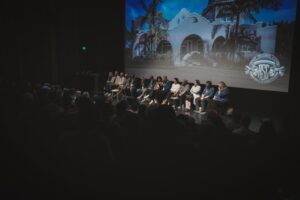
the latest in camera optics and lighting technology. Returning visitor favourites include the ASC ‘Dialogue with Cinematographers’ panel, plus there will be a variety of celebrity filmmaker activations this year.
“The annual awards ceremony and reception is another unmissable event,” promises Grosso. “It is an invite-only celebration of the industry’s finest that brings together the cinematography community at its most celebratory. Given the significance of this milestone year, we anticipate the honorees and evening will be particularly memorable. And the Film Series screenings, at which you can experience beautifully crafted independent work on the stages of Universal Studios, remain one of the most unique things we offer. There truly is nowhere else in Hollywood where that experience exists.”
Grosso feels reflective as the event enters its 30th year, keeping an eye on the challenges the industry faces while staying optimistic about its future.
“The threats are there and we do not shy away from them at Cine Gear. Artificial intelligence raises many profound questions; the consolidation of streaming platforms has tightened the market for certain kinds of content and the economics of mid-budget filmmaking are genuinely precarious. These are not just abstract concerns; they affect the livelihoods of the very community we serve,” she stresses.
“That’s why Cine Gear’s role feels more important now than ever. We’re not just a trade show. We’re a forum for honest, forward-looking conversation and a place where these questions get asked openly, in community, with the people who are living them. The next 30 years, we believe, will be defined by how the filmmaking community navigates these forces together. We intend to be at the centre of that conversation every step of the way.”