
Round table: Storage simplified
Posted on Jan 7, 2026 by Admin
Blackmagic’s James Townend and Mnemonica’s Piero Costantini discuss the evolving demands of on-set storage, remote workflows and long-term data preservation
The panel
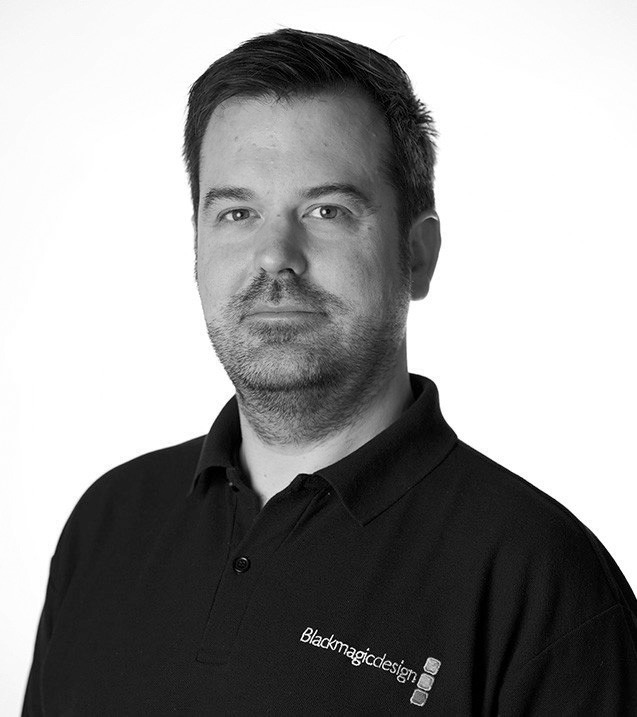
- James Townend, Senior product specialist, Blackmagic Design
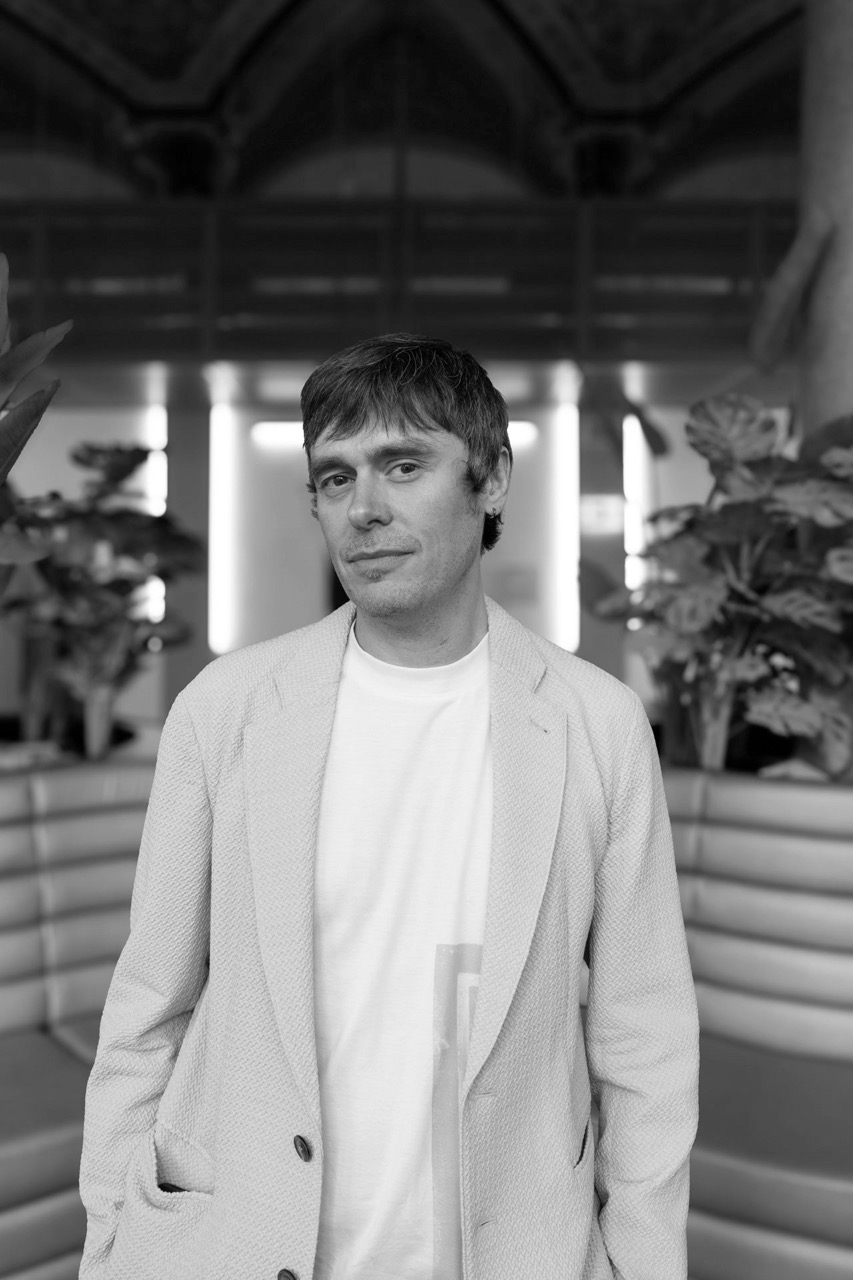
- Piero Costantini, CEO, Mnemonica
DEFINITION: When you talk to filmmakers, what are the biggest storage headaches they face on productions today?
James Townend: One of the biggest challenges is the expectation to have material available for review almost immediately, for teams both on-set and off-site.
At the same time, productions need to offload media quickly and reuse storage to keep costs down. This means having fast, reliable network storage on-set, paired with an efficient pipeline for generating proxies and distributing them to remote collaborators. It’s no longer enough to think about storage as a local problem. Productions increasingly need a system that can handle both instant access and long-distance collaboration.
Piero Costantini: It’s important for us to distinguish between individual filmmakers and production companies. We’ve found that most independent filmmakers are acutely aware of the need for preservation, while production companies seem to ignore the problem or push it aside. They accumulate vast quantities of physical media that sit gathering dust in their storage rooms, disconnected from the market and difficult to access. The big question is whether, in the long term, these companies will even be able to access the content on that ageing media, and what condition it’ll be in if they can. The challenge we’re tackling is a cultural one: to instil the concept of digital patrimony and how to get the most out of it.
DEF: Remote collaboration is now a big part of filmmaking – how are modern storage solutions helping teams work smoothly across different locations or departments?
JT: The key is removing complexity for remote teams. Products like our Cloud Dock and Cloud Store let you pre-configure sync settings so that media drives connect to the main network and automatically sync to remote destinations. Productions can choose whether to sync full-resolution media or just proxies, and all of this can be managed centrally. For remote collaborators, there is no set-up or manual file wrangling needed. They can simply work with the media as if it were local, which reduces delays, mistakes and the overhead admin that used to slow down distributed teams.
PC: Mnemonica was built on the idea of collaboration. It’s a tool designed to bring all stakeholders together around their data. We like to say that it’s where media meets people. In the contemporary production environment, there’s a continual need for information exchange between all parties involved in a project. The cloud is a natural enabler for this. Its globally distributed and low-latency access (when architected correctly) make it the ideal platform for collaboration. While there are on-premises, peer-to-peer solutions that distribute data, I don’t see them as viable for our industry. They might work for small creative teams or agencies, but the film industry requires a level of security that individual users simply cannot guarantee for every entity storing and distributing data.
DEF: Costs can quickly creep up. What hidden costs should filmmakers watch out for, and how can they think about long-term value in their storage decisions? How can productions future-proof their storage?
PC: This brings us back to the idea of digital patrimony. If a production company loses control of its data, little can be done to recover it. It’s crucial to adopt a mindset where digital assets are treated as the company’s core wealth. As such, they must be preserved and carried into the future without hesitation.
The cost of proper storage is minimal compared to the catastrophic cost of losing data. Losing the master of a film, which happens every day, has an enormous financial impact, not to mention the repercussions from public entities who may have co-financed the project. Often, there’s a legal obligation to preserve the integrity of a work indefinitely. I advise production companies to designate a specific portion of their budget for the preservation of digital assets, as a direct extension of the financial investment of producing the film itself.
JT: One of the biggest cost traps is uncontrolled cloud usage, especially from storing vast amounts of Raw camera files for extended periods. Productions should determine exactly what needs to be in the cloud at each stage of a project, and then automate ingest and archival processes to move material into more cost-effective tiers once it’s not active. The pricing model of Blackmagic Cloud is deliberately simple, for instance, with no hidden egress fees and no ongoing charges for Cloud Store hardware. By taking control of what’s in progress in the cloud and planning for long-term archival, productions can keep costs predictable while also mitigating risk.
DEF: Performance is always the top priority. What storage innovations have made the biggest differences to workflows in recent years?
JT: The arrival of 10Gb Ethernet as standard on lots of Macs and PCs is a game changer. Combined with off-the-shelf network storage products, it’s democratising high-performance workflows that were once the preserve of major studios. Nowadays, small productions or independent creators also have multi-user, real-time editing networks at their fingertips. Looking forward, 100Gb Ethernet is becoming more accessible and should be on the radar for the next generation of high-performance workflows.
PC: Without a doubt, the cloud. It has provided a single, centralised information hub available to all stakeholders across production, post-production, distribution and even long-term preservation. Having this central memory, accessible from any device, anywhere and at any time, is the most significant innovation we’ve witnessed in recent years. It has driven extreme efficiency in workflows, though it’s also demanded that professionals become more skilled, attentive and technologically well versed in looking after data. Data management used to be a niche, specialist role. Now, we are all data managers.
DEF: What are the key questions a filmmaker should ask themselves when deciding what storage set-up is right for them?
PC: The main question is: ”What do I need to do with my data?” If you need to circulate your assets widely, a cloud solution is necessary. If the data has to remain static and completely disconnected from the internet, an on-premises solution is the obvious answer. However, the business models that you’re able to build around the first option are exponentially greater than what you can do with a storage system locked away in a warehouse.
JT: Filmmakers should ask: how much time do you want to spend managing the system versus using it? Do you want an off-the-shelf solution that just works, or a customised set-up that you can administer yourself? What data needs to be instantly accessible, and what can be archived? How can the system scale as formats and file sizes grow? Answering these questions helps a production avoid overspending and under-preparing.
DEF: Finally, looking ahead, what do you think storage for filmmakers will look like five or ten years from now, and how might that change the way films are made?
PC: The cost of cloud storage is already plummeting, a trend that we’ve seen in the price lists of most major providers. In five to ten years, the landscape will evolve in step with internet connection speeds, which are already reaching optimal levels, at least in the west. This will make connecting to a remote, seemingly limitless storage solution the default. We are already seeing this trend with major OTT platforms like Amazon and Netflix, who are taking care of all their data management in-house so that production teams draw from their back pocket at any moment.
Independent producers, on a smaller scale, can and should adopt similar structures, to generate efficiency but also to allow them to stop worrying about IT. Production companies are not IT companies, and they should be able to dedicate their focus to what they do best: bringing stories to life with the best talent they can find.
For more insights into the industry, read Round Table: Rental.
This story appears in the November/December 2025 issue of Definition