

The next generation of PTZ Round table
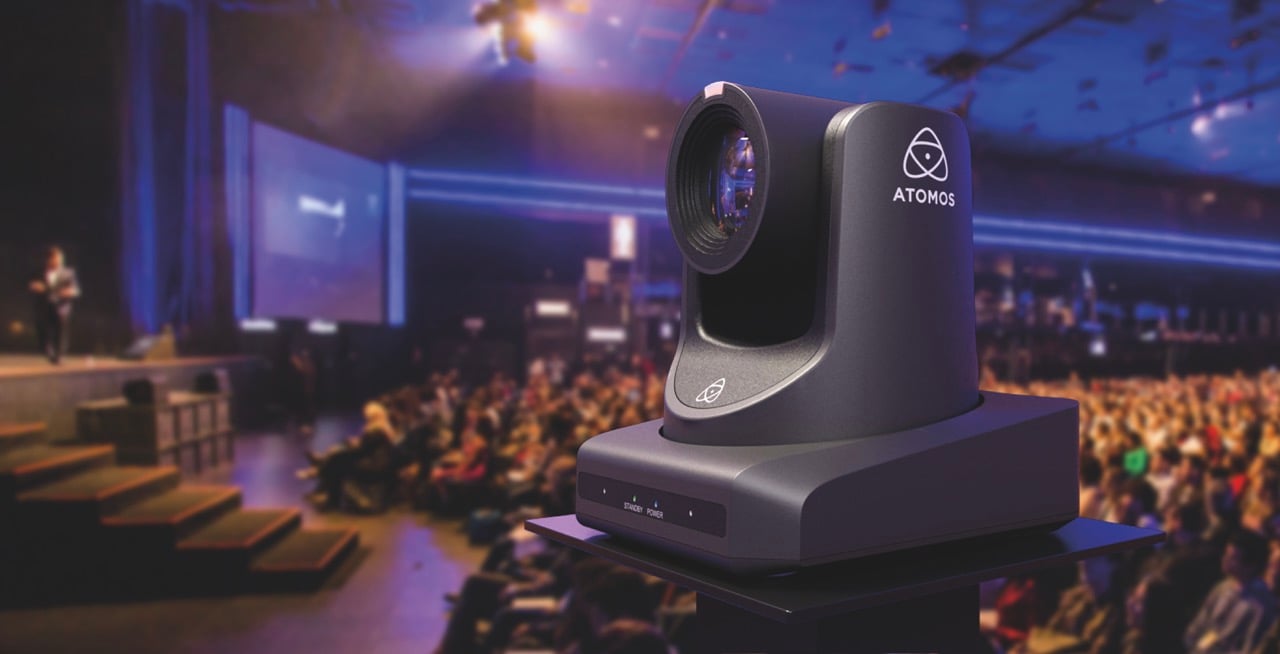
Posted on
We pan, tilt and zoom our way into the future of PTZ camera tech with the help of experts from six leading manufacturers
The panel
Matt Davis
CEO and chief technology officer, PTZOptics
Barry Griffin
Pro Imaging B2B manager, Canon UK
Claire Lam
Category head – network cameras and professional monitors, Sony Europe
Dan Miall
CEO, BirdDog
Karl So
Chief product officer, Atomos
Guilhem Krier
Head of new business and market development, Panasonic Connect Europe
Greg Boren
Product integration engineer, Marshall Electronics

DEFINITION: Looking back over the past five years, what do you think has been the most significant development in PTZ technology?
Karl So: I think the most significant developments have been advances in sensor technology and CMOS module design. The move from HD to 4K resolution, along with optical zoom ranges increasing from 5x to 30x, has created a much broader choice of PTZ cameras to suit different applications. At the same time, demand for more advanced controllers has grown rapidly, particularly for automation, AI-assisted tracking and remote operation.
Matthew Davis: Looking back, the most transformative shift hasn’t been a single feature, but the transition of PTZ cameras from niche utility items to central components of intelligent video ecosystems.
The integration of advanced AI-powered automation, particularly voice-tracking and autonomous subject following (like Presenter Lock), has redefined what a camera does; it’s now an active participant in production rather than just a passive observer. Simultaneously, the maturation of IP-based production through protocols like NDI HX3 and Dante AV-H has provided the low-latency, broadcast-quality transport that high-end filmmakers once found lacking in robotic systems.
Dan Miall: PTZ cameras have evolved from products originally adapted from the security market into purpose-built production tools. Today’s PTZs offer image quality, colour control, motion accuracy and operational flexibility that increasingly rival traditional broadcast cameras.
Just as importantly, modern PTZ cameras increasingly evolve through software rather than hardware alone. Firmware updates can deliver significant improvements throughout a product’s lifetime, from image processing and autofocus refinements to entirely new workflows, protocols and control capabilities. After purchase, a PTZ can continue to evolve alongside production requirements, extending its useful life and protecting the customer’s investment.
At the same time, the conversation has moved beyond simply delivering 4K. Larger sensors, better optics, more sophisticated image processing and improved colour science are becoming genuine differentiators that directly impact production quality.
Claire LaM: PTZ cameras have gone from simple, remotely operated cameras into intelligent imaging systems capable of delivering broadcast-quality results. Advances in sensor technology, autofocus, image processing and AI have significantly improved image quality. AI-powered tracking technology has been one of the most significant developments. Modern PTZ cameras are no longer limited to basic subject-following; they can recognise people, maintain natural framing and support more intelligent camera operation. This has opened up new possibilities across broadcast, corporate production, education, live events and houses of worship, etc.
AI is also evolving beyond human tracking into more specialised applications. For example, sports production requires cameras to follow fast-moving action, and technologies such as ball tracking can enable PTZ cameras to automatically follow the movement of the ball while maintaining appropriate framing of players and the overall scene.
These developments are expanding the role of PTZ cameras into areas that traditionally required dedicated camera operators. However, while AI and automation are important innovations, image quality remains the most critical element. Producers ultimately judge a camera by the pictures it produces.
Barry Griffin: Advances in AI-powered auto tracking and IP connectivity have transformed what PTZ systems can deliver. Today, a single operator can manage multiple cameras, automate shots and produce content that would previously have required a much larger crew. From my perspective at Canon, I’ve also seen the range of customers using PTZ expand significantly. We now work with broadcasters, podcasters, corporate studios, educational institutions, houses of worship and live event companies, all leveraging PTZ tech in different ways.
The technology has become far more accessible while continuing to deliver the image quality and reliability that professionals expect. For me, that’s been the biggest development. PTZ has evolved from a specialist solution into an essential part of modern content creation and I believe we’re only beginning to see what’s possible.
Guilhem Krier: A big development has been the shift towards fully integrated production ecosystems – PTZ cameras are no longer standalone devices, they are becoming intelligent, connected tools that combine advanced imaging, automation, robotics and IP-based workflows.
A milestone has been the adoption of open workflow standards such as FreeD, which has enabled PTZ cameras to become an important part of AR, XR and virtual production environments. Another important area has been improving image performance for virtual production stages where LED volumes are becoming increasingly common. Optical low-pass filter technology is helping minimise moiré and aliasing artefacts when capturing LED displays and delivering cleaner, more natural images.
Panasonic’s approach has been to consider the complete imaging chain from sensor technology and optical design to image processing, colour science and workflow integration. We have seen this evolution first-hand through the development of PTZ systems designed to meet the needs of modern production environments. Products such as the Panasonic AW-UE160 and AW-UE150A demonstrate how PTZ cameras have moved into a new generation, combining larger sensors, advanced image processing, broadcast-quality features and flexible connectivity options.
Alongside improvements in imaging, AI-assisted functionality and robotic camera movement are enabling intelligent tracking, auto framing and more dynamic, repeatable camera moves. Ultimately, the biggest development has been the removal of traditional limitations. PTZ cameras are becoming intelligent production platforms that combine image quality, automation, robotics and connectivity to give creators greater flexibility than ever.
Greg boren: PTZ technology continues to evolve especially as it relates to incorporating better optics into the camera. As AI is making its way into tracking PTZs, improved facial and situational recognition have also been big advancements.
DEF: How are the changing needs of filmmakers influencing the development of PTZ technology, and where are manufacturers focusing their R&D efforts?
KS: PTZ cameras can still be difficult to use as primary filmmaking cameras because of limitations such as smaller sensor sizes, restricted recording formats and their fixed installation. However, they are an excellent solution for secondary camera angles, or positions where it would be difficult or impossible to place a camera operator. They can provide reliable remote operation while capturing unique perspectives.
Looking ahead, I see leading brands focusing on larger sensors, higher-quality recording formats and more cinema-focused features to make PTZ cameras more suitable for film production.
MD: Filmmakers are increasingly demanding broadcast-quality output from pro AV budgets, which is pushing manufacturers to focus R&D on larger sensors and improved low-light performance to compete with traditional mirrorless and cinema cameras. Featuring a one-inch sensor alongside our most fluid and responsive control yet, the PTZOptics Rise exemplifies this shift.
There is also a significant push toward ‘visual reasoning’, where cameras use edge-compute AI to analyse scenes in real time, recognising gestures, counting subjects and making autonomous framing decisions that mimic a human operator. Furthermore, manufacturers are responding to the need for aesthetically appropriate hardware, such as black camera bodies with subtle accents that blend seamlessly into professional studio environments.
BG: Productions are expected to deliver more content than ever before, often with less time and resources. But audiences continue to expect high production values, creating a real demand for technology that enables teams to work more efficiently without compromising on quality.
At Canon, a significant area of focus is making PTZ systems more intuitive and better connected. Technologies such as XC Protocol play an important role by allowing customers to control compatible PTZ and Cinema EOS cameras through a common IP-based protocol. This gives production teams greater flexibility, whether they are building a visual podcasting studio, a live event set-up or a broadcast environment, while simplifying operation and reducing
the need for multiple control systems.
GK: The expectations of filmmakers and content creators have changed significantly. Today’s users no longer see convenience and image quality as separate priorities. They expect remote-operated cameras to deliver the same creative possibilities, colour performance and production quality associated with traditional broadcast and cinema cameras.
Historically, PTZ cameras were associated with smaller broadcast sensors, but the industry has moved towards larger sensor formats that provide improved dynamic range, stronger low-light performance, more cinematic depth of field and greater creative control.
Panasonic has responded through a broad camera portfolio spanning professional PTZ cameras, broadcast cameras and cinematic imaging systems. The AW-UE160 and AW-UE150A demonstrate how PTZ cameras can deliver significantly improved image quality through larger sensors, advanced processing, sophisticated colour reproduction and the imaging philosophy behind Panasonic’s broadcast and cinema cameras.
Filmmakers are also increasingly looking for modular solutions that allow them to choose the right combination of camera, lens and movement system. Panasonic’s UB series cameras, including the AW-UB10, AW-UB50 and AW-UBX100, provide this flexibility by pairing high-performance imaging with robotic pan and tilt heads, motion-control systems and other remote camera platforms.
Another major focus area is intelligent automation. Panasonic’s approach is centred around bringing together PTZ cameras, robotic systems, professional controllers, AI-assisted tools and IP production platforms such as KAIROS to create connected ecosystems, helping creators achieve higher production values with greater efficiency.
GB: Film and broadcast productions can be set up more quickly and reconfigured by using IP with PoE, providing single cable and central control. We are also seeing independent webcasters using tracking PTZ cameras on a desktop, allowing for freedom of movement.
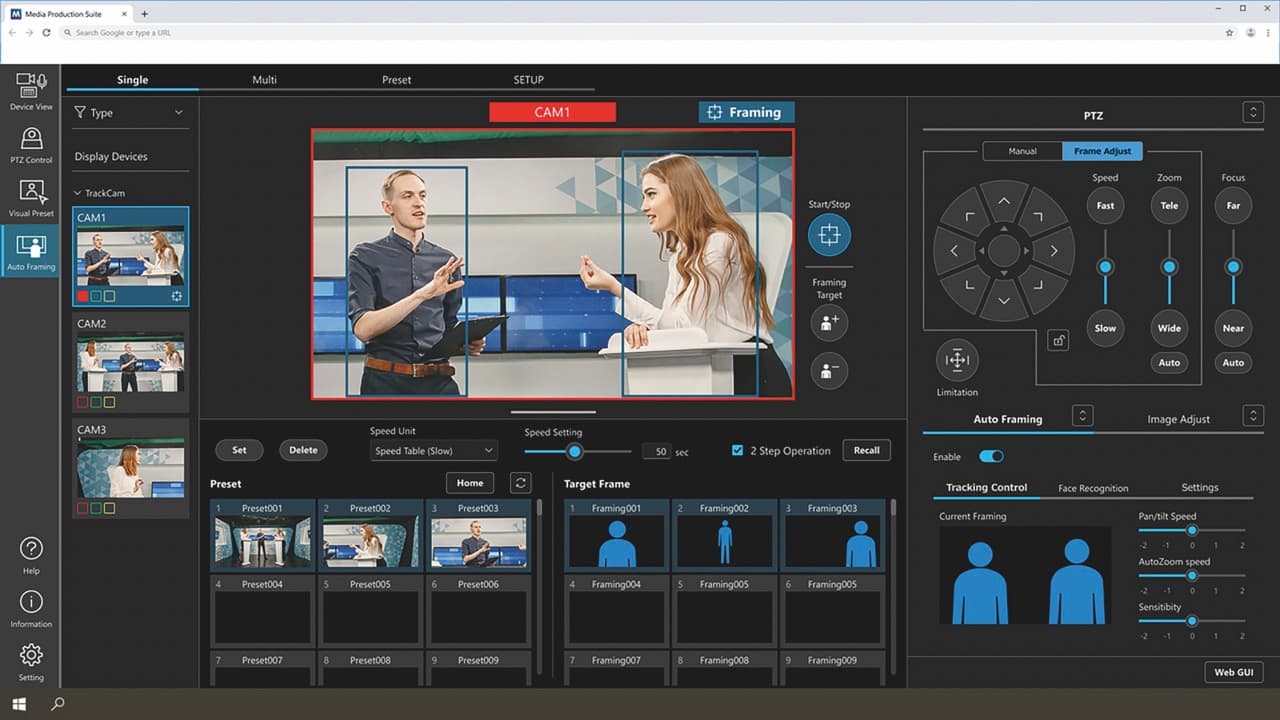
DEF: AI and automation are becoming increasingly important. What role do you see them playing in the evolution of PTZ technology, and what benefits will filmmakers see in practice?
KS: AI and automation will continue to play an increasingly significant role, as features like intelligent subject tracking and more advanced preset capabilities reduce repetitive manual operation, improve consistency and minimise the intervention of dedicated camera operators. This allows production teams to focus more on creative decision-making while maintaining reliable camera coverage, with a single operator potentially managing multiple cameras and feeds.
CL: AI will play a key role in making PTZ cameras more intelligent and easier to operate. The objective is intelligent assistance that helps production teams achieve better results more efficiently. Features such as AI-powered auto framing, subject tracking, face recognition and application-specific tracking technologies allow cameras to maintain consistent and natural-looking shots while reducing the need for continuous manual adjustment.
In live sports, for example, AI-based tracking can help follow athletes and the movement of the ball, enabling smaller production teams to capture professional-quality coverage. In corporate events and presentations, AI can automatically keep speakers framed as they move around the stage, allowing operators to focus on overall production management. AI technology will become a valuable assistant for camera operators, helping them deliver consistent results while leaving creative decisions in human hands.
DM: Auto tracking is only the beginning. AI is gradually becoming an operational layer across the entire production workflow rather than simply a camera feature. We’re already seeing AI improve autofocus, exposure, colour consistency and subject recognition. Looking ahead, AI will assist with shot suggestions, production analytics, predictive maintenance, system diagnostics and workflow optimisation across connected IP production environments. The goal isn’t to replace operators but to automate repetitive tasks, allowing creative teams to focus on storytelling rather than technical processes.
MD: AI is moving from a ‘future concept’ to a mainstream buyer expectation. In practice, filmmakers will see presenter and group locking, ie cameras that can distinguish between subjects, ensuring the ‘right’ person is always in frame without manual intervention. They’ll also see audio-visual synergy, with greater integration with beamforming microphones allowing cameras to automatically switch and frame based on who is speaking in a room.
Another thing to look out for is automated metadata: AI can generate real-time captions, scene descriptions and production prompts (like scoreboard recognition in sports), streamlining the indexing and post-production process.
BG: The key is that these technologies are there to support the operator, not replace them. At Canon, features such as Auto Tracking help production teams capture smooth, professional shots with greater consistency, particularly when working with smaller crews or in fast-paced environments. This allows operators to focus on the bigger picture while the camera takes care of more repetitive tasks.
Looking ahead, we see AI making PTZ systems even smarter and more intuitive, helping filmmakers and content creators work more efficiently while remaining in complete creative control. Ultimately, it’s about removing technical barriers so they can spend more time focusing on storytelling.
GK: AI and automation will be among the most important developments shaping the future of PTZ technology. However, the most successful applications will be those that enhance human creativity rather than replace it.
The role of AI in production is changing from simple automation towards intelligent assistance. Rather than only performing predefined actions, future camera systems will increasingly understand their environment, support operators and help production teams make more informed creative decisions.
We have already seen significant progress. Early tracking systems focused on keeping a person within the frame, but modern AI-assisted PTZ cameras can identify subjects, distinguish between multiple people, maintain framing as they move and support more natural-looking compositions. Panasonic’s approach is to use AI as a creative assistant, reducing repetitive workloads while leaving artistic decisions and storytelling firmly in human hands. This is particularly important as production environments become more complex, with operators often responsible for multiple cameras, robotic systems and production functions simultaneously.
AI will play an increasingly important role when combined with robotic movement systems, enabling smoother, more dynamic and repeatable camera movements while maintaining precise subject awareness. For broadcasters, educators, corporate studios, sports producers and live events, this means more creative camera angles, greater consistency, faster operation and higher production values with smaller teams.
The future of PTZ technology will be defined by the balance between automation and creativity. AI will handle complex and repetitive tasks, while people remain responsible for vision, storytelling and the creative decisions that make great productions successful.
GB: I think it will be incremental versus revolutionary. Currently, AI is mostly found in auto-tracking cameras for facial recognition and determining the number and placement of individuals in a room or on a stage. Another main AI/automation feature to look for is the cameras’ ability to read hand gestures, for panning and tilting. In the near future, it may be possible to provide a script and have an AI system choreograph all of the camera moves, which can then be edited and fine-tuned.
DEF: Filmmakers increasingly expect technology to integrate seamlessly into wider production workflows. How is the PTZ market responding to those expectations, and where is there still room for improvement?
KS: Many PTZ cameras have limited built-in recording options, typically relying on compressed formats such as H.264 or H.265. For wider adoption in filmmaking, support for professional recording formats such as ProRes, along with RAW recording and Log colour profiles, would provide much greater flexibility for colour grading and post-production workflows.
CL: Integration has become one of the most important considerations for professional users. Customers no longer view a PTZ camera as a standalone device; they expect it to work seamlessly with switchers, production automation systems, virtual production platforms, robotic camera systems and software. The market is responding through greater support for industry-standard protocols, open interfaces and partnerships with third-party technology providers.
PTZ cameras are being integrated with robotic rails, motorised sliders and other motion-control systems, enabling more dynamic camera movements while retaining the advantages of remote operation. Virtual production and AR/VR workflows are also driving demand for more accurate camera positioning, tracking data and system integration.
There is still room for improvement in industry-wide interoperability and workflow standardisation. Greater consistency between manufacturers and easier integration between different systems would help users build more efficient production environments.
DM: Interoperability is a huge priority. Open standards such as NDI, SRT and Dante AV-H are helping cameras integrate more naturally into diverse production environments, while improvements in network infrastructure have made IP workflows far more accessible than they were just a few years ago.
At the same time, the traditional boundaries between broadcast and AV continue to blur. Users increasingly expect a single camera to work seamlessly across SDI, IP, HDMI, USB and cloud-connected workflows without having to choose one ecosystem over another. There is still work to do around simplifying deployment and ensuring seamless interoperability across different manufacturers, but the industry is moving steadily towards more open, standards-based ecosystems that give users greater flexibility and investment protection.
MD: The next breakthrough will come through making imaging, control, automation and device management feel like one coherent experience. For filmmakers and video-production teams, integration is about more than connecting a camera to a network. The camera must fit naturally into the entire production workflow from acquisition and camera control through live switching, remote collaboration, recording and post-production.
We are seeing growing demand for production-native connectivity, REMI and distributed production, open control and automation and post-production readiness. There is still room for improvement. The industry needs greater interoperability and more consistent APIs across manufacturers, along with simpler software environments that bring camera configuration, control and automation together.
Filmmakers also want more natural movement curves, including sophisticated ease-in and ease-out controls, so automated camera moves feel intentional and cinematic rather than robotic. Technology should adapt to a filmmaker’s workflow, not force them to work around it. That philosophy is what guides us and our product development. We believe the future is in combining advanced camera imaging innovation with sophisticated automation and control capabilities into a single, intuitive software interface that plugs into any video production ecosystem. Why? So producers can focus on creativity and content without all the complexity.
BG: Productions increasingly expect technology to fit naturally into their existing workflows, and that has become a major focus for PTZ development. It’s no longer just about the camera itself; it’s about how effectively it integrates with the wider production environment.
At Canon, we’re focused on creating a connected ecosystem. Features such as XC Protocol allow compatible PTZ and Cinema EOS cameras to work together seamlessly, making multi-camera productions simpler to manage. The goal remains the same: to make workflows as simple and intuitive as possible, enabling filmmakers to focus on creativity rather than managing technology.
GK: Workflow integration has become just as important as image quality. Today’s filmmakers, broadcasters and content creators expect PTZ cameras to become fully connected components within a wider production ecosystem. This shift has been a major focus for Panasonic. The future of production is not defined by individual pieces of equipment but by how effectively systems work together.
PTZ cameras are becoming part of intelligent, software-driven workflows where image capture, control, processing and distribution are connected through open standards and flexible architectures. Interoperability is central to this approach. Panasonic supports the technologies customers need, including FreeD for virtual production and augmented reality, SRT for secure low-latency contribution, NDI and NDI HX for flexible IP workflows and SMPTE ST 2110 for professional broadcast infrastructures. At the same time, Panasonic continues to support SDI, HDMI, fibre and hybrid environments, allowing customers to transition to IP at their own pace.
Workflow integration also extends beyond video transport. Platforms such as Panasonic KAIROS bring PTZ cameras, broadcast and cinema cameras, graphics and IP workflows together within a flexible software-defined production environment. Combined with robotic systems such as Panapod and PanaTrack, PTZ cameras provide complete control over camera movement while maintaining the reliability and repeatability required for professional production.
The future of PTZ technology is not just about developing better cameras. It is about creating connected production ecosystems that combine imaging, automation, robotics and software.
GB: Most PTZ products on the market today support at least two interface types and many support multiple simultaneous outputs and control technologies. It is not unusual to see a PTZ supporting SDI, HDMI and USB along with some form of IP connectivity. Improvements will come as the market converges on a common set of methods.
DEF: Is there anything that filmmakers might misunderstand about PTZ technology, and what needs to happen before those perceptions change?
KS: PTZ cameras are still primarily associated with video conferencing, studio and livestreaming. While those remain important applications, content creators and smaller production teams are discovering that PTZ cameras can add new angles, dynamic camera movement and greater production value without requiring a larger crew.
PTZ cameras are not intended to replace traditional cinema cameras or camera operators. Instead, they complement existing camera set-ups by providing additional coverage and capturing perspectives that might otherwise be difficult or impractical to achieve. Changing perceptions will require manufacturers to continue improving image quality, sensor performance, recording formats and cinematic control, while demonstrating PTZ cameras in more creative, real-world productions. As filmmakers see more examples of PTZ being used alongside traditional cameras, perceptions are likely to shift to PTZ cameras being viewed as flexible creative tools that can enhance a broad range of productions.
CL: PTZ cameras are designed to complement existing production workflows. By automating repetitive camera tasks and enabling cameras to be positioned in places that may not be practical for operators (eg B roll footage from different angles), PTZ technology allows production teams to use their creative resources more effectively.
The future of PTZ technology will be about expanding production possibilities. As image quality continues to improve and AI, sports tracking, virtual production and third-party integration become more advanced, PTZ cameras will increasingly become an essential part of professional production workflows.
DM: One common misconception is that all PTZ cameras are fundamentally the same. While many products may appear similar externally, the engineering behind them can be dramatically different. Many PTZ cameras share common OEM platforms, which can limit the scope for innovation. Others develop their own hardware, firmware, image processing and software ecosystems, allowing them to innovate much more rapidly and deliver a significantly better long-term ownership experience.
As PTZ cameras become increasingly software-driven, the quality of that engineering, and the ability to continually improve products after purchase, will matter just as much as the hardware specifications on the datasheet. Ultimately, filmmakers should look beyond feature lists and resolution alone and consider how a camera performs, integrates and evolves over its lifetime.
MD: The most persistent misunderstanding is that PTZ cameras are inherently inferior in image quality or soul compared to manual set-ups. Many still view them solely as lecture-capture or security-style devices rather than creative tools. To change these perceptions, the industry must demonstrate high-end optics, highlight creative use cases and position PTZs as an assistant, not a replacement, by emphasising that AI and robotics exist to help smaller teams achieve bigger creative results, not to replace the creative vision of the director.
BG: It is a big misconception that PTZ cameras are only suitable for simple or entry-level productions. The reality is that they have evolved significantly and are now used across a broad range of productions, including broadcast, live events, corporate production and visual podcasting, delivering professional image quality alongside streamlined workflows.
At Canon, we’re focused on ensuring that our PTZ cameras work seamlessly alongside our Cinema EOS cameras, so customers don’t have to choose between flexibility and image quality. As more filmmakers see what PTZ cameras can do and how easily they integrate into existing productions, I believe those perceptions will continue to change.
GK: One of the misconceptions about PTZ cameras has historically been that they cannot deliver the same image quality or flexibility as traditional broadcast or cinema cameras. While this may have been true in the early days of PTZ technology, it no longer reflects the capabilities of modern systems. Advances in sensor technology, image processing, lens design, colour science and connectivity have transformed what PTZ cameras can achieve.
Panasonic has played a significant role in this evolution by bringing together decades of experience in broadcast imaging, professional cameras and cinema technology. As production environments evolve, technologies such as optical low-pass filters have become increasingly important for virtual production, helping minimise moiré and aliasing when capturing LED walls and ensuring real and virtual elements blend seamlessly. Products such as the AW-UE160 and AW-UE150A demonstrate how PTZ cameras have moved beyond their traditional perception, combining larger sensors, advanced imaging performance, professional connectivity and optical low-pass filters for demanding broadcast and creative production environments.
Another misconception is that PTZ cameras are creatively limiting. Modern integrated PTZ cameras offer a broad range of optical capabilities, while Panasonic’s modular UB series cameras, combined with robotic heads and motion-control platforms, enable interchangeable lenses, repeatable movement and more cinematic camera configurations. Advances in robotics, AI and automation have also transformed PTZ systems, enabling intelligent tracking, automated framing and dynamic camera movement while giving operators greater creative control.
Rather than replacing traditional cameras, PTZs can expand the creative toolkit. By combining broadcast and cinema heritage with PTZ, robotics and IP-based production, creators can achieve higher production values, greater efficiency and new levels of creative freedom.
GB: While PTZs can provide more angles without increasing the crew size, set-up and rehearsal times may not shrink. Each camera move, track or shot needs to be tried and tweaked separately and, with one operator, this cannot be rushed.
This article appears in the August/September 2026 issue of Definition
You might also like...
 Read More
A trio of film experts share their thoughts on how we can achieve a more environmentally friendly future and examine what’s standing in the way of progress.
 Read More
Our esteemed panel of experts from various corners of the industry reveal what’s making the wide world of data tick – and what’s in store for the future
 Read More
Blackmagic’s James Townend and Mnemonica’s Piero Costantini discuss the evolving demands of on-set storage, remote workflows and long-term data preservation
 Read More
A panel of high-flying aerial specialists gives us the view from the top